UK eVTOL Leader Vertical Aerospace Pushes Type Certification Target to 2029
British eVTOL manufacturer Vertical Aerospace has delayed the type certification timeline for its flagship air taxi, the Valo, by one year to 2029, pushing back from its previous 2028 target. The company says the revised schedule "reflects the rigor required to certify a new category of aircraft" under existing regulatory frameworks. Conditional-order customers including American Airlines will not receive aircraft before 2029.
Highlights
- Vertical Aerospace has delayed Valo type certification by one year to 2029, shifting from its previously announced 2028 target set in late 2024.
- Conditional-order customers including American Airlines will not receive Valo deliveries before 2029.
- The company closed a financing arrangement of up to $800 million in April 2025 and estimates approximately $700 million is needed to complete Valo certification.
- A hybrid-electric Valo variant with a design range of up to 1,000 miles is targeting a first flight in the first half of 2027.
- Vertical received an expanded CAA flight permit allowing testing beyond Cotswold Airport, and plans to open an early-stage production assembly facility within months.
American Airlines and other carriers holding conditional orders for Vertical Aerospace's flagship Valo eVTOL air taxi will have to wait until at least 2029 to take delivery of the aircraft.
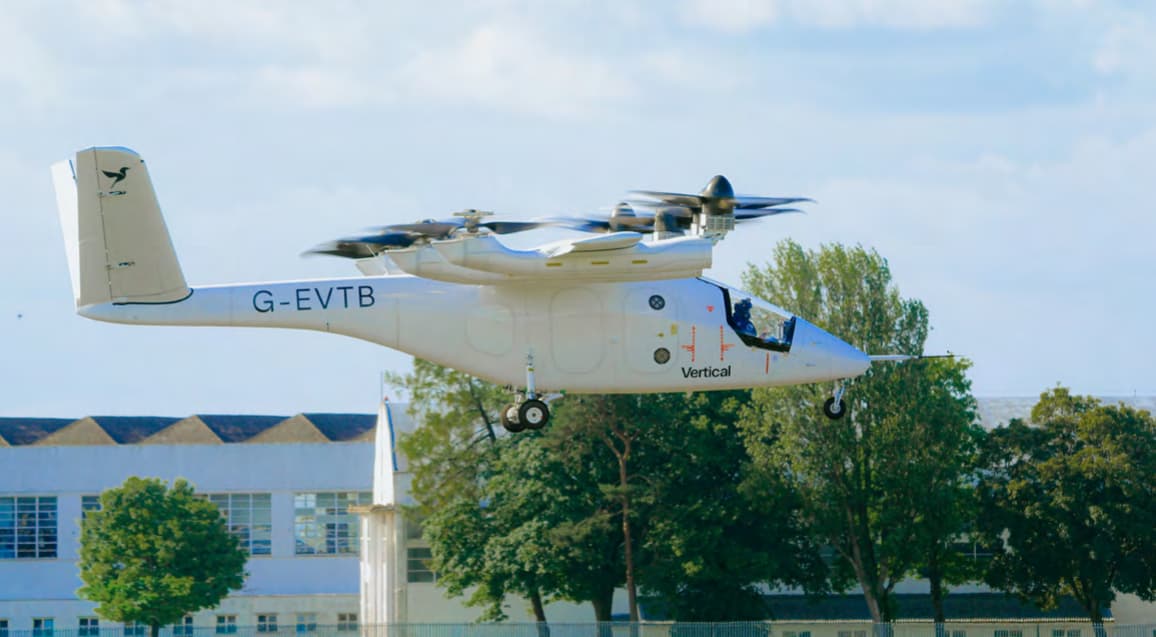
Vertical Aerospace, widely regarded as the UK's leading air taxi developer and one of a handful of companies conducting regular flight testing, announced Monday in a business update that it has "re-baselined" its certification programme. The company is now targeting simultaneous type certification from both European and US regulators in 2029 — a one-year slip from the 2028 goal it set at the end of 2024.
"This schedule reflects the rigor required to certify a new category of aircraft within established regulatory certification frameworks," the company said in Monday's update.
Vertical added that it will provide more detail on certification progress at the Farnborough International Airshow in July and in a business update on 13 August.
Valo: A Vision for Urban Air Mobility
Vertical formally unveiled the Valo as its flagship air taxi in December of last year. The company plans to establish urban air mobility networks in cities including New York, Miami, and London, connecting passengers between airports, city centres, hospitals, and event venues.
The Valo is being certified under the European Union Aviation Safety Agency's (EASA) Special Condition for VTOL (SC-VTOL) at the "Enhanced" category level, which permits operations over densely populated areas. The Enhanced category holds manufacturers to the same 10⁻⁹ safety standard used in commercial aviation — meaning no more than one catastrophic failure per one billion flight hours.
Vertical Chief Commercial and Technical Officer Michael Cervenka told FLYING magazine in January that the US Federal Aviation Administration (FAA) would "sign a type certificate on the same day." Because the FAA applies a lower 10⁻⁸ standard to smaller eVTOL air taxis, Cervenka described simultaneous validation as a "passport" to the US market.
"It effectively creates a certification moat for us in Europe — we will be the only aircraft certified to the highest standard able to fly over densely populated areas, covering all the genuinely high-value use cases," he said.
A Pattern of Delays
Vertical had originally targeted certification and entry into service by 2025 before pushing that date back to 2026 in 2023. US air taxi manufacturers Archer Aviation and Joby Aviation have similarly revised their certification timelines multiple times — partly due to the FAA revising its certification pathway for eVTOL aircraft — with some developers declining to offer firm schedules at all.
Nevertheless, the gap between US and European air taxi manufacturers is widening.
Joby and Beta Technologies have already begun flying airworthiness-compliant pre-production prototypes — a stage Vertical does not expect to reach until next year. The FAA is also overseeing expanded pre-certification flight testing at airports across the United States, while Europe's more demanding regulatory environment has contributed to the bankruptcy of some of Vertical's rivals.
The geographic gap is equally stark: Beta Technologies has flown electric prototypes in the United States, Europe, New Zealand, and Japan, while Vertical's flight testing has to date been confined to Cotswold Airport (EGBP) in the UK. However, the company announced Monday that it has at last received an expanded flight permit from the UK Civil Aviation Authority (CAA), allowing it to fly beyond Cotswold.
When Will Air Taxis Actually Arrive?
In the early years of this decade, US eVTOL manufacturers widely projected that their aircraft would enter passenger service around 2024. As those timelines approached, companies were forced to confront the realities of type certification and sustained financial losses, and expectations were revised accordingly.
The most recent example is Joby, which has set a target of launching commercial air taxi service in Dubai via the Uber platform by the end of 2026 — a timeline that is itself now in question due to the conflict in the Middle East.
Vertical finds itself in a similar position. The British manufacturer estimated last September that completing Valo certification would require approximately $700 million in additional funding. In April, the company closed a financing arrangement of up to $800 million and completed the Valo's first crewed hover-to-forward-flight-and-back transition flight. It is currently conducting flight testing with two prototypes under CAA flight permit authority.
By comparison, US manufacturers operate a larger fleet of flying vehicles — partly because Vertical's unmanned VX4 prototype was destroyed in a crash during flight testing in 2023, permanently grounding that aircraft. The company resumed flight testing with a second VX4 in 2024 and introduced a third and final prototype in June of this year.
According to Vertical's Flight Plan 2030 vision document released in December 2024, the third VX4 was originally expected to appear during 2025. Seven airworthiness-compliant pre-production aircraft are then planned to follow, to be used by Vertical and the CAA for certification testing.
The Flight Plan also called for the VX4's first crewed transition flight to take place in 2025 — a milestone that was not achieved until April of this year. In the company's May earnings call, CEO Stuart Simpson acknowledged the milestone had arrived "slightly late" and said it had "increased the risk" of achieving certification by 2028. He maintained at the time that the 2028 target was "absolutely achievable" while also conceding the existence of "additional risk" in the same call.
Alongside Monday's announcement of the 2029 certification slip, Vertical also said it expects to complete the Critical Design Review (CDR) for the Valo before the end of this year — a delay from the mid-2026 target Simpson had previously set. The CDR will lock in the air taxi's baseline design and allow Vertical to begin building airworthiness-compliant prototypes for certification testing.
Progress Highlights Amid the Delays
Despite the setbacks, Vertical also announced several positive developments on Monday.
Prior to completing the CDR, the company plans to open an early-stage production assembly facility within the coming months, and expects to bring a battery production facility online before year-end. Combined with the CAA's expanded flight permit, these steps will position Vertical to conduct more extensive testing once pre-production aircraft are ready.
Vertical also announced Monday that a planned hybrid-electric variant of the Valo — with a design range of up to 1,000 miles — is undergoing propulsion system evaluation on a dedicated test stand. The company projects a first flight in the first half of 2027 and says it will name a long-term turbogenerator supplier later this year.
The hybrid-electric Valo could potentially enter service before the passenger air taxi version. US manufacturers Archer, Joby, and Beta have each developed hybrid variants of their flagship aircraft to pursue early commercial opportunities in cargo and defence markets. In the near term, Vertical may similarly bid for contracts — such as those already awarded to US operators by various branches of the US military — to help ease financial pressure while certification work continues.
Either way, the UK's leading air taxi company will need to move decisively if it is to meet the targets it set in December 2024: 150 customer deliveries and an annual production rate of 200 aircraft before the end of the decade.
原文來源: 查看原文
FAQ
Reviewed and published by the LAETimes editorial desk ·