Building the Foundation for Advanced Air Mobility: An Interview with Vertiports UK Chairman Michael Proffitt
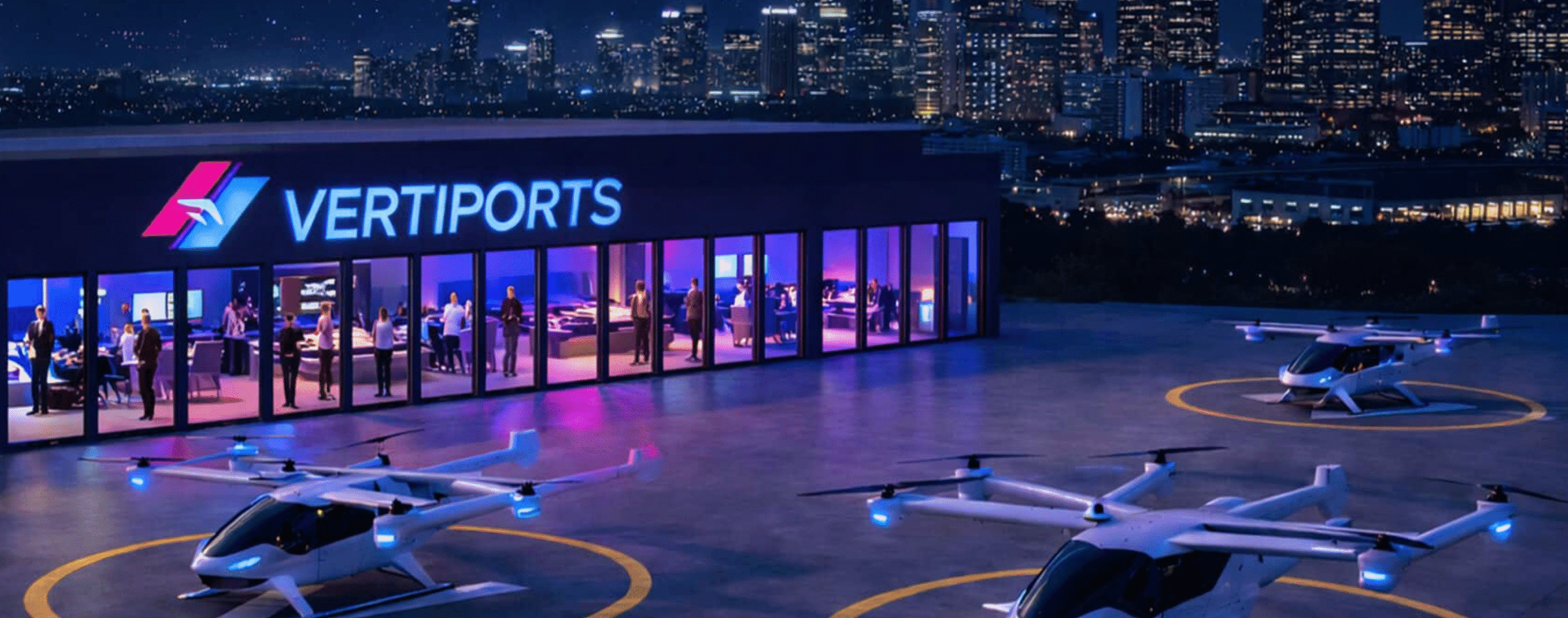
Vertiports UK Chairman Michael Proffitt, speaking on the eVTOL Insights Podcast, argues that the success of Advanced Air Mobility (AAM) hinges not on aircraft alone, but on a complete ground infrastructure ecosystem. He warns that without a network of safe vertiports, charging facilities, low-altitude airspace management, and a robust regulatory framework, even certified eVTOL aircraft will be unable to enter commercial service.
Highlights
- Vertiports UK Chairman Michael Proffitt warns that certified eVTOL aircraft cannot enter commercial service without a pre-built network of vertiports, charging infrastructure, and low-altitude airspace management.
- Vertiports UK is collaborating with NATS and the UK CAA to develop the airspace integration and regulatory framework required for commercial AAM operations in the United Kingdom.
- The company's feasibility studies evaluate each potential vertiport site within a broader network context, targeting the 10 to 20 most commercially viable routes per location.
- A partnership with Doncaster Airport aims to integrate vertiport infrastructure into the airport's long-term masterplan, treating eVTOL operations as a core component rather than an add-on.
- Vertiports UK has expanded its focus beyond passenger eVTOL to include drone operations, which Proffitt believes may achieve large-scale commercial deployment ahead of crewed air taxi services.
While much of the industry's attention remains fixed on the aircraft themselves, Vertiports UK Chairman Michael Proffitt believes the ultimate success of Advanced Air Mobility (AAM) will be determined by the ground infrastructure that supports those vehicles.
Infrastructure Is the Critical Factor
Speaking on the eVTOL Insights Podcast, Proffitt acknowledged that aircraft manufacturers have made significant strides toward certification and commercialization—but stressed that without a safe, well-planned operating environment, the entire industry will remain grounded.
"We hear a lot about the aircraft," he said. "There's been a great deal of coverage and, frankly, quite a bit of hype over the past few years. But things are now starting to take shape, and there are several very serious eVTOL manufacturers in the market."
Certified aircraft alone, however, are not enough to launch commercial operations.
"Once these aircraft are certified and production begins, if there is no safe operating environment, they simply cannot fly. That is exactly what vertiports are for."
More Than an Airport—A Complete Network
While existing airports will play an important role, Proffitt envisions a network that extends well beyond traditional aviation infrastructure. Initial services are expected to focus on air taxi operations before gradually expanding to regional connectivity, making purpose-built vertiports essential to delivering the speed and efficiency the industry has promised.
"If the infrastructure isn't in place, these operations won't get off the ground—pun intended," he said with a wry smile.
Beyond physical landing sites, Proffitt emphasized that Vertiports UK takes a much broader view of the ecosystem. The company's work goes beyond designing vertiports; it is focused on ensuring that every element required for commercial AAM operations is planned well in advance.
"Our focus isn't just on vertiports," he explained. "What we want to build is the complete ecosystem around what is needed for these operations to launch successfully."
That ecosystem encompasses reliable charging infrastructure for electric aircraft, sufficient power capacity to scale with growing fleets, maintenance facilities, planning considerations, and low-altitude airspace management.
Low-Altitude Airspace Integration Is the Core Challenge
While early operations may place relatively modest demands on the power grid, Proffitt noted that future growth will require careful planning to ensure energy supply keeps pace with an expanding number of aircraft.
One of the most significant challenges today is integrating eVTOL aircraft into UK low-altitude airspace. Vertiports UK has been working closely with NATS (National Air Traffic Services) while the UK Civil Aviation Authority (CAA) continues to develop the regulatory framework needed to support these new types of operations.
"The overall infrastructure will be critical," Proffitt said. "Airspace, I believe, remains a core issue that must be resolved."
He also highlighted the practical hurdles facing potential vertiport sites, including securing planning permission at locations that do not currently benefit from permitted development rights.
"We are working to engage with both airport and non-airport locations to convey a clear message: once all of this goes live, every piece of preparation must already be in place. We need to start now so that when eVTOL production genuinely ramps up, everything is ready to go."
In-Depth Feasibility Studies: Mapping Route Networks
A key part of Vertiports UK's current work involves conducting detailed feasibility studies of potential sites. These studies go beyond simply identifying suitable landing locations—they assess how each site fits into a broader network, analyze surrounding communities, and identify the commercially strongest routes.
"Our feasibility studies look in depth at the site and its surrounding area, and try to identify the 10 to 20 most important routes," Proffitt explained.
He sees this network-centric thinking as fundamental to making AAM commercially viable.
"Developing a single vertiport in isolation makes no sense," he said. "When operations begin in the UK and elsewhere, you will have a network of vertiports, and passengers will naturally travel from one to another."
The partnership with Doncaster Airport is one example of this approach. Anticipated future passenger and cargo traffic presents an ideal opportunity to integrate vertiport infrastructure into the airport's long-term development plans. Proffitt believes airports must consider how eVTOL operations fit within their overall masterplans, rather than treating them as standalone projects.
Drones Cannot Be Overlooked
Looking ahead, Proffitt also sees significant commercial opportunity beyond passenger transport. Vertiports UK has been expanding its focus to include drones, recognizing that uncrewed aerial vehicles may achieve large-scale commercial deployment ahead of passenger-carrying eVTOLs.
"We're not only looking at eVTOL—we're now looking at drones as well," he said. "It's another fascinating direction for the entire electric vertical takeoff and landing space."
Despite ongoing challenges around BVLOS (beyond visual line of sight) operations and low-altitude airspace management, Proffitt views drone operations, air taxi services, and regional passenger transport as three successive phases in the evolution of advanced air mobility.
For Proffitt, the future of the industry depends not only on innovative aircraft, but on the ability to build the infrastructure, regulatory framework, and operational ecosystem that allows those aircraft to fly safely and efficiently. As commercial eVTOL operations draw ever closer to reality, he is convinced of one thing: the foundations laid today will determine how quickly advanced air mobility can scale tomorrow.
原文來源: 查看原文
FAQ
Newsletter
Subscribe to our Low-Altitude Industry Newsletter
Daily curated news on low-altitude economy and drone industry, delivered to your inbox.
Reviewed and published by the LAETimes editorial desk ·