Walmart and Wing Announce Seven New Markets, Setting Up First Direct Clash with Amazon in Memphis
Walmart and drone delivery partner Wing announced on June 10 an expansion into seven new metro areas — Memphis, Phoenix, Philadelphia, San Diego, the San Francisco Bay Area, New Orleans, and Salt Lake City. The move is notable because Amazon is simultaneously building out operations in both Memphis and Phoenix, marking the first time the two leading U.S. drone delivery players will compete directly in the same markets.
Highlights
- Walmart and Wing announced expansion into seven new U.S. metro areas on June 10, 2026, including Memphis, Phoenix, Philadelphia, San Diego, San Francisco Bay Area, New Orleans, and Salt Lake City.
- The Walmart–Wing partnership has completed over one million commercial deliveries with a 23-minute average delivery time, making it the highest-volume drone delivery program in the United States.
- Memphis and Phoenix will become the first U.S. markets where Wing and Amazon Prime Air operate simultaneously, representing the first direct competition between the two leading U.S. drone delivery services.
- Amazon's MK-30 has been involved in at least four notable incidents since January 2025 — including crashes caused by LiDAR misreads in rain and collisions with a crane and an apartment building — each triggering FAA review.
- The Walmart–Wing expansion targets 270-plus sites serving over 40 million Americans by 2027, with Phase 1 having launched from Houston in January 2026.
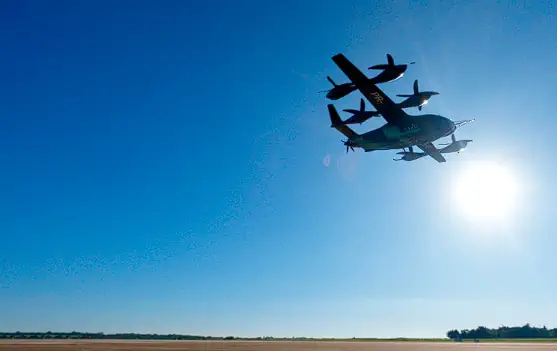
Walmart and its drone delivery partner Wing announced on June 10 that they will expand their delivery network to seven new metropolitan areas. The inclusion of Memphis drew immediate attention: just hours earlier that same day, Amazon had hosted a community open house in the city, parking an MK-30 drone at the Renasant Convention Center. The expansion by Alphabet-owned Wing will bring the Walmart–Wing partnership to nearly 20 U.S. markets and place Wing directly in airspace that Amazon is also actively pursuing.
The seven newly announced markets are Memphis, New Orleans, Philadelphia, Phoenix, San Diego, the San Francisco Bay Area, and Salt Lake City. Cincinnati is already in a pilot phase, continuing the partnership's existing footprint in Ohio. More broadly, the announcement marks the first time the two dominant players in U.S. drone delivery are moving simultaneously into the same cities — with a striking gap in their respective track records.
Walmart–Wing Delivery Count Dwarfs Amazon's
The Walmart–Wing partnership has now completed more than one million commercial deliveries, a figure that sets it apart from every other drone delivery program in the United States. The average delivery takes 23 minutes. The service is free for Walmart+ members and costs $19.99 for non-members.
The expansion follows a plan the two companies unveiled in January, targeting more than 270 sites serving over 40 million Americans by 2027. Phase one began rolling out from Houston in January 2026. Wing Chief Commercial Officer Heather Rivera noted that customers in existing markets are using the service more than once a week, and that Wing has already begun community outreach in all seven new markets.
In its announcement, Wing highlighted its regulatory advantages — citing a combination of advanced technical capabilities, FAA special airworthiness authorizations, and Walmart's retail footprint as forming a uniquely capable logistics network. A recently obtained FAA authorization to fly after sunset has extended Wing's operating hours. Wing's drones use a tether-lowering system to deliver packages directly to a yard or driveway without descending to ground level.
Memphis: The Clearest Head-to-Head
Memphis is the sharpest illustration of the emerging rivalry. Wing added it to its expansion list on June 10; the day before, Amazon had already staged a community event there. Neither company has announced a formal launch date for Memphis — both are still in the community engagement and market-preparation phase. Amazon has previously followed a similar "warm-up before launch" sequence in Baton Rouge, the Chicago suburbs, and other cities.
The two services do not compete on identical terms. Amazon Prime Air charges Prime members $4.99 per delivery, with a 5-pound weight limit and a 7.5-mile range. Wing is free for Walmart+ members, and its 23-minute average delivery time is drawn from actual completed flights, not a projected target. Amazon has promised sub-one-hour delivery, but the program's leadership acknowledged at a recent market briefing that actual delivery times are currently closer to two hours.
One model pairs a retailer with a specialist drone operator; the other has a retailer building and flying its own aircraft. Consumers in Memphis may ultimately have the rare opportunity to choose between the two — a situation almost unheard of in a country where most cities have yet to see even one drone delivery service.
Phoenix presents the same dynamic. Amazon has been serving the Tolleson area in the West Valley since November 2024; Wing has now added Phoenix to its expansion list. The overlap between the two services has moved from hypothetical to real.
A Wide Gap in Safety Records
The detail conspicuously absent from both press releases is the most consequential differentiator: safety records. Wing's one-million-plus deliveries stand alongside a string of incidents involving Amazon's MK-30 — a pattern not seen among other major operators.
In January 2025, Amazon suspended all U.S. drone operations after two MK-30s crashed at its Pendleton, Oregon test site. Investigators found that the drones' LiDAR sensors had misread altitude in light rain, causing software to cut power to all six rotors simultaneously; both aircraft were destroyed. After operations resumed in spring 2025, further incidents followed: the MK-30 struck a construction crane in Tolleson, Arizona in October; severed a utility cable in Waco, Texas in November; and hit an apartment building in Richardson, Texas in February 2026 — each incident triggering FAA scrutiny.
None of these events resulted in injuries, and property damage was limited. Nevertheless, a crane, a cable, and a building wall are all stationary objects. Amazon launched service in Kansas City just five days after the Richardson incident made national headlines, signaling that expansion velocity takes precedence over reputational management. By contrast, Wing's value proposition centers on reliability and repeat-use rates rather than hardware specifications.
DroneXL Perspective
For years, the central question in drone delivery was whether the technology could actually work at scale. The Walmart–Wing announcement, released one day after Amazon's Memphis community event, signals that question has largely been answered. The new question is: when two services arrive in the same city, which model wins on the ground?
Wing leads on delivery volume, with more than one million completed flights — but results in Dallas–Fort Worth, Houston, and Atlanta do not automatically translate to Memphis or Salt Lake City, where zoning rules, weather patterns, and consumer habits will require fresh adaptation. Amazon, for its part, has deeper capital reserves and has shown willingness to absorb per-flight losses.
Watch Memphis closely. Both companies have completed pre-launch groundwork there without announcing a go-live date, making it the most direct test case for both approaches. Whether Wing's reliability narrative or Amazon's financial firepower better converts into actual consumer preference remains an open question — but the answer will say more about the future of drone delivery than any single city expansion announcement.
Sources: WKBN, Wing
原文來源: 查看原文
FAQ
Newsletter
Subscribe to our Low-Altitude Industry Newsletter
Daily curated news on low-altitude economy and drone industry, delivered to your inbox.
Reviewed and published by the LAETimes editorial desk ·