Phoenix Joins Walmart Drone Delivery Network as Wing Plans Expansion to Nearly 20 U.S. Cities by 2027
Wing and Walmart have announced the addition of seven major metro areas — including Phoenix — to the largest drone delivery network in the United States. The phased rollout targets operational launch in all new markets by 2027, ultimately covering nearly 20 U.S. markets, more than 270 store locations, and over 40 million American consumers.
Highlights
- Wing and Walmart announced the addition of seven new metro areas — Memphis, New Orleans, Philadelphia, Phoenix, San Diego, the San Francisco Bay Area, and Salt Lake City — to their drone delivery network, targeting operational launch by 2027.
- The expanded network will cover nearly 20 U.S. markets, more than 270 Walmart store locations, and over 40 million American consumers, with an interim goal of 150 stores live by end of 2026.
- Wing has completed more than 1 million commercial drone deliveries to date, primarily in the Dallas–Fort Worth, Greater Houston, and Atlanta metro areas.
- Wing holds an FAA Part 135 Air Carrier certification — the first ever issued to a drone delivery operator — authorizing BVLOS flight and paid cargo transport.
- Walmart operates approximately 4,605 U.S. stores, with roughly 90% of Americans living within 10 miles of one, making each store a viable drone launch pad for short-range deliveries.
Phoenix is officially on the map. Wing and Walmart this week announced the addition of seven metropolitan areas to what is now the largest drone delivery network in the United States, with Phoenix, Arizona among the newly named markets.
The expansion will be rolled out in phases, with operations in all new markets targeted to launch by 2027. For Phoenix-area consumers, that means a tube of toothpaste or a phone charging cable could be dropping from the sky to their doorstep in under 30 minutes — in the not-too-distant future.
Seven New Markets, One Delivery Network
The seven newly added metro areas are: Memphis, New Orleans, Philadelphia, Phoenix, San Diego, the San Francisco Bay Area, and Salt Lake City. With these additions, the Wing–Walmart drone delivery footprint will expand to nearly 20 U.S. markets.
Back in January, the two companies had already outlined an ambitious blueprint: a delivery network spanning more than 270 store locations, with a target of reaching over 40 million American consumers by 2027. An interim milestone calls for 150 stores to be online by the end of 2026.
Phoenix is part of this broader buildout rather than a standalone launch. This week's announcement confirms market selection and intent — not the start of service in any specific neighborhood.
Walmart's Store Network Is the Real Foundation
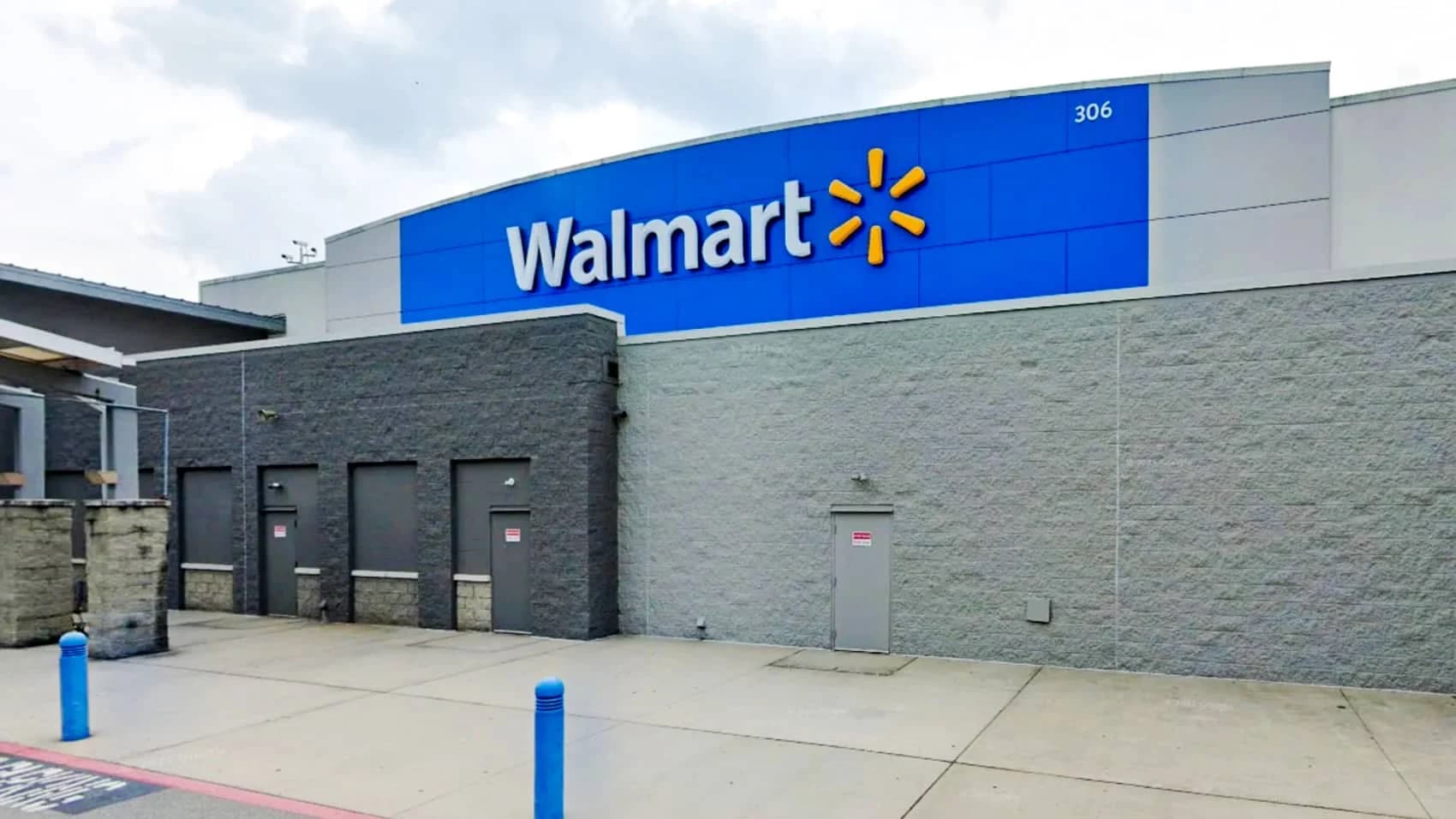
The core logic behind this ambition lies in Walmart's physical retail footprint. The company operates approximately 4,605 stores across the United States, and by its own estimates, roughly 90% of Americans live within 10 miles (16 km) of their nearest Walmart.
Each store becomes a drone launch pad, keeping most flights within short-range round-trip limits. That density is precisely what allows drones with an operational range of around 12 miles (19 km) to effectively cover an entire metro area. The store where you do your weekly shopping becomes the warehouse the drone takes off from.
How Wing's Delivery System Works
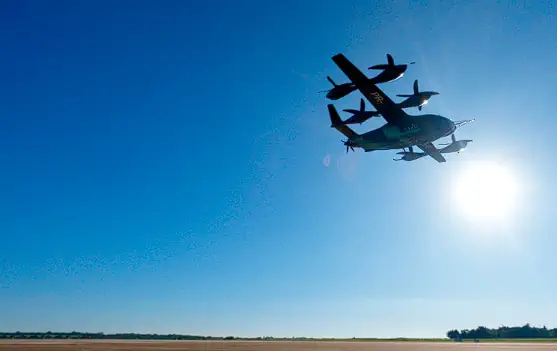
According to AZ Big Media, Wing operates a small family of aircraft rather than a single model. Its standard delivery drone carries up to 2.5 lbs (1.1 kg) of cargo with a round-trip range of approximately 12 miles (19 km); a larger variant introduced in early 2024 nearly doubles that payload capacity to 5 lbs (2.3 kg) to handle bigger orders.
Cruising speed reaches up to approximately 65 mph (105 km/h), though Walmart and Wing publicly quote a delivery speed of around 60 mph (97 km/h). More notable than the numbers, however, is the delivery method itself.
These drones do not land at your door. They hover at approximately 23 feet (7 meters) and lower packages via a thin tether to a yard or driveway, then release. If the line catches on anything, it is designed to snap free, keeping the aircraft safe.
For the consumer, the experience is designed to be as uneventful as possible. You place an order through the app, the drone takes off from a nearby store, and minutes later a package settles gently onto the lawn — no driver, no door-answering, no tip required.
None of this is improvised. Wing obtained its FAA Part 135 Air Carrier certification in April 2019 — the first such certification ever issued to a drone delivery operator — authorizing beyond visual line of sight (BVLOS) flight and the transport of paid cargo. That regulatory foundation is what separates an operational delivery network from a demonstration.
One caveat: current information does not specify which aircraft variant will operate in which city. Payload figures should be treated as platform-level capabilities, not Phoenix-specific guarantees.
Expanding After One Million Deliveries
This expansion does not start from zero. Wing's delivery network has now completed more than one million commercial deliveries, concentrated primarily in the Dallas–Fort Worth, Greater Houston, and Atlanta metro areas. Walmart crossed that same million-delivery milestone earlier this year — a figure that looks less like a pilot program and more like mature infrastructure.
The vast majority of those flights took place in suburban environments with yards and driveways — the ideal setting for Wing's tether-drop system. Phoenix, with its sprawling low-density single-family housing, fits that profile well.
Delivery items skew toward small, time-sensitive goods: last-minute grocery items, over-the-counter medications, electronics accessories, and household essentials drawn from Walmart's vast product catalog. The common denominator is weight — if it fits within the payload limit and the customer needs it quickly, it is a candidate.
"Customers expect their orders to be delivered as fast and conveniently as they need them," said Greg Cathey, Senior Vice President of Walmart U.S. eCommerce Logistics Transformation. Shoppers can place orders through the Wing app, the Walmart app, or Walmart.com, and can check eligibility before service officially launches in their area.
What Phoenix Residents Should Realistically Expect
Phoenix residents should not expect drones over their rooftops tomorrow. Wing has described a phased launch plan targeting full operations across all seven metro areas by 2027, and the company has not announced specific go-live dates for individual store locations.
Desert heat, dense suburban airspace, and local permitting processes will all affect how quickly individual communities come online. These are real variables, not press-release footnotes.
What is certain is the direction: Phoenix is now formally part of the largest retail drone delivery program in the United States — no longer a "maybe" on a slide deck.
Editor's Take
What is genuinely remarkable is not just the speed of delivery, but how quickly all of this has arrived. A few years ago, placing an order meant waiting days, paying a premium for expedited shipping, or waiting even longer without it. Now you tap to buy a pack of batteries, and the package is buzzing over your back fence before the payment has fully processed.
One million deliveries is no small number. Even by conventional means — people and trucks on the ground — a million deliveries is a significant milestone. Achieving it by air, in record time, is a different category of achievement entirely.
But the more striking point is not the delivery time — it is that none of this works without 4,605 stores positioned where Americans actually live. The drone is the magic trick. The store network is the magician.
From a pilot's perspective, there is one issue worth watching closely. These aircraft operate in the same low-altitude airspace — below 400 feet (approximately 120 meters) — used by recreational drone flyers. When someone is flying a Mavic Mini at that altitude and a delivery drone comes through the same corridor, what happens? There are no horns to honk, no hands to wave. How that shared airspace gets managed is one of the more important questions drone traffic management will need to answer.
原文來源: 查看原文
FAQ
Newsletter
Subscribe to our Low-Altitude Industry Newsletter
Daily curated news on low-altitude economy and drone industry, delivered to your inbox.
Reviewed and published by the LAETimes editorial desk ·