WDMMA 2026 Global Air Power Rankings: US Army Outranks China's PLAAF — Here's Why
The World Directory of Modern Military Aircraft (WDMMA) has released its 2026 rankings covering 129 air arms across 103 countries. The US Air Force tops the list with a TruVal Rating (TVR) of 242.9, while the US Army Aviation scores 112.6 to claim fourth place — nearly double China's People's Liberation Army Air Force (PLAAF), which scores 63.8 in seventh. WDMMA cites combat experience, logistics, fleet balance, and readiness rates as key metrics, but acknowledges UAV integration has yet to be factored into its scoring.
Highlights
- WDMMA 2026 ranks 129 air arms across 103 countries, with the US Air Force topping the list at a TVR score of 242.9.
- US Army Aviation ranks fourth with a TVR of 112.6 — nearly double China's PLAAF score of 63.8 in seventh place — despite having zero fixed-wing combat aircraft.
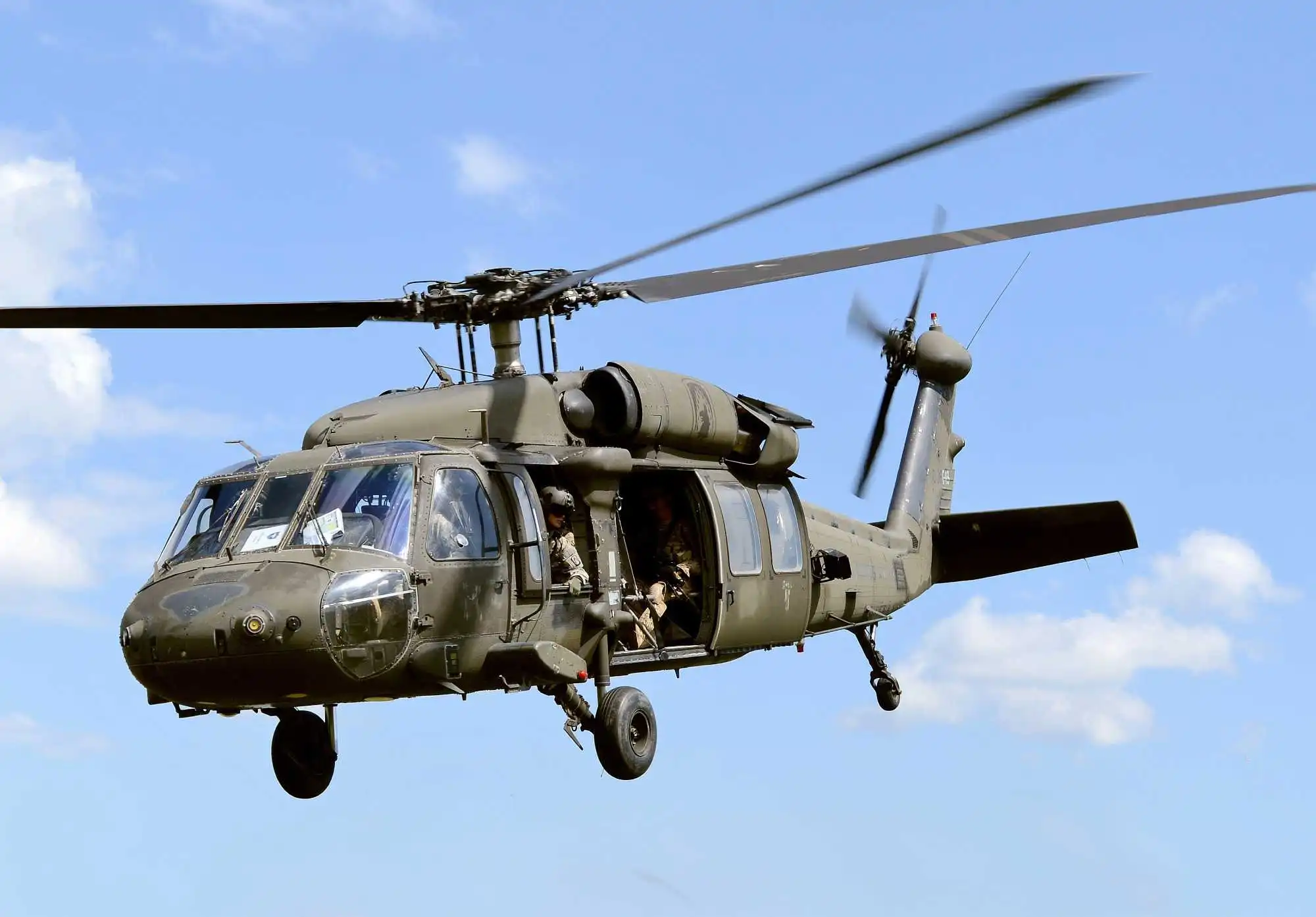
- 94% of the US Army's 4,333-strong active inventory consists of helicopters, including 2,299 UH-60 Black Hawks and 824 AH-64 Apache attack helicopters.
- The PLAAF's lower score is attributed to its high proportion of trainers (28% of fleet), mixed-generation aircraft, and a lack of large-scale combat experience since the 1979 Sino-Vietnamese War.
- WDMMA acknowledges its ranking formula has not yet incorporated UAV integration, a significant omission given the PLAAF's rapid drone expansion.
The World Directory of Modern Military Aircraft (WDMMA) has published its 2026 rankings, offering a comprehensive assessment of global air power. This edition covers 129 air arms across 103 countries, systematically mapping each force's strengths and weaknesses.
WDMMA employs a sophisticated formula to evaluate the overall operational capability of air forces worldwide, weighing not only total combat strength but also modernisation levels, logistical support, and both offensive and defensive capabilities.
Through these metrics, WDMMA produces an authoritative TruVal Rating (TVR) for each air arm — a score that looks beyond sheer aircraft numbers to assess actual quality, overall fleet balance, and mission-specific effectiveness.
Overall Rankings at a Glance
The US Air Force (USAF) comfortably claims the top spot with a TVR of 242.9. The US Navy ranks second, the Russian Aerospace Forces third, US Army Aviation fourth, and the US Marine Corps fifth — meaning four of the top five positions are held by branches of the United States military.
China's People's Liberation Army Air Force (PLAAF) sits in seventh place, behind India's Air Force (IAF) in sixth. Despite positioning itself as a near-peer rival to the USAF, the PLAAF trails not only the US Air Force and Navy, but also the US Army and Marine Corps.
Why Does US Army Aviation Outrank the PLAAF?
US Army Aviation holds a TVR of 112.6 compared to the PLAAF's 63.8 — nearly twice the score.
The US Army operates 4,333 aircraft on active inventory versus the PLAAF's 3,733. Notably, the US Army outranks the PLAAF despite having zero fixed-wing combat strike aircraft — 94% of its inventory consists of helicopters.
According to the WDMMA database, the US Army fields 4,071 helicopters (2,167 available at 50% readiness; 3,466 at 80% readiness), along with 152 transport aircraft, 88 special-mission aircraft, and 22 trainers, with 226 new helicopters on order.
Key US Army Helicopter Types
UH-60L/M Black Hawk (2,299 aircraft) The UH-60L and UH-60M are advanced variants of the legendary Sikorsky UH-60 Black Hawk medium utility helicopter, manufactured by Lockheed Martin. Both are twin-engine platforms engineered for durability in extreme environments, capable of troop transport, medical evacuation (MEDEVAC), and combat assault. Notably, four heavily modified stealth variants of the UH-60 Black Hawk were used in Operation Neptune Spear, the raid that killed Osama bin Laden.
AH-64D/E Apache (824 aircraft) The AH-64D and AH-64E are advanced variants of Boeing's AH-64 Apache — the primary twin-engine attack helicopter of the US Army and allied defence forces.
CH-47D/F Chinook (449 aircraft) Boeing's CH-47 Chinook is a tandem-rotor heavy-lift helicopter capable of delivering troops, artillery, supplies, and equipment to the battlefield, as well as performing MEDEVAC, aircraft recovery, parachute operations, search and rescue, disaster relief, firefighting, and heavy construction support.
UH-72A Lakota (391 aircraft) The UH-72A Lakota is a twin-engine light utility helicopter developed by Airbus Helicopters for the US Army. It supports training, search and rescue, reconnaissance, MEDEVAC, disaster response, firefighting, homeland defence, counter-narcotics, command and control, and VIP transport.
MF-47D/E/G Multi-Mission Helicopter (61 aircraft) The MF-47 is a variant of the classic CH-47 Chinook — a tandem-rotor heavy-lift helicopter optimised for combat, transport, and clandestine operations.
AH/MH-6M Little Bird (47 aircraft) The AH/MH-6M Little Bird is a highly modified light special operations helicopter widely used by the elite 160th Special Operations Aviation Regiment (160th SOAR), nicknamed the "Killer Egg." It comes in two mission configurations: the unarmed MH-6M (rapid personnel insertion/extraction) and the heavily armed AH-6M (close air support light gunship).
Overall, US Army Aviation fields attack, multi-mission, heavy/medium transport, special-mission, and utility helicopters, forming a lethal and highly balanced force.
PLAAF Fleet Composition
The PLAAF operates 3,733 aircraft in total, comprising 1,975 combat aircraft, 1,060 trainers, 270 transport aircraft, 209 bombers, 125 special-mission aircraft, 68 helicopters, and 26 tankers.
Among the 1,975 combat aircraft, the main types include: J-10C (588), J-7 (289), J-16 (280), J-20 (210), J-11 (205), JH-7A (200), Su-30 (97), J-8 interceptor (50), Su-27 (32), and Su-35 (24). The fleet also includes 209 H-6 bombers and 68 helicopters.
Key Factors Behind the PLAAF's Lower Score
High Proportion of Trainers: Nearly 28% of the PLAAF's total inventory — 1,060 aircraft — consists of trainers, which contribute little to overall combat power.
Mixed Generation Fleet: While the PLAAF operates 210 fifth-generation J-20s and 588 fourth-generation-plus J-10Cs, it also retains ageing types such as the Su-27, J-7, and J-11.
Lack of Combat Experience: Although the J-10 saw limited action during the 2025 India-Pakistan conflict, the J-20, J-11, J-16, and J-8 have never been tested in actual combat, leaving their real-world performance uncertain. The PLAAF's last large-scale combat engagement was the 1979 Sino-Vietnamese War, and even then operations were largely limited to defensive sorties within Chinese airspace.
IAF Overtakes PLAAF on Combat Experience: India's Air Force, ranked sixth, edged out the PLAAF in part due to its demonstrated performance during the brief May 2025 India-Pakistan conflict, during which the IAF struck 11 Pakistani air bases in a single night. Combat experience also permeates doctrine and pilot training curricula — with the PLAAF having been absent from significant combat for over half a century, the quality of new pilot training is inevitably affected.
Logistics and Industrial Support: US logistics, maintenance standards, training infrastructure, and industrial base all receive high marks. WDMMA's formula rewards balanced, sustainable forces with high readiness rates.
Limitations of the Rankings
WDMMA itself acknowledges that UAV (drone) integration has not yet been incorporated into its evaluation.
The WDMMA formula also shows a clear bias towards rotary-wing assets, which can distort comparisons between fundamentally different types of air arms. Because the system places considerable weight on helicopter fleet size, readiness, and diversity, army aviation units — such as US Army Aviation — tend to score higher than air forces focused on strategic and fixed-wing capabilities.
As a result, the US Army, with its thousands of attack, utility, and heavy-lift helicopters, achieves a ranking that arguably overrepresents its value in the absence of strategic bombers, long-range fighters, or significant power-projection assets.
In a high-intensity conflict — particularly in the Indo-Pacific — strategic depth, fifth-generation stealth fighters, long-range precision strike, integrated air defence systems, and a rapidly expanding UAV/drone capability (areas where the PLAAF has invested heavily) may prove far more decisive than a helicopter-centric force structure.
The PLAAF fields strategic bombers, fifth-generation stealth fighters, and long-range missiles. Beijing is also rapidly modernising its air arm and integrating drones into its operational framework. While WDMMA's rankings may show US Army Aviation performing better than the PLAAF within its specific scoring framework, this does not mean the PLAAF is an overall weaker or less capable air power.
Author Sumit Ahlawat has over a decade of journalism experience, with tenures at Press Trust of India, Times Now, Zee News, the Economic Times, and Microsoft News. He holds a Master's degree in International Media and Modern History from the University of Sheffield, UK.
原文來源: 查看原文
FAQ
Reviewed and published by the LAETimes editorial desk ·