America's Largest Drone Delivery Service Expands Again: Wing and Walmart Announce Seven New Markets
Walmart and Alphabet's Wing have announced an expansion of their drone delivery service into seven new markets — San Diego, Phoenix, Salt Lake City, New Orleans, Memphis, Philadelphia, and the San Francisco Bay Area. The partners aim to serve 20 markets covering 40 million residents, or roughly 10% of the U.S. population, by 2027.
Highlights
- Wing and Walmart announced expansion into seven new markets — San Diego, Phoenix, Salt Lake City, New Orleans, Memphis, Philadelphia, and the San Francisco Bay Area — targeting coverage of 20 U.S. markets and 40 million residents by 2027.
- Wing's cumulative commercial deliveries have surpassed one million, making it the second-largest drone delivery operator in the U.S. after Zipline.
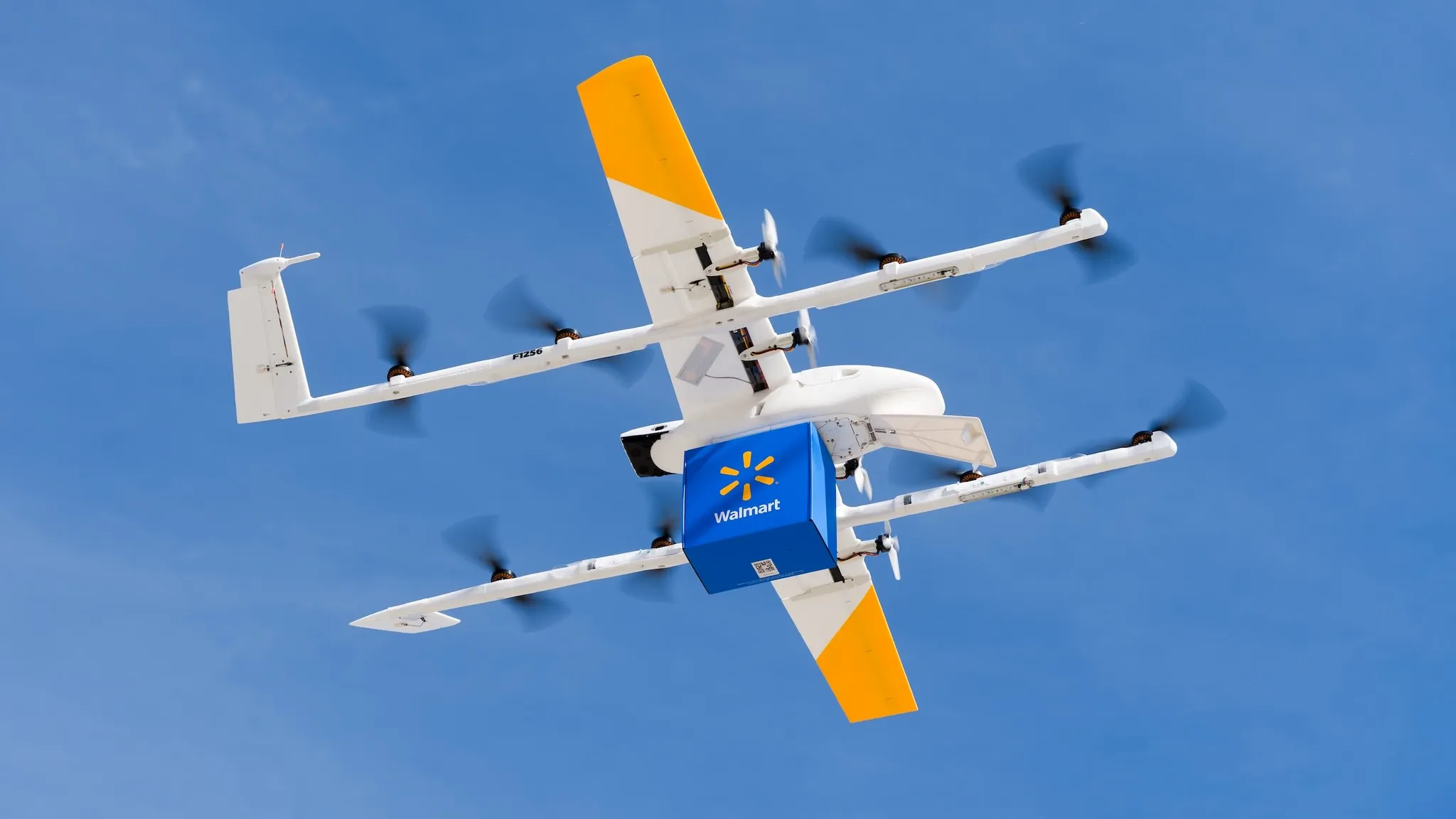
- Wing's drones fly at up to 96 km/h, carry a maximum payload of 2.3 kg, and can deliver within a 9.7 km radius in as little as 30 minutes.
- Wing's H2 2025 delivery volume was three times higher than H1 2025, reflecting rapid growth in the commercial drone delivery sector.
- FAA Part 108 rulemaking, which would streamline BVLOS certification for large-scale drone operations, has been delayed due to opposition from manned aircraft pilot organizations.
Walmart's partnership with Alphabet's Wing has produced the largest drone delivery operation in the United States — and the two companies are pushing further. This week they announced an expansion into seven new markets, building on existing operations in Texas and Georgia, as they press toward their stated goal of serving 10% of the American population by 2027.
In January, the pair announced drone delivery availability from 270 Walmart stores nationwide, with plans to extend service to Los Angeles, Miami, St. Louis, and Cincinnati. Those announcements followed earlier commitments to launch in Atlanta (which went live in December 2024), Charlotte, North Carolina (served via a Wing and DoorDash partnership), and Orlando and Tampa, Florida.
On Monday, Wing and Walmart confirmed the next wave of cities: San Diego, Phoenix, Salt Lake City, New Orleans, Memphis (Tennessee), Philadelphia, and the San Francisco Bay Area. Once the expansion is complete, the partnership will cover 20 markets — more than any other drone delivery operator currently active in the U.S.
Customers can check eligibility through the Walmart website or app based on their registered address. The companies say deliveries can be completed in as little as 30 minutes.
"We are already working with communities in seven new markets to accelerate our path to delivering super-fast drone delivery to 40 million Americans," said Wing Chief Commercial Officer Heather Rivera in a statement.
How Wing's System Works
Wing said Monday that its cumulative commercial deliveries have "well surpassed one million," placing it second only to medical and commercial drone delivery provider Zipline. Wing is one of a small number of operators holding an FAA Part 135 certificate, which authorizes commercial drone delivery operations.
The company says "millions" of people currently have access to its drone service. Wing's aircraft can fly at speeds of up to 96 km/h (60 mph) at an altitude of approximately 45 meters (150 feet), lowering packages via a tether onto a landing zone roughly the size of a picnic blanket. The drone has a wingspan of approximately 1.5 meters (5 feet), uses a hybrid vertical-lift and forward-flight propulsion design, carries a maximum payload of approximately 2.3 kg (5 lbs), and has a service radius of up to 9.7 km (6 miles). It can serve single-family homes, apartment buildings, and commercial delivery zones.
Wing operates under special waivers that permit beyond visual line of sight (BVLOS) flight without a dedicated ground observer. Flight planning, pre-flight checks, and airspace traffic management are partially or fully automated. Store employees place orders curbside, where Wing's Autoloader system automatically attaches packages to the drone's tether. The entire ground footprint requires only about the equivalent of two parking spaces.
Drone Delivery Continues Its Rapid Growth
Wing revealed in January that delivery volume in the second half of 2025 was three times higher than in the first half — a data point that underscores the explosive growth trajectory of the commercial drone delivery sector, a trend widely expected to continue.
The BVLOS waivers Wing currently relies on are set to be superseded once the FAA finalizes Part 108 rulemaking. Under the proposed Part 108 framework, operators would no longer need to apply for individual BVLOS waivers for each new market. Instead, they would obtain a blanket BVLOS certification by meeting industry-developed airworthiness, design, and testing standards. Certified operators would follow a new operational framework specifically designed to scale drone operations — one that reduces direct human oversight and increases automation compared with current requirements.
However, the FAA's timeline for finalizing Part 108 has slipped in the face of strong pushback from manned aircraft pilots. Some pilots have objected to proposals that would grant drones right-of-way in certain scenarios and have argued that current technology is not mature enough to safely integrate drones into complex controlled airspace — restrictions that Part 108 also proposes to ease.
How the FAA responds to that feedback will have a direct bearing on how many customers operators like Wing will ultimately be able to serve.
原文來源: 查看原文
FAQ
Reviewed and published by the LAETimes editorial desk ·