Candy-Making Inspires Breakthrough: Caltech Creates World's First Cold Radium Molecules, Opening New Era in Quantum Research
A Caltech research team has successfully produced cold molecules containing radioactive radium for the first time, opening new avenues for exploring the matter-antimatter asymmetry of the universe. Inspired by candy-making techniques, researchers mixed radium with xylitol to safely handle the hazardous material, then used lasers in a tabletop apparatus to cool and precisely measure the molecules' quantum properties. The findings have been published in the journal Science.
Highlights
- Caltech physicist Nick Hutzler's team produced cold radium-containing molecules for the first time, publishing results in the journal Science.
- Radium's pear-shaped atomic nucleus amplifies symmetry-breaking signals relevant to the universe's matter-antimatter asymmetry.
- A candy-making-inspired technique — mixing radium with xylitol and water — was developed to safely handle the radioactive, highly reactive element.
- Molecules were cooled to −268°C in a helium-cooled tabletop apparatus, with a separate laser system measuring their quantum properties at high precision.
- The team is developing engineered molecular clocks, already tested on ytterbium molecules, with planned future application to radium-based quantum experiments.
A research team at the California Institute of Technology (Caltech) has successfully produced cold molecules containing the radioactive element radium for the first time, opening an entirely new avenue of research into why the universe is composed predominantly of matter rather than equal amounts of matter and antimatter.
The breakthrough allows scientists to prepare, cool, and precisely study radium-containing molecules using lasers in a tabletop laboratory apparatus. These molecules can serve as highly sensitive quantum probes capable of detecting faint signals that would hint at the existence of new particles or forces beyond the current framework of physics.
Scientists have long held that shortly after the Big Bang, matter and antimatter should have been produced in equal quantities. Because particles and their antimatter counterparts annihilate each other upon contact, physicists have struggled to explain why ordinary matter survived while antimatter almost entirely disappeared.
The Key Advantage of Pear-Shaped Nuclei
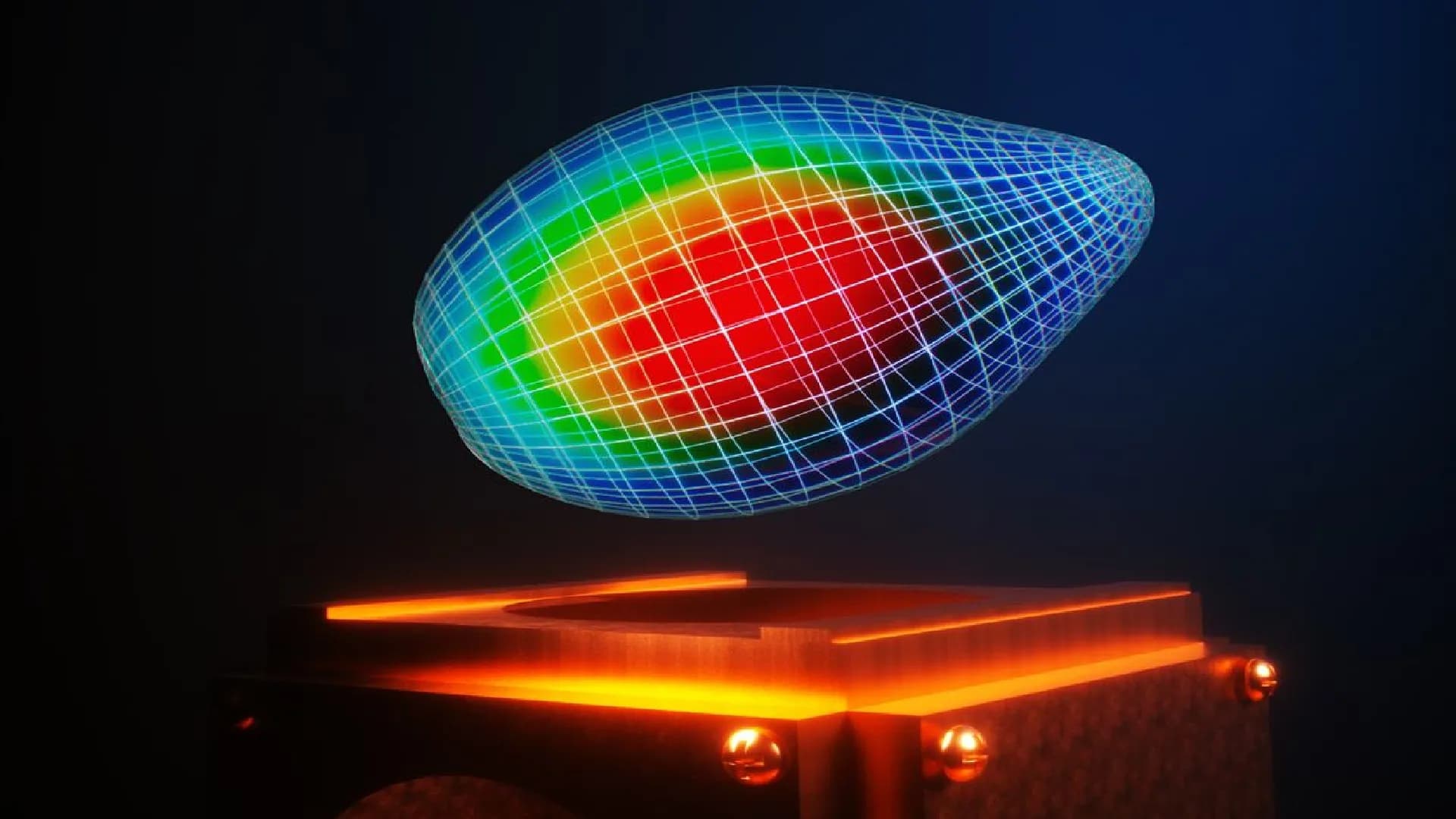
The research team, led by physicist Nick Hutzler, chose radium as their subject because of an unusual property of its atomic nucleus. Unlike most nuclei, which are nearly spherical, radium's nucleus is pear-shaped — a geometry that greatly amplifies the tiny symmetry-breaking effects researchers are trying to detect.
"The pear-shaped nucleus has an asymmetry that can dramatically amplify the potential signals we are looking for to explain the matter-antimatter asymmetry," Hutzler said.
"Most nuclei are spherical like an orange, or stretched in one direction like an American football. Radium has the rare pear shape that we need."
Working with radium, however, presents enormous challenges. The element is radioactive, highly reactive, and available only in vanishingly small quantities. To handle it safely, the team developed a method inspired by candy-making: radium is mixed with water and xylitol, a sugar substitute, and the liquid is then evaporated to produce a thick, stable substance that is easier to transport and handle.
The radium mixture is placed on a gold foil inside a helium-cooled chamber chilled to approximately −268°C (−450°F). Lasers then excite the radium atoms into a chemically active state so that they form molecules. A separate laser system measures the quantum properties of these molecules with high precision.
A New Tool for Precision Measurement
Hutzler noted that developing the full workflow required years of iterative testing. "How do you start from a small piece of radium and make cold molecules suitable for a tabletop quantum experiment? It took us many years of repeated attempts to finally establish a complete process for handling radium, making molecules, detecting them, and measuring their properties," he said.
The potential applications of this technique extend beyond radium. The researchers say the same approach can be adapted to produce other heavy radioactive molecules for precision quantum experiments.
The team is also developing "engineered molecular clocks" — a method designed to reduce the noise that typically interferes with precision quantum measurements. This technique has already been tested on ytterbium-containing molecules and is expected to be applied to radium research in the future.
"Our goal is to use these extraordinarily complex molecules to build the best possible quantum tools. We are engineering molecules to achieve precise quantum control," Hutzler said.
The research has been published in the internationally leading academic journal Science.
原文來源: 查看原文
FAQ
Newsletter
Subscribe to our Low-Altitude Industry Newsletter
Daily curated news on low-altitude economy and drone industry, delivered to your inbox.
Reviewed and published by the LAETimes editorial desk ·