Netherlands Bets €30 Million on Drone Software Over Hardware in Landmark Intelic Deal
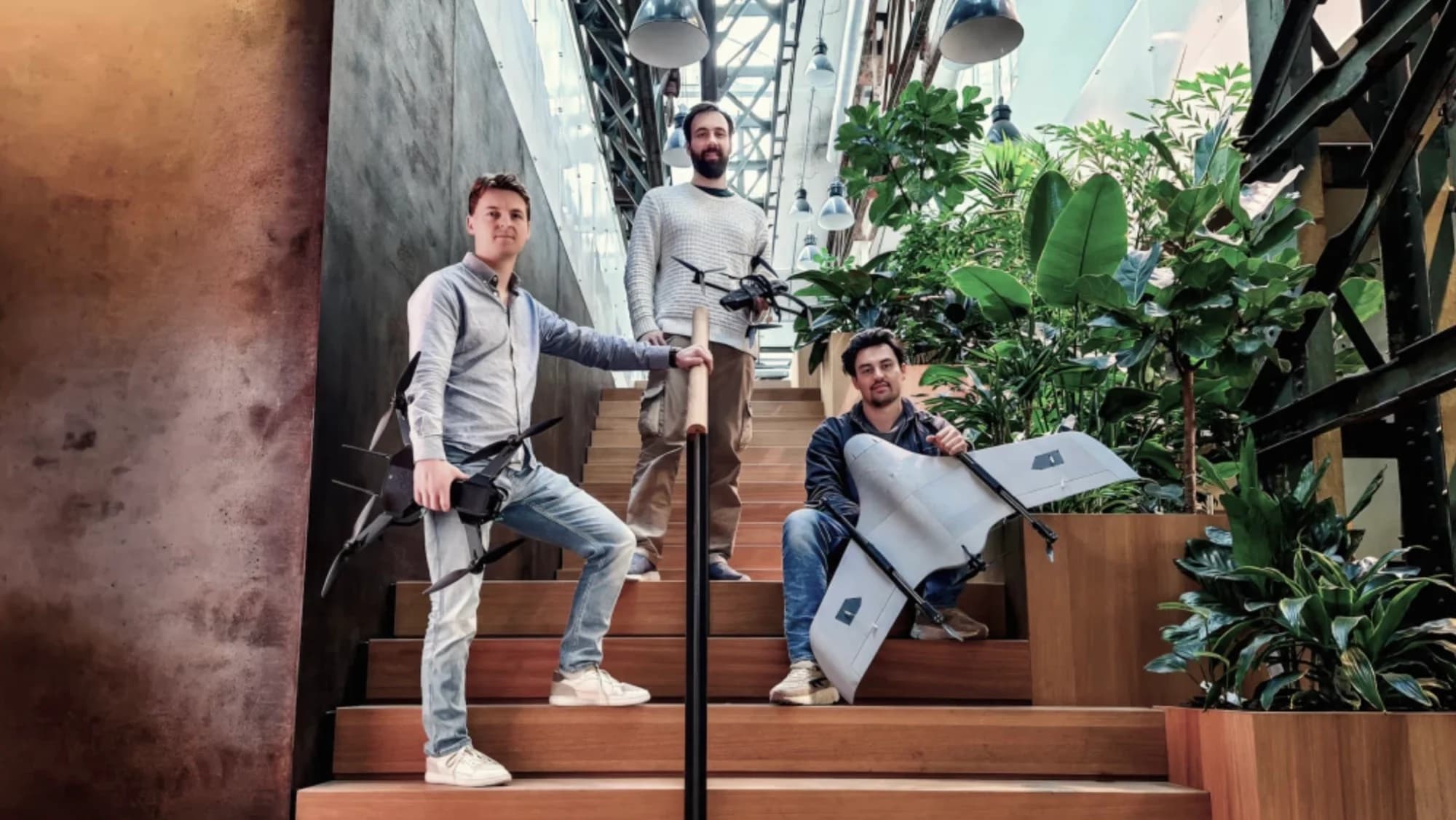
The Dutch Ministry of Defence has announced a three-year strategic partnership with Amsterdam-based software firm Intelic, valued at over €30 million. Intelic's NEXUS command-and-control platform integrates drones from multiple manufacturers into a single operational picture. The deal makes the Netherlands the world's first country to formally adopt a 'software-first' military drone procurement strategy, and the ministry is also exploring acquiring a 'golden share' in Intelic.
Highlights
- The Dutch Ministry of Defence announced a three-year strategic partnership with Intelic on July 3, investing over €30 million to make NEXUS the software backbone of the Netherlands' military drone fleet.
- The Netherlands is the world's first country to formally adopt a 'software-first' military drone procurement strategy, selecting a command-and-control layer before committing to specific airframe manufacturers.
- Intelic's NEXUS platform has been used in active combat in Ukraine since 2025, integrating drones from dozens of manufacturers including Gurzuf Defence's Heavy Shot and Skyeton's Raybird.
- The Dutch Ministry of Defence is evaluating acquiring a golden share in Intelic — which would be the first time the ministry has ever held a stake in a private company — to prevent foreign acquisition.
- The Netherlands aims to have more than 50% of its combat capability delivered by drones within five years, and signed a €200 million joint drone production deal with Ukraine in October 2025.
The Dutch Ministry of Defence has announced an investment of over €30 million in Amsterdam technology company Intelic, with the two parties formally announcing a three-year strategic partnership on Friday, July 3. Intelic's NEXUS command-and-control software enables drones from different manufacturers to operate together within a single common operating picture. The Netherlands has thereby become what Intelic describes as the world's first country to formally adopt a 'software-first' strategy for military drone procurement — establishing a software connectivity layer before selecting airframes.
DroneXL has been tracking the company since spring of this year. When this publication reported on Intelic's launch of the BASE drone marketplace platform on May 6, the company was in the process of finalizing its first cooperation agreement with the Royal Netherlands Army. Just eight weeks later, that pilot collaboration has been elevated to a formal national strategic partnership, covering the software infrastructure underpinning the Netherlands' entire future military drone fleet.
One detail that appeared in Dutch domestic media but was absent from international wire reports: the Ministry of Defence is evaluating the option of acquiring a 'golden share' in Intelic — which would be the first time the Dutch Ministry of Defence has ever held a stake in a private company.
NEXUS: Putting Competing Drones on the Same Command Screen
NEXUS is Intelic's command-and-control platform, capable of integrating unmanned and ground systems from different manufacturers into a single mission environment. Under the newly signed partnership agreement, NEXUS will serve as the software backbone of the Netherlands military's overall unmanned systems strategy for the next three years.
Intelic says the company will work directly with the Ministry of Defence to jointly develop and continuously evolve an architecture that integrates aerial and ground robots within a single operational environment, while reducing deployment timelines and operator training costs. Reuters correspondent Bart Meijer was first to report the deal on July 3.
Intelic CEO Maurits Korthals Altes noted that Europe now has more than 700 drone manufacturers, with the number continuing to grow. For defence procurement authorities, he argued, "the challenge is no longer acquiring technology, but ensuring that these technologies can work together." In his framing, military advantage now derives from the software that connects different platforms, not from procurement contracts that lock governments into a single system.
A note on sourcing: some early aggregated reports incorrectly identified Intelic as a Ukrainian developer. The company is Dutch, founded in Amsterdam in 2021 under the name Avalor AI before pivoting to focus on the defence sector.
Ukraine's Battlefield Wrote the Requirements Document
The Dutch Ministry of Defence stated that the necessity of interoperability has been validated on the front lines in Ukraine. NEXUS has been used in active combat since 2025, with operators having to solve integration problems involving drones from dozens of manufacturers in the field — not in a procurement office.
Dutch Defence State Secretary Derk Boswijk drew directly on lessons from the war: "It's not just hardware — software matters enormously too." He added that enabling different drone systems to operate together reduces the burden on operators. According to earlier reporting by Defense News, NEXUS has been running on Gurzuf Defence's Heavy Shot attack drone, and Intelic is working to integrate its software with Skyeton's Raybird reconnaissance platform.
The agreement also fits within the broader context of the Netherlands' large-scale pivot toward unmanned systems. The Dutch Ministry of Defence aims to have more than half of its combat capability delivered by drones within five years. The Netherlands also signed a €200 million joint production agreement with Ukraine in October 2025, with mass production of drones to take place at the VDL factory in Borne.
Golden Share: Making Intelic National Strategic Infrastructure
Boswijk told Het Parool that the Ministry of Defence is jointly evaluating with the Ministry of Finance the option of acquiring a golden share in Intelic. A golden share is a special class of share that grants the holder veto rights over certain company decisions — and this would mark the first time the Dutch Ministry of Defence has ever held a golden share in a private company.
Boswijk described Intelic as "of critical importance" to the Dutch Ministry of Defence and said the two parties "have moved beyond the typical customer-supplier relationship." Intelic staff will participate in Dutch military exercises, refining the software alongside soldiers in field environments. This structural arrangement is designed to protect the company from foreign acquisition and ensure it remains rooted in the Netherlands. Boswijk raised the golden share concept last month as a mechanism for the state to gain stronger control over the domestic defence industry; Intelic will serve as the first test case for this policy.
Where the Pentagon Has Repeatedly Failed, the Netherlands Has Moved in Weeks
The United States has spent years and more than a billion dollars attempting to get drones from different vendors to operate together — interoperability failures were among the primary reasons the Pentagon's Replicator programme stalled, until an efficiency team took over the programme last autumn.
DroneXL reported in October that a Pentagon DOGE team took over the military drone programme following repeated integration failures under Replicator, and covered how Norway deployed NATO's first operationally tested drone swarm by iterating software directly with soldiers — without waiting for procurement paperwork. Auterion, another leading software-layer platform company in Europe, raised $130 million in September on the same premise: a single software stack compatible with any vendor's airframe.
The pattern is clear: the bottleneck in Western drone capability is no longer building flying hardware — it is making the hardware work together. The Netherlands has become the first government to make solving that problem the starting point of procurement, rather than an afterthought.
DroneXL Analysis
When this publication reported on Intelic's BASE platform launch in May, the core argument was that European drone hardware had become good enough — what was missing was a connectivity layer that could make it deployable across national boundaries. Eight weeks later, a NATO defence ministry has put more than €30 million behind that argument. By wartime standards, that is a remarkably fast endorsement.
The contrast with Washington is instructive. The U.S. response to drone security concerns has been to regulate hardware by country of origin — banning DJI and hoping the software problem would solve itself. The Hague's answer is to own the command layer, making the origin of the airframe a secondary concern. A sovereign, platform-agnostic command-and-control stack that can run Latvian interceptors, Slovak quadcopters, and Ukrainian strike drones on the same screen — and swap in better or cheaper hardware the moment it becomes available — represents a genuinely different conception of security. Hardware bans are, at best, a moat protecting a government's weakest domestic suppliers.
To be fair, the Netherlands has effectively replaced hardware lock-in with software lock-in to a single vendor. But the golden share is precisely the answer to that critique: when the state holds veto rights over its command-and-control supplier, the lock-in relationship becomes bilateral.
Two developments are worth watching, and both are active processes rather than speculation. First, the golden share: the Ministry of Defence and Ministry of Finance are actively evaluating the option, and if it goes through, a Dutch state stake in a defence technology company would signal that Europe has begun treating drone software the way it treats ports and power grids. Second, Intelic told Defense News in May that it was in discussions with several unnamed European defence ministries. Whether a second country signs a 'software-first' agreement will determine whether the Netherlands has pioneered a new procurement model or simply conducted a one-off experiment.
Sources: Intelic, Reuters, NL Times / Het Parool, Defense News.
DroneXL uses automated tools to assist with research and data queries. All reporting and editorial commentary is written by Haye Kesteloo.
原文來源: 查看原文
FAQ
Newsletter
Subscribe to our Low-Altitude Industry Newsletter
Daily curated news on low-altitude economy and drone industry, delivered to your inbox.
Reviewed and published by the LAETimes editorial desk ·