College Student Claims 500 MPH Jet Drone Built in Dorm Room — But FAA Regulations Say It Shouldn't Have Flown
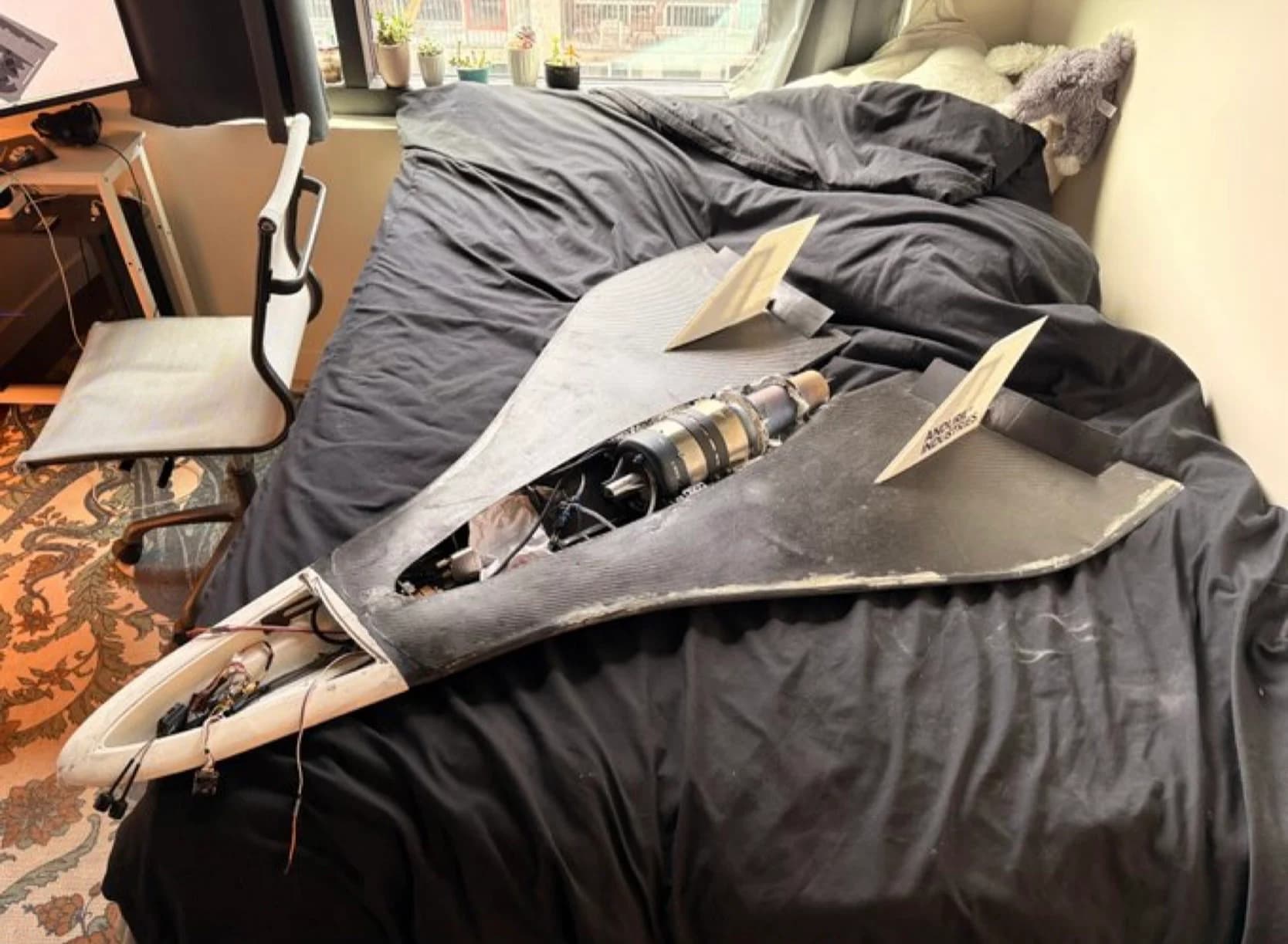
American college student Tomas Salvo claims to have built 'Reaper,' a 5 kg carbon-fiber delta-wing jet aircraft powered by a 250-newton turbine engine, in his dorm room. He says it can reach 500 mph (800 km/h). The post garnered over 700,000 views within hours, but the flights described appear to violate multiple FAA regulations, including speed limits and visual line-of-sight requirements.

Highlights
- Tomas Salvo在五個月內以約13,000美元在宿舍打造出5公斤碳纖維三角翼渦輪噴射機「Reaper」,X平台貼文數小時內突破70萬次瀏覽。
- Salvo宣稱Reaper時速可達500英里,超越德國飛手Niels Herbrich持有的465英里噴射動力RC飛機紀錄,但該數字目前無官方驗證。
- FAA Part 107規定無人機速度上限為100英里;AMA渦輪機豁免計畫上限為200英里,且均要求目視範圍內飛行,Salvo描述的飛行明顯違反這些規定。
- Boom Supersonic執行長Blake Scholl在貼文下留言表示欣賞並邀請私訊,顯示此專案已引起航空業界高層注意。
- Salvo的合作者在LinkedIn上透露,計畫前往莫哈維沙漠進行一次有完整文件佐證的正式破紀錄嘗試。
An American college student claims to have designed and built the world's fastest RC aircraft in his dormitory — and the build photos at least confirm the construction part is real. Tomas Salvo posted his creation, dubbed "Reaper," to X (formerly Twitter) late on July 1. The aircraft is a 5 kg carbon-fiber delta-wing jet powered by a 250-newton turbine engine, and Salvo claims it can reach 500 mph (approximately 800 km/h). The post accumulated more than 8,000 likes and 700,000 views within hours.
A closer read of the thread revealed two details worth noting before getting to the speed figures: the wingtip fins bear counterfeit "Anduril Industries" logos, and when someone asked where he sourced the turbine engine, Salvo quipped, "Email Anduril for money!" That joke took on a different dimension once the identity of one commenter became clear — Blake Scholl, founder and CEO of Boom Supersonic, wrote: "Congrats, this is awesome. DM me." Another commenter expressed interest in testing the design in Ukraine.
A Carbon-Fiber Jet Built in Five Months
Salvo says he began the project in February, meaning the entire build — from design to first flight — took roughly five months. Construction photos show a hand-laid carbon-fiber delta wing with internal carbon-fiber rib structure, two canted wingtip fins, a turbine engine integrated into the fuselage, and a nose section packed with electronics.
In exchanges with other builders, Salvo said he CNC-cut his own MDF molds and laid up the airframe by hand using two layers of twill carbon cloth in a wet layup process. On endurance, he admitted: "At full throttle, the plane has about 2 minutes of fuel," though he believes it could be stretched to around 15 minutes. He also noted that some flights covered more than 30 km total distance, with the aircraft flying 4–5 km away from him.
The 500 MPH Claim Versus Existing Records
The "world's fastest RC aircraft" claim comes with two important asterisks, as two verified records already exist. The fastest documented jet-powered RC aircraft is the "Inferno," flown by German pilot Niels Herbrich, which set a record of 465 mph (749 km/h) with a 7.5 kg turbine model. The outright RC aircraft speed record — covering all propulsion types — belongs to Spencer Lisenby's unpowered dynamic-soaring glider, which reached 548 mph in January 2021 at Parker Mountain, California, using wind shear without any engine.
If Reaper can genuinely sustain 500 mph, it would substantially surpass Herbrich's powered record but fall short of Lisenby's glider mark. The critical word, however, is "genuinely." Salvo's figures are self-reported: no timing gates, no official witnesses, no recognized record-attempt procedure. Herbrich's record was fully measured and verified. At minimum, a GPS log screenshot — which Salvo has yet to share publicly in the thread — would be needed to give the number basic credibility. He says flight footage including landing has been posted to LinkedIn and that a full build documentation will appear on X in the coming days.
A 500 MPH Hobby Jet Has Almost No Regulatory Path in the U.S.
U.S. regulations leave essentially no room for this type of flight, and commenters in the thread were quick to point that out. Under Part 107, the FAA caps small UAS groundspeed at 100 mph (87 knots). Recreational fliers operating under the FAA's recreational exemption must comply with a community-based organization's safety guidelines; the Academy of Model Aeronautics (AMA) turbine waiver program — currently the standard legal pathway for flying jet-powered models in the U.S. — requires a turbine exemption and caps speed at 200 mph. Both frameworks also require aircraft to remain within visual line of sight (VLOS), a requirement that a 5 kg jet flying 4–5 km away at 500 mph clearly does not meet.
These rules are anything but theoretical. As DroneXL reported earlier this week, a red-and-white RC aircraft was spotted near a JFK Airport approach path, making regulators and the public acutely sensitive to the boundary between hobby aircraft and airspace safety threats.
DroneXL Editorial Perspective
Two reactions need to be honestly separated here. From an engineering standpoint, this is genuinely impressive. A student who can CNC-cut his own molds, hand-lay a carbon-fiber airframe, integrate a turbine engine, and complete test flights within five months is exactly the kind of talent the U.S. drone industry claims it cannot find. The "Email Anduril for money" joke might actually work — Anduril has long argued that the U.S. needs to mass-produce affordable hardware, and a dorm-built jet with a budget of approximately $13,000 (the figure Salvo cited on LinkedIn) is more persuasive than most degrees.
That said: please don't be that person. Part 107's speed and VLOS rules are technically waivable, but the FAA has never approved a 500 mph BVLOS hobby flight waiver, and it certainly hasn't done so here. A report this week of a JetBlue flight crew spotting a suspected drone near JFK generated days of national coverage. Consider what a 5 kg, 500 mph carbon-fiber jet colliding with something biological would mean. Every reckless viral flight hands ammunition to the people who write the rules — rules that ultimately constrain everyone's freedom to fly.
The right move for Salvo — and this is genuine encouragement — is to make it official: conduct a recognized record attempt with calibrated timing equipment, witnesses, and full documentation. One of his collaborators mentioned on LinkedIn that a record-breaking run in the Mojave Desert is being planned. Good. Go somewhere remote, file the paperwork, and formally beat Herbrich's 465 mph record. That is the story worth reporting.
Source: Tomas Salvo on X
原文來源: 查看原文
FAQ
Newsletter
Subscribe to our Low-Altitude Industry Newsletter
Daily curated news on low-altitude economy and drone industry, delivered to your inbox.