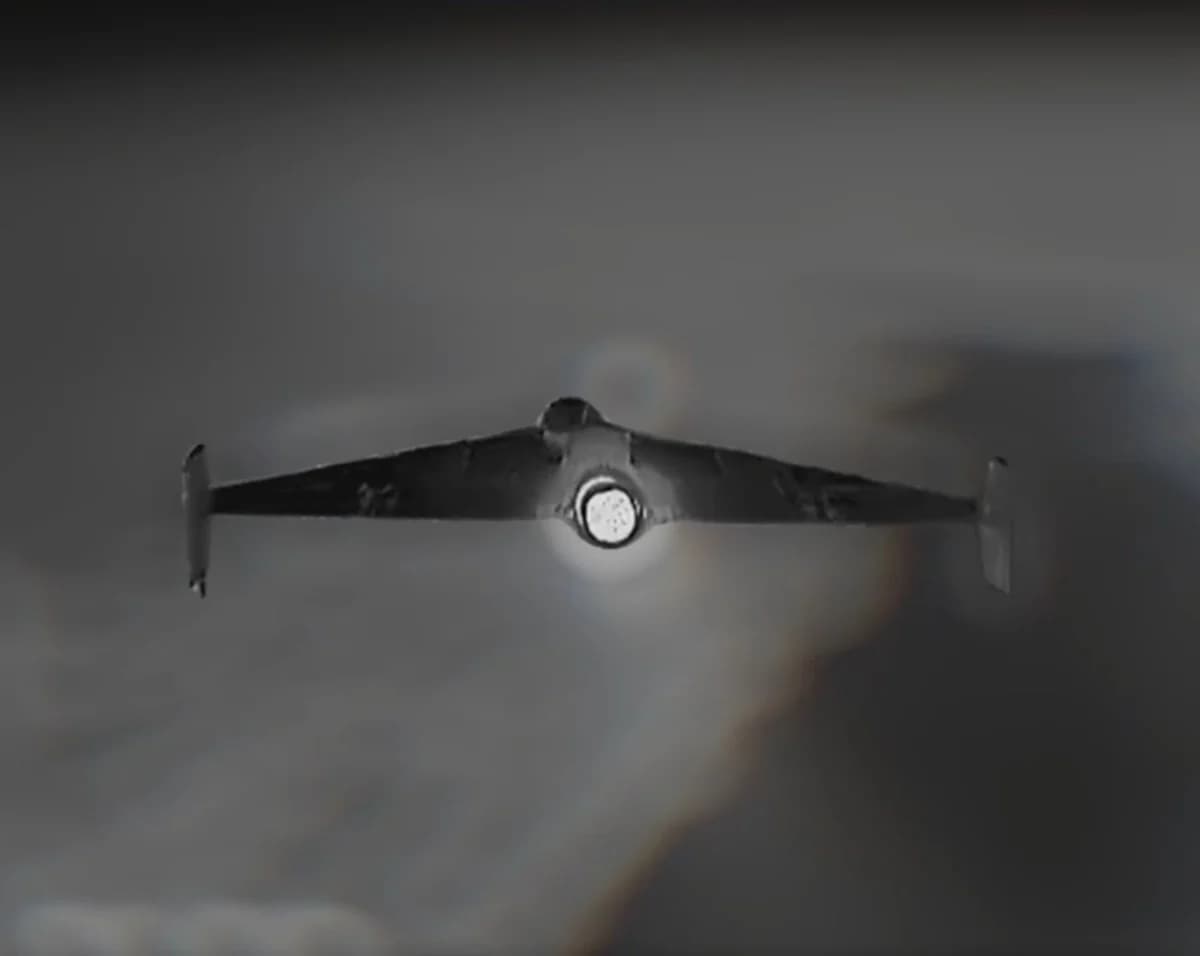
Ukraine's Autonomous Interceptor Drone Enters Combat: AI-Driven System Hunts Russian Shahed Loitering Munitions
Ukraine has reached a significant milestone in drone-vs-drone air defense: an autonomous interceptor drone has completed live combat testing, capable of automatically tracking and destroying Russian Shahed loitering munitions with minimal human intervention. The development marks a pivotal shift toward AI-driven aerial interception on the modern battlefield.

Highlights
- Ukraine has completed live combat trials of an autonomous interceptor drone that can detect, track, and destroy Russian Shahed loitering munitions with minimal human intervention.
- The system uses AI autopilot and computer vision to execute the full intercept sequence — from takeoff to target destruction — autonomously after receiving initial targeting data.
- Deploying low-cost autonomous interceptors against cheap Shahed drones directly addresses the cost asymmetry that arises when conventional missiles are used to counter mass drone strikes.
- The operational debut marks a pivotal transition of the drone-vs-drone air combat concept from theory to battlefield reality, with particular effectiveness in nighttime and low-altitude scenarios.
- Remaining technical challenges include electronic warfare resilience, multi-target coordination, and integration with existing air defense networks, but performance is expected to improve rapidly with AI advances.
Ukraine's Autonomous Interceptor Drone Enters Combat: AI System Hunts Russian Shahed Loitering Munitions
Ukraine has crossed a critical technological threshold in its air defense campaign against Russian drone strikes. An autonomous interceptor drone has completed live combat trials, demonstrating the ability to automatically detect, track, and destroy the Iranian-designed Shahed series loitering munitions — extensively deployed by Russian forces — with minimal human operator involvement.
Autonomous Interception Becomes Reality
The system's defining capability is its fully autonomous intercept mode. Unlike conventional air defense systems that require an operator to maintain continuous control, this interceptor is equipped with advanced AI autopilot and computer vision technology. Upon receiving target data, the drone can autonomously take off, search for, lock onto, and engage incoming Shahed drones. Human operators are only required to provide minimal oversight and authorization throughout the engagement sequence.
A Cost-Effective Answer to Drone Swarms
The breakthrough carries significant strategic weight for Ukraine. Russia has sustained a relentless campaign of mass Shahed strikes against Ukrainian territory, and intercepting each one with conventional surface-to-air missiles creates a severe cost asymmetry — the intercept routinely costs far more than the target itself. Deploying relatively low-cost autonomous interceptor drones against these loitering munitions is expected to dramatically reduce the financial burden on Ukraine's air defense network.
The Dawn of Drone-vs-Drone Air Combat
This development represents a landmark step in the transition of the "drone-vs-drone" air combat concept from theory to operational reality. Autonomous interceptors can complement traditional air defense layers while offering unique advantages in nighttime and low-altitude environments — precisely the conditions in which low-radar-cross-section, relatively slow-flying loitering munitions are most difficult to counter.
Technical Challenges and the Road Ahead
Despite the system's demonstrated promise, several technical hurdles remain. These include resilience against electronic warfare and jamming in complex electromagnetic environments, coordination for simultaneous multi-target interceptions, and integration with other air defense assets operating in friendly airspace. Nevertheless, with continued advances in AI and the accumulation of real-world combat experience, the reliability and effectiveness of such systems are expected to improve rapidly.
Ukraine's capacity for rapid drone technology innovation throughout the conflict has drawn intense attention from defense communities worldwide, offering a concrete reference point for the future evolution of air defense operations.
原文來源: 查看原文