The Hidden Planning Hurdle: UK Drone Delivery Could Stall Before It Even Starts
The UK drone delivery sector is heavily focused on airspace integration and detect-and-avoid technology, but industry observers warn that ground infrastructure and planning permission challenges may become critical bottlenecks before commercial operations can begin. The existing Town and Country Planning system was not designed for the drone age, leaving operators facing lengthy and uncertain approval processes for landing pads, charging facilities, and logistics hubs.

Highlights
- UK drone delivery operators face an overlooked bottleneck: planning permission for ground infrastructure such as landing pads and charging stations under the Town and Country Planning system.
- Local authorities currently lack standardised criteria for evaluating drone infrastructure applications, resulting in lengthy and uncertain approval timelines.
- Industry analysts warn that even fully developed airspace regulations and BVLOS approvals cannot enable commercial drone delivery if ground-level planning consent cannot be secured.
- Some UK drone operators have begun early-stage engagement with local planning authorities to establish precedent ahead of formal regulatory frameworks.
- Coordination between the UK Civil Aviation Authority (CAA) and local government is identified as a critical factor in determining whether drone delivery can commercialise on schedule.
The Hidden Planning Hurdle: UK Drone Delivery Could Stall Before It Even Starts
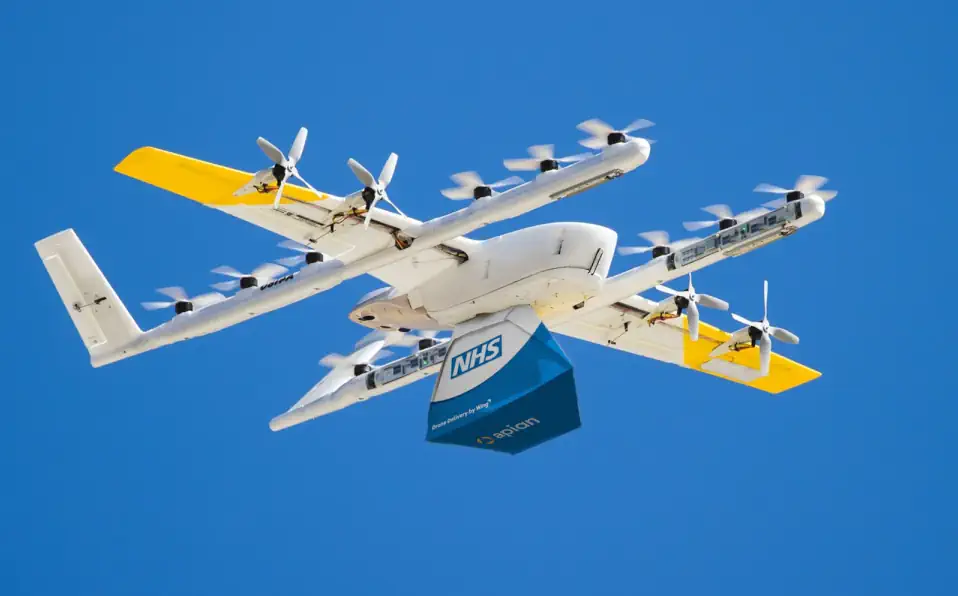
The UK drone delivery industry is channelling considerable energy into airspace integration, Detect-and-Avoid (DAA) technology, and beyond visual line of sight (BVLOS) regulatory frameworks. Yet industry observers are flagging an equally critical — and largely overlooked — challenge that could quietly derail commercial operations before they ever get off the ground: the planning permission and ground infrastructure problem.
A Blind Spot Beyond the Airspace
While attention remains fixed on flight corridor planning, Remote ID technology, and BVLOS regulations, the physical infrastructure that drone delivery networks depend on — landing pads, charging stations, and logistics hub facilities — has received far less scrutiny.
The UK's Town and Country Planning system was not designed with drone operations in mind. Approval processes for such facilities are complex and time-consuming, and local authorities lack standardised criteria for evaluating applications of this kind. The result is that operators face lengthy administrative procedures with highly uncertain outcomes.
Planning Permission as a Potential Chokepoint
Analysts warn that even if airspace regulations fall into place smoothly and drone technology reaches commercial deployment standards, a delivery network simply cannot be built if the landing and ground infrastructure cannot obtain lawful planning consent. This makes planning permission a potential weak link in an otherwise carefully constructed supply chain.
Some operators have already begun early-stage dialogue with local planning authorities, seeking to establish precedent before a formal regulatory framework takes shape. However, the industry's overall level of preparedness on this issue remains notably insufficient.
A Call for Early Action
Industry voices are urging policymakers to bring ground infrastructure firmly into the core agenda of drone policy discussions — before the sector finds itself in the frustrating position of having resolved its airspace challenges only to be blocked at ground level.
Coordination between the UK Civil Aviation Authority (CAA) and local government authorities is expected to be a decisive factor in whether drone delivery can achieve commercial scale on any realistic timeline. Without proactive engagement on the planning side, the industry risks clearing every hurdle in the sky only to stumble on the ground.
原文來源: 查看原文
FAQ
Newsletter
Subscribe to our Low-Altitude Industry Newsletter
Daily curated news on low-altitude economy and drone industry, delivered to your inbox.