Spanish Navy Successfully Tests Hornet Block 1 Interceptor Drone at Sea aboard Frigate F-81 Santa María
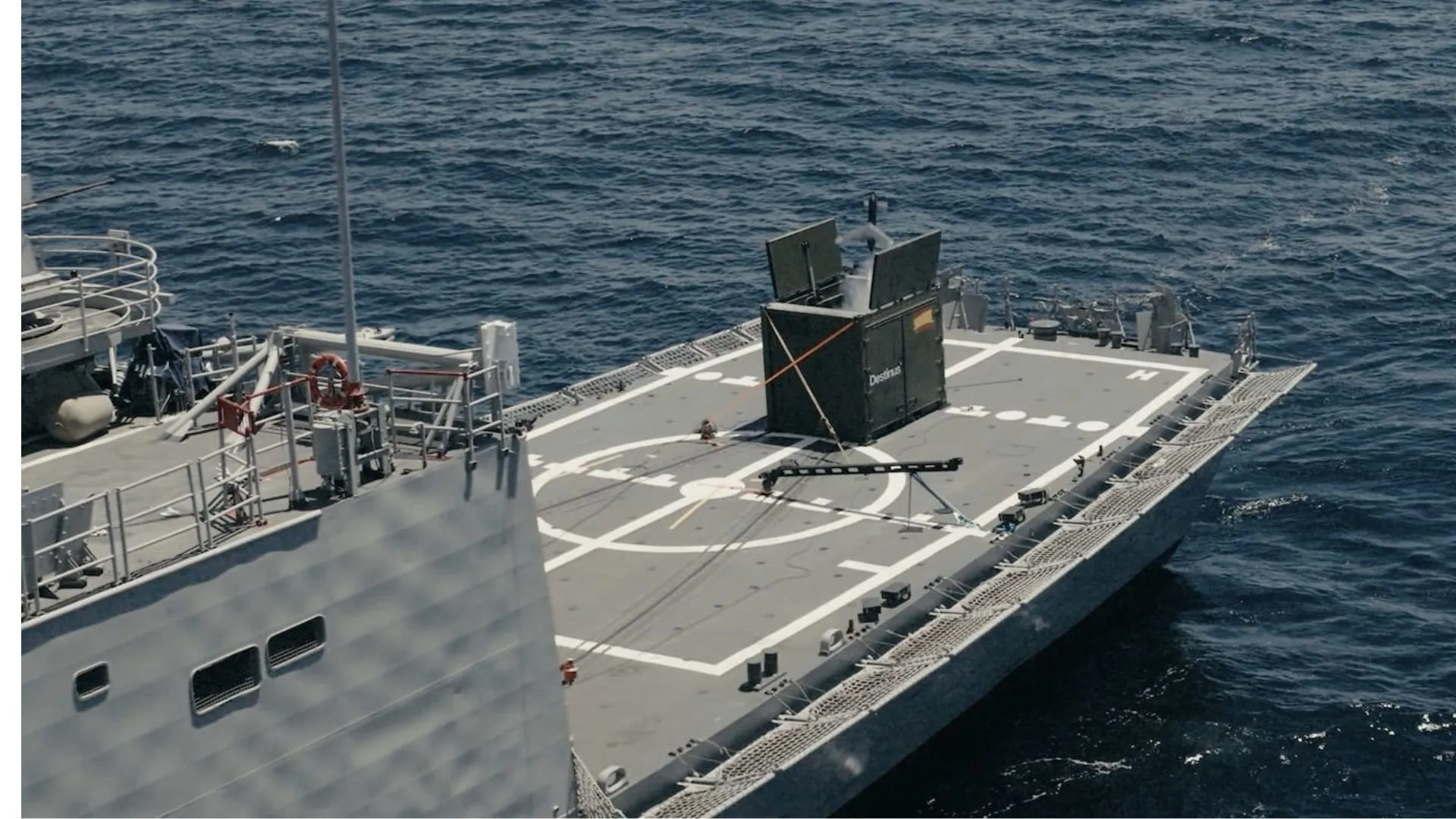
The Spanish Navy has successfully completed sea trials of the Hornet Block 1 interceptor drone aboard frigate F-81 Santa María. Developed by European defence-tech company Destinus, the system features a modular containerised launcher that integrates onto existing vessels with minimal modification, offering an intercept range exceeding 75 km and designed specifically to defeat subsonic drones and drone swarms.

Highlights
- The Spanish Navy successfully completed sea trials of the Hornet Block 1 interceptor drone aboard frigate F-81 Santa María, marking a milestone in naval counter-drone defence.
- Hornet Block 1, developed by Destinus, uses a modular containerised launcher that integrates onto existing vessels with minimal modification.
- The system offers an intercept range exceeding 75 km and is specifically optimised to defeat subsonic UAVs and coordinated drone swarm attacks.
- Dual-mode guidance — radar navigation in flight switching to onboard-sensor autonomous engagement — maintains effectiveness even when GPS is jammed.
- Destinus is developing the Hornet Block 2, featuring longer range, a larger warhead, and AI-enabled collaborative multi-interceptor engagement.
Spanish Navy Successfully Tests Hornet Block 1 Interceptor Drone at Sea aboard Frigate F-81 Santa María
The Spanish Navy has successfully completed at-sea trials of the Hornet Block 1 interceptor drone, a system purpose-built to counter the growing threat posed by unmanned aerial vehicles (UAVs) and drone swarms. The test was conducted aboard frigate F-81 Santa María, marking a significant milestone in efforts to bolster naval defences against low-cost aerial threats.
During the demonstration, the Hornet Block 1 interceptor was launched from a containerised launcher temporarily installed on the vessel. Unlike conventional missile systems that often require extensive ship modifications, the Hornet concept centres on a modular launch container that can be integrated onto existing platforms with minimal changes. This approach allows navies to rapidly expand their defensive capacity without costly fleet-wide modernisation programmes.
Optimised to Intercept Subsonic Drones
Developed by European defence-technology company Destinus, the Hornet Block 1 has been specifically optimised to intercept subsonic drones and coordinated UAV attacks. The system is designed to provide surface vessels with a dedicated drone-defence layer, reducing reliance on expensive air-defence missiles to engage comparatively low-cost targets.
According to the company, the interceptor combines multiple guidance modes to ensure effectiveness in contested environments. Radar-based navigation is used during the flight phase, switching to an autonomous engagement mode supported by onboard sensors as the interceptor closes on its target. This design is intended to maintain full operational capability even when satellite navigation signals are jammed or disrupted.
Intercept Range Exceeding 75 km
One of the Hornet Block 1's key advantages is its relatively long intercept range, reported to exceed 75 kilometres. The interceptor carries a compact warhead designed to destroy drones and similar aerial targets while keeping the overall system cost-effective — a characteristic that makes it particularly well-suited to defending vessels against large-scale UAV attacks.
The successful validation aboard the veteran Santa María-class frigate is especially noteworthy given that the class has been in service for several decades. Choosing an older hull for the demonstration signals that comparable vessels could be retrofitted with enhanced counter-drone capability without major structural work, an attractive prospect for navies seeking affordable solutions.
Containerised Interceptors Gaining Momentum
Demand for counter-drone systems has surged in recent years as conflicts around the world continue to highlight the effectiveness of UAVs in both reconnaissance and strike roles. Navies are actively seeking ways to defeat large numbers of drones without depleting stocks of high-value missiles. Containerised interceptors such as the Hornet offer a viable solution, delivering a low-cost defensive option that can be deployed across a wide variety of platforms.
Destinus is also developing a more advanced successor, the Hornet Block 2, which is expected to feature extended range, a larger warhead, and expanded capabilities covering air-defence and precision-strike missions. The company says advanced networking technology and artificial intelligence (AI) will play a central role in enabling multiple interceptors to operate collaboratively in a swarm engagement.
原文來源: 查看原文
FAQ
Newsletter
Subscribe to our Low-Altitude Industry Newsletter
Daily curated news on low-altitude economy and drone industry, delivered to your inbox.