U.S. Army Activates 7th ID MDC-PAC to Overwhelm Adversaries with Drone Swarms in the Pacific
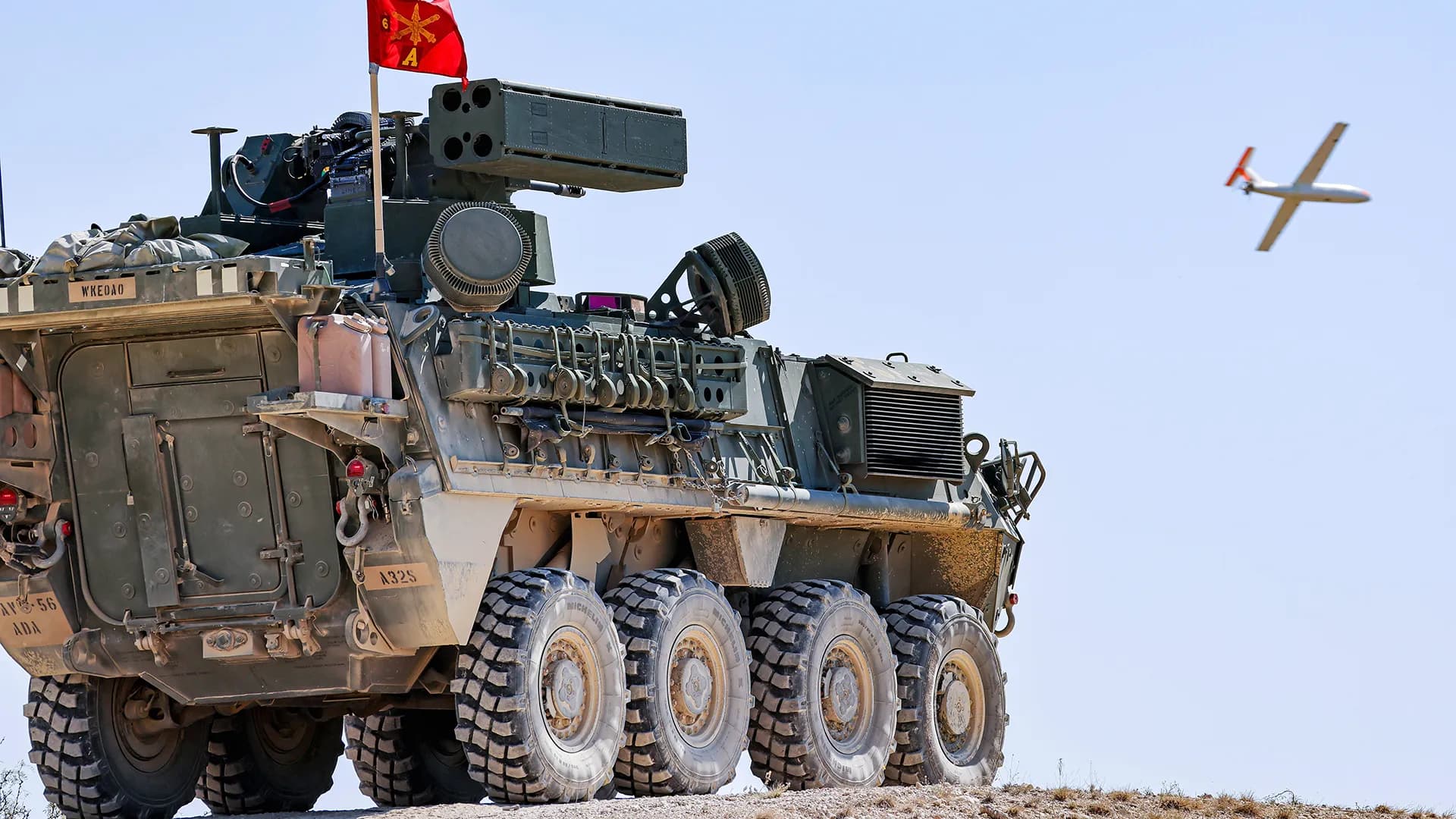
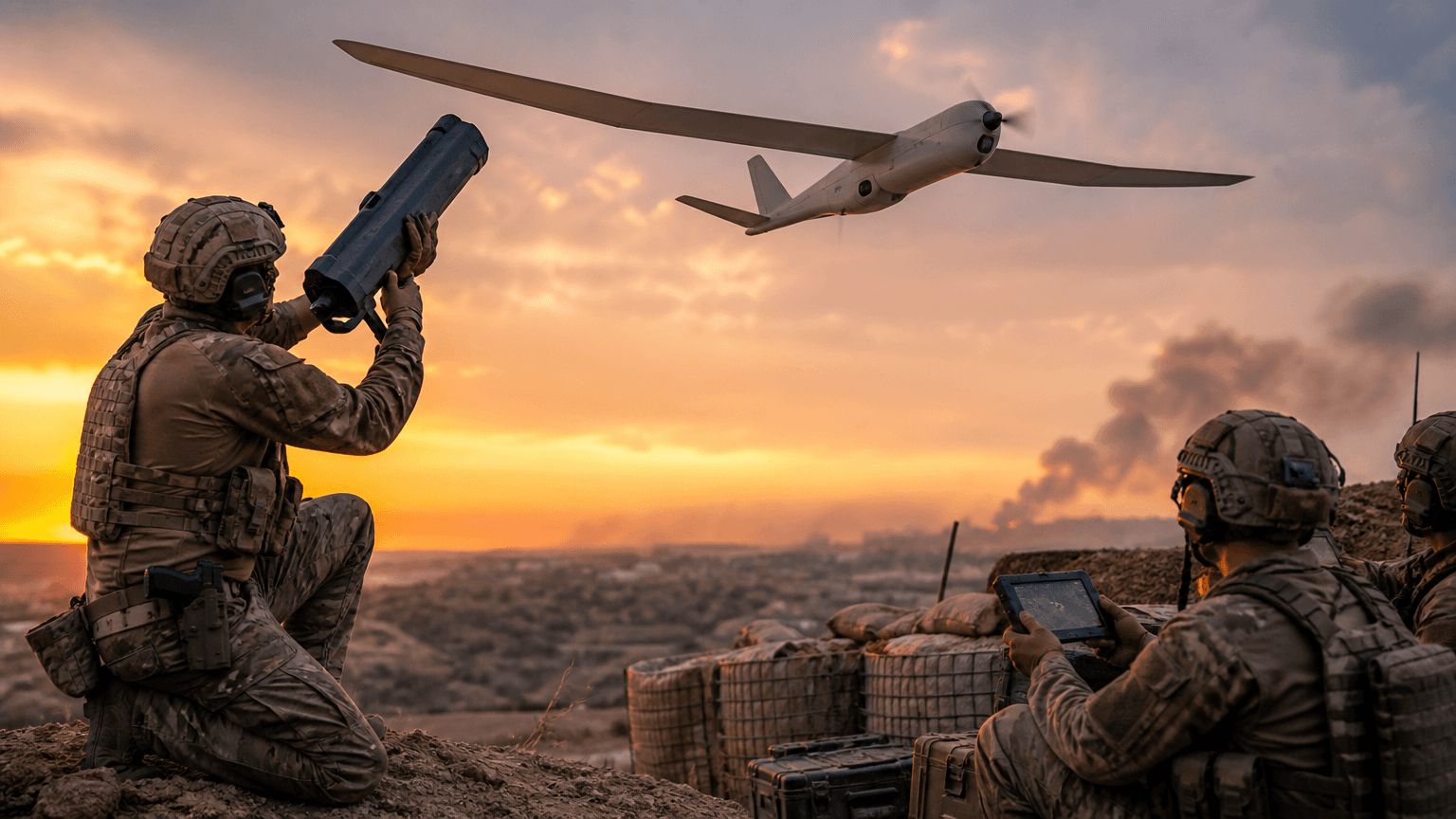
U.S. Army Pacific (USARPAC) officially activated the 7th Infantry Division Multi-Domain Command – Pacific (7th ID MDC-PAC) in April 2026, headquartered at Joint Base Lewis-McChord, Washington. The new command integrates Stryker Brigade maneuver capability with long-range fires, electronic warfare, and AI-driven autonomous C2 systems, aiming to saturate potential adversaries with large numbers of drones—including decoys—drawing heavily on lessons from the war in Ukraine.

Highlights
- USARPAC activated the 7th Infantry Division Multi-Domain Command – Pacific (7th ID MDC-PAC) in April 2026 at Joint Base Lewis-McChord, Washington, merging the 7th Infantry Division with the 1st Multi-Domain Task Force.
- Commanding General Maj. Gen. Bernard J. Harrington stated the command's goal is to flood adversaries with drones using an AI-driven 'adaptive and agentic C2' system operating on a 'soldier-on-the-loop' model.
- The command plans to integrate decoy drones to deplete adversary air defense stockpiles, mirroring tactics used in Ukraine by both Russia and Ukrainian forces.
- USARPAC Commander Gen. Ronald Clark described the Pacific operational area as equivalent in scale to all of Western Europe, spanning approximately 2,000 nautical miles from Cambodia east to the Philippines.
- Maj. Gen. James Bartholomees of the 25th Infantry Division acknowledged the U.S. Army is currently behind China in long-range sensing and drone-delivered effects, citing an urgent need to close the gap.
U.S. Army Activates 7th ID MDC-PAC to Overwhelm Adversaries with Drone Swarms in the Pacific
U.S. Army Pacific (USARPAC) officially announced the activation of a new command structure in April 2026, designed to accelerate response times and sustain continuous operations within the Pacific theater's anti-access/area-denial (A2/AD) environment. The command's general officer told media that his explicit goal is to ensure any future adversary is flooded with so many drones that effective operation becomes impossible.
Command Structure and Mission
The 7th Infantry Division Multi-Domain Command – Pacific (7th ID MDC-PAC), headquartered at Joint Base Lewis-McChord (JBLM), Washington, was formed by integrating the 7th Infantry Division with the 1st Multi-Domain Task Force (1st MDTF).
The core concept combines the ground maneuver capability of the 7th Infantry Division's two Stryker Brigades with the MDTF's long-range sensing, precision fires, cyber operations, space, electronic warfare (EW), and information operations capabilities.
Commanding General Maj. Gen. Bernard J. Harrington said at a media roundtable: "What we've learned from Ukraine is that almost no location is immune from observation or attack. True sanctuaries no longer exist."
AI-Driven 'Agentic' Command and Control
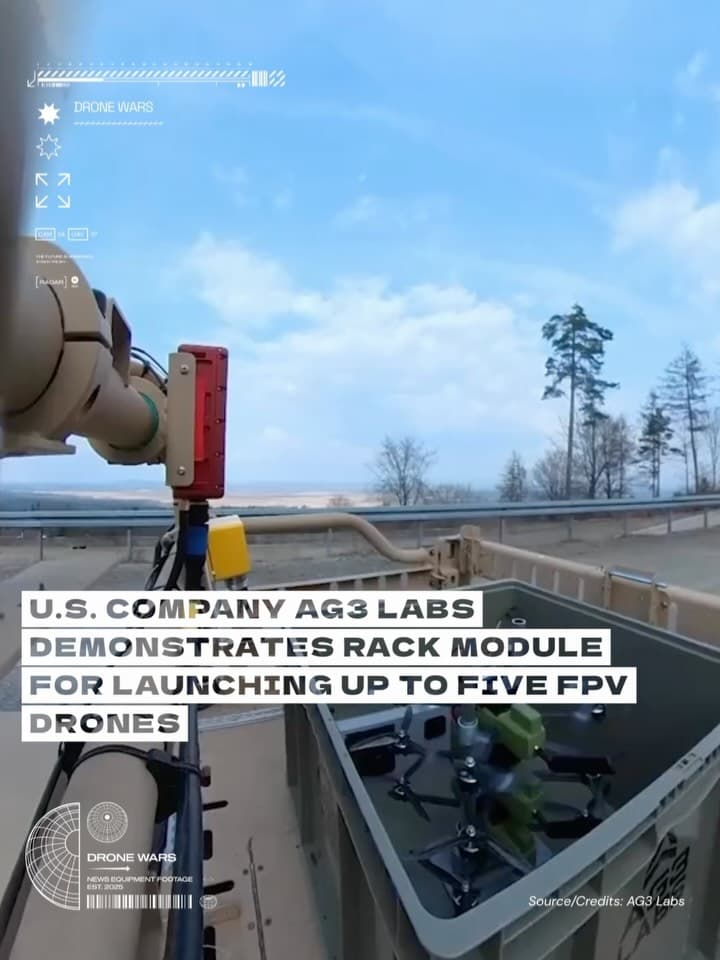
Harrington outlined how the command is evaluating the integration of systems well beyond "traditional reconnaissance-strike drones," linking them through an adaptive and agentic C2 architecture—forming a complete kill chain from sensing drones to long-range one-way attack munitions—with the goal of overwhelming an adversary's defensive systems through sheer volume.
The system he described is AI-driven, capable of autonomous decision-making and execution—including data routing, sensor repositioning, and target-shooter pairing—without requiring a human to manually approve each individual step. He later defined this as "soldier-on-the-loop, not in-the-loop": humans retain the ability to monitor and override the system at any time, but are not involved in real-time approval of every action.
Decoy Drones and Electronic Warfare Integration
Drawing on lessons from Ukraine and Middle East conflicts, Harrington said he intends to use decoy drones to "confuse and deceive adversaries," with the objective of "depleting their ammunition stockpile depth." This mirrors the Russian strategy of deploying decoy drones at scale in Ukraine to exhaust Ukrainian air defense missiles—a tactic Ukraine subsequently replicated with indigenously produced decoys.
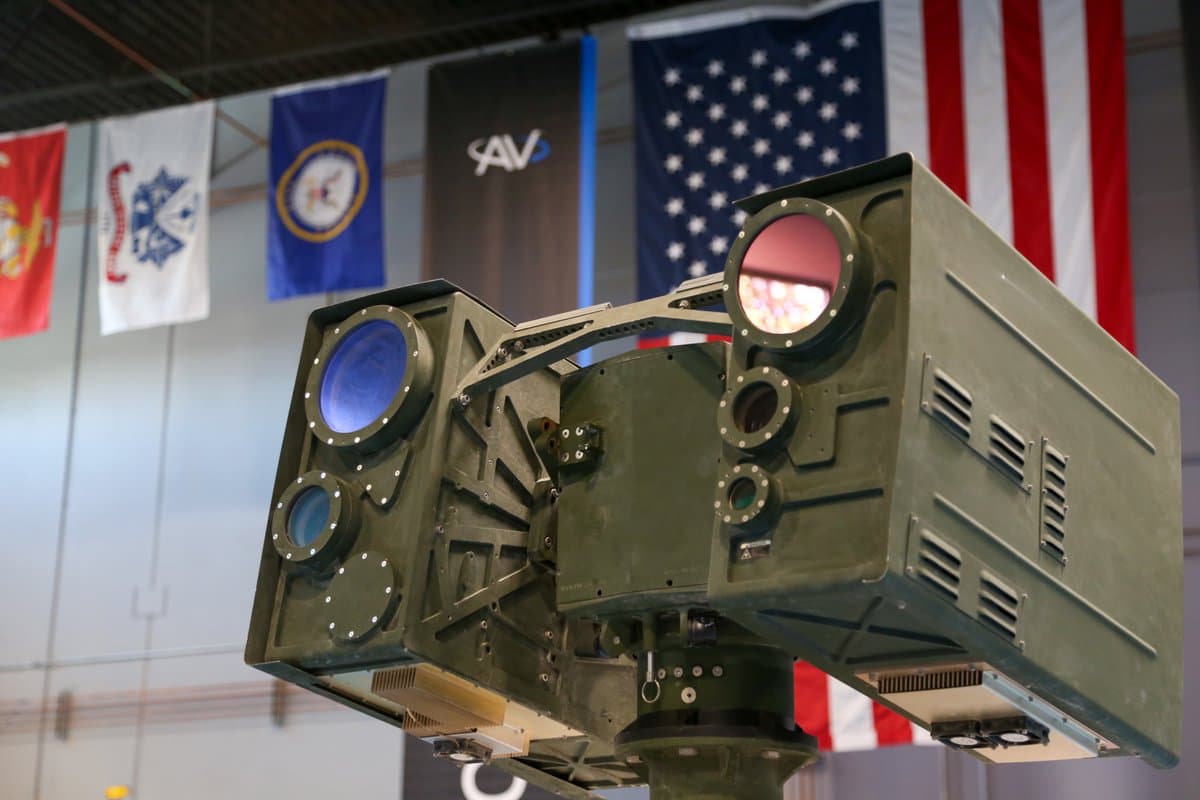
Harrington also highlighted the role of electronic warfare drones in "helping to isolate enemy signals, enabling other drones to operate more effectively. We're not looking at a single role, but at how systems work together to most effectively complete the full sense-to-strike chain."
Harrington declined to specify the drone types the new command intends to field. Notably, U.S. Central Command (CENTCOM) recently employed the Low-Cost Uncrewed Combat Attack System (LUCAS)—a kamikaze drone reverse-engineered from the Iranian-designed Shahed-136—in combat against Iran for the first time.
The Challenge of Pacific-Scale Operations
USARPAC Commander Gen. Ronald Clark highlighted the profound challenges posed by the Pacific's vast geography: "From the Arctic tundra of Alaska to the jungles of Hawaii and Malaysia, to the deserts of Australia's interior—each environment demands different types of drones and different employment concepts."
He illustrated the scale of the operational area with concrete figures: "If you draw a 2,000-nautical-mile box from Cambodia—east to the Philippines, south to Indonesia, west to Malaysia—that area is roughly equivalent to the portion of Western Europe stretching from the United Kingdom to Finland, to Turkey, to Spain."
Despite these challenges, Clark expressed confidence in younger soldiers' adaptability: "Our young soldiers are very comfortable with technology and very willing to give feedback—because it's a matter of life and death for their fellow soldiers, and every one of them takes that seriously."
The Urgency of Closing the Gap
The activation comes against the backdrop of the U.S. military still working to catch up in modern drone warfare—particularly in the low-cost small unmanned systems domain. China has invested heavily across the spectrum from infantry-level low-cost drones to long-range one-way attack munitions, and its ability to rapidly mass-produce a wide variety of drone types at scale is a concern that U.S. Army leadership is acutely aware of.
Maj. Gen. James (Jay) Bartholomees, commander of the 25th Infantry Division at Hawaii, acknowledged last year: "We are behind in long-range sensing and long-range delivery of effects. We absolutely need to build that capability quickly, test it in our operational area, and advance it in concert with our allies and partners."
It is worth noting that despite China being the primary pacing threat in the Pacific, military officials did not name China or any specific adversary throughout the briefing. Gen. Clark emphasized that 7th ID MDC-PAC is "not directed at a specific adversary or a specific location, but rather a capability to counter threats from any adversary."
Outlook
The 7th ID MDC-PAC is only one day old, and the Army is still far from being able to draw any definitive conclusions about the concept's operational effectiveness. Questions surrounding drone types, quantity requirements, and procurement timelines remain to be resolved. Nevertheless, the activation of a dedicated command focused on fusing drone warfare with Stryker Brigade maneuver capability sends a clear signal: the U.S. Army recognizes that winning on tomorrow's Pacific battlefield will require a fundamental transformation in how it fights.
原文來源: 查看原文
FAQ
Newsletter
Subscribe to our Low-Altitude Industry Newsletter
Daily curated news on low-altitude economy and drone industry, delivered to your inbox.