California Police Drone Programs Expand Rapidly, Drawing Strong Community Backlash
West Hollywood and Berkeley advanced separate police drone programs in the same week, both facing significant resident opposition. West Hollywood launches a $750,000 one-year Drone as First Responder (DFR) pilot in late July; Berkeley folds two drone systems into a $2.4 million public safety technology package. Residents in both cities share a common fear: that surveillance footage could be accessed by federal immigration enforcement (ICE).

Highlights
- West Hollywood is launching a $750,000, one-year DFR pilot in late July 2026, operated by the LA County Sheriff's Department — the only U.S. city with a DFR contract with a sheriff's department.
- Berkeley is procuring two drone systems as part of a $2.4 million public safety package; an RFP is expected around July 8 with a bid deadline of August 7.
- Chula Vista's DFR program, the first in the U.S., surpassed 25,000 missions by May 2026, with drones arriving before patrol cars in over 17,000 calls at an average response time of 97 seconds.
- Residents in both cities fear that police drone footage could be accessed by ICE, with critics citing Flock Safety data breach incidents and federal data-sharing in other jurisdictions.
- Flock Safety acquired DFR pioneer Aerodome for over $300 million in 2024, and LAPD is preparing its own DFR program in partnership with Skydio.
California Police Drone Programs Expand Rapidly, Drawing Strong Community Backlash
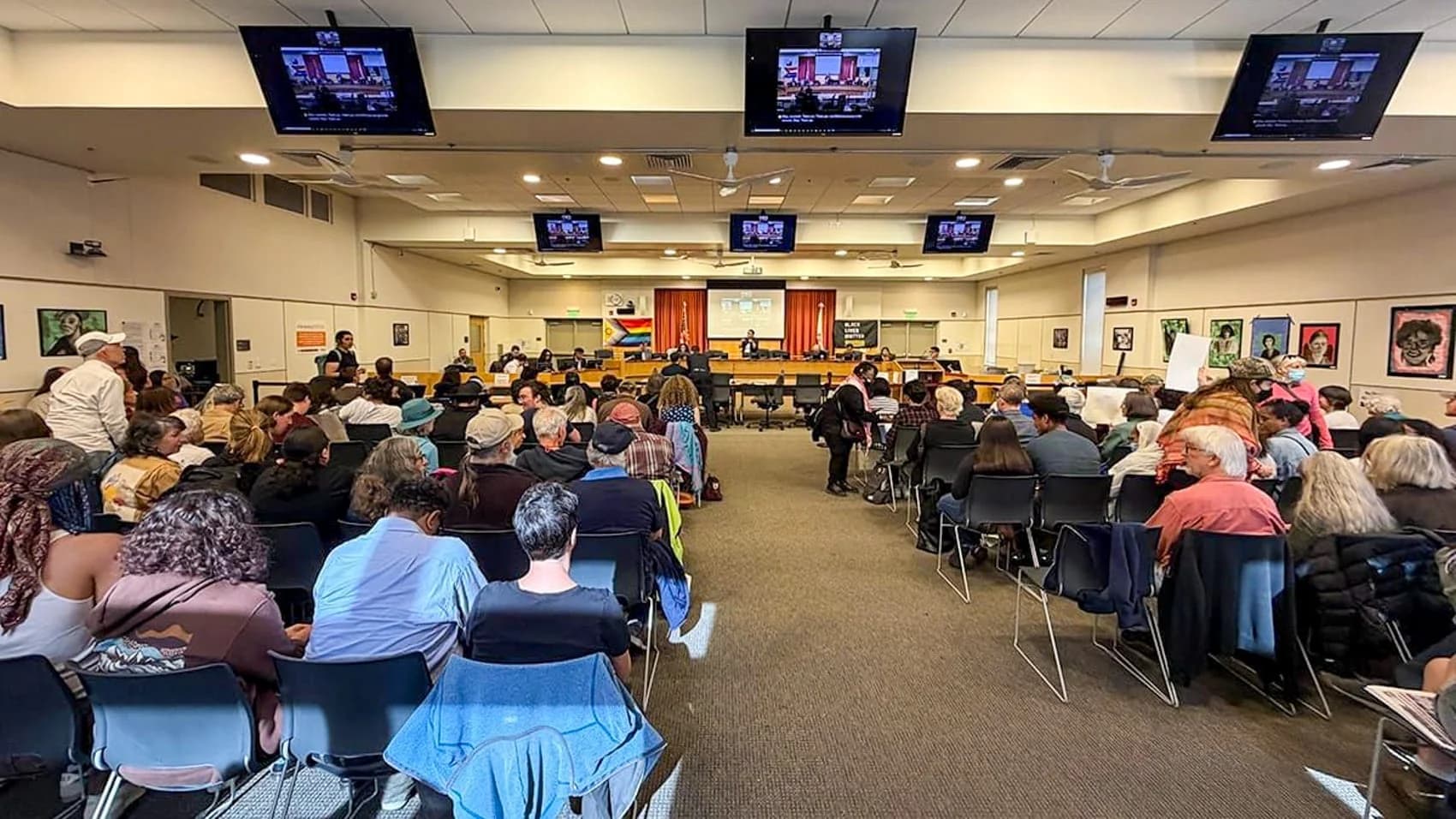
West Hollywood and Berkeley moved forward with police drone deployment plans in the same week, each facing fierce opposition from residents. As the city of Chula Vista surpassed the 25,000-mission milestone in May, the Drone as First Responder (DFR) movement is accelerating across California — and so is the community pushback.
West Hollywood: Sheriff's Department Drone Program Launches in July
West Hollywood will officially launch a one-year, $750,000 pilot program in late July, with the Los Angeles County Sheriff's Department operating drones that fly to designated call locations ahead of deputies. The city is currently the only municipality in the United States with a DFR service contract with a sheriff's department.
The path to launch was far from smooth. The city council first explored feasibility in February 2023, approved the program in July 2024, then suspended it in June 2025 due to policy conflicts. The program was only cleared to proceed after the Sheriff's Department revised its policies specifically for West Hollywood in April 2026.
Under the program rules, drones respond only to calls initiated by members of the public and scout locations before deputies arrive. West Hollywood Sheriff's Station Captain Fanny Lapkin explained that drones do not record during transit: "The drone only begins recording when it arrives at the scene and stops when it leaves — it works the same way as an officer's body-worn camera. No recording takes place while flying to or from a location."
The city plans to launch a public dashboard disclosing the number and types of calls the drones respond to, allowing residents to monitor the program's scope without filing public records requests. The drone vendor has not yet been publicly announced.
Berkeley: Drones Folded into $2.4 Million Surveillance Package
Berkeley is taking a different approach, integrating two drone systems into a broader public safety technology procurement capped at $2.4 million. The package also includes automated license plate readers (ALPRs), fixed cameras, community cameras, and investigative software that consolidates video data.
The city expects to issue a Request for Proposals (RFP) around July 8, with a bid deadline of August 7, followed by a contract vote. The police department aims to procure both mobile and fixed drone systems; the fixed system is expected to establish a permanent DFR capability.
This procurement also had a turbulent run-up. On May 7, the city council rejected a sole-source contract with Flock Safety, retaining only the existing license plate reader contract and directing the department to conduct a full competitive bidding process. Chief Jen Louis's department now must find its own funding, with some voices suggesting that vacant officer positions be cut to close the financial gap.
The Core Fear: ICE Access to Surveillance Data
Residents in both cities are less opposed to drones per se than to the question of where the footage ultimately goes. The shared concern is clear: that police surveillance data could be accessed by federal immigration enforcement (ICE).
West Hollywood Public Safety Commissioner Stephen Post was direct: "In multiple cities, we have already seen cases of improper access to and use of this data. At a moment when ICE and the Department of Homeland Security are dramatically ramping up enforcement, we should not be among the first to build out digital surveillance infrastructure that authoritarian leaders can use to harm our communities."
Opposition in Berkeley echoes the same concern. Critics have cited past data breach incidents involving Flock Safety and reports of federal agencies obtaining immigration-related data from other cities. Many residents say they will continue opposing any surveillance expansion regardless of which vendor ultimately wins the contract.
Not all voices are opposed, however. Steve Martin of the Eastside Neighborhood Watch offered a different perspective: "As someone who freely exercises my First Amendment rights, I actually welcome the Sheriff's Department surveillance to some extent."
On a technical note, standard DFR operating procedures call for drones not to record while en route to a call — a practice well-documented across existing programs. Whether ICE can ultimately obtain drone footage will likely depend on each law enforcement agency's level of cooperation with federal personnel and whether it actively chooses to share data.
Chula Vista: Where It All Started
None of this began in West Hollywood or Berkeley. Chula Vista established the first DFR program in the United States back in 2018. By May 2026, the program had logged more than 25,000 missions, with drones arriving before patrol cars in over 17,000 of those calls and an average response time of approximately 97 seconds.
That figure is the key reason police departments across the state are racing to adopt the model. Beverly Hills, Santa Monica, and Redondo Beach have all established DFR programs, and the Los Angeles Police Department is preparing to launch its own DFR initiative in partnership with Skydio.
Capital is flowing in rapidly as well. Flock Safety acquired DFR pioneer Aerodome for more than $300 million in 2024, and Axon continues to market Skydio hardware to police departments nationwide. Orlando established an 11-drone Skydio network in June.
Analysis
What no one is saying out loud is that the drones themselves are the easy part. The hardware works, the response times are real, and Chula Vista's eight years of mission records genuinely demonstrate that an aerial camera can reach a scene faster than a patrol car.
The real fight was never about the aircraft. Footage exists after the flight ends. The actual question is: who can access it a month later, and on what grounds? A drone program's credibility depends on the rigor of its data retention rules and access logs — precisely the details that are never highlighted in a press release.
California is the front line of this conflict because the state is polarized enough on both ends: police departments want drones, and residents are organized enough to demand accountability. The drone era has arrived. The real battles are just beginning.
The timeline makes everything concrete. West Hollywood's public dashboard goes live when the program launches in July — the first real public accountability test for a DFR program. Berkeley's bid deadline is August 7; the vendor the city council ultimately selects, and the data provisions attached to that contract, will reveal just how seriously the city has taken its residents' concerns.
原文來源: 查看原文
FAQ
Newsletter
Subscribe to our Low-Altitude Industry Newsletter
Daily curated news on low-altitude economy and drone industry, delivered to your inbox.