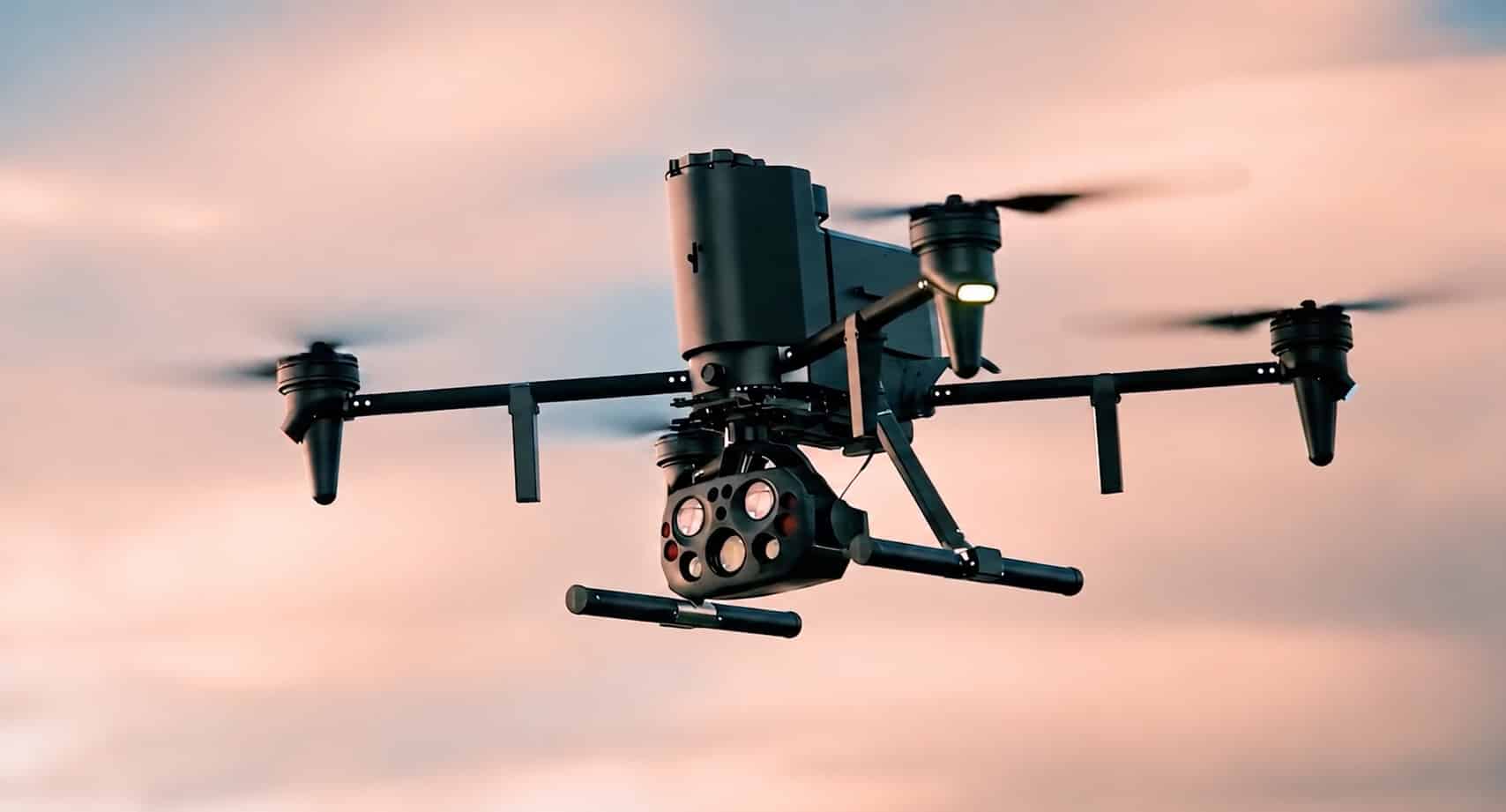
Colorado's El Paso County Sheriff's Drone-First Program Leads to Arrest of Woman with Two Active Warrants
The El Paso County Sheriff's Office in Colorado used its Drone-First Response program to locate individuals fleeing a residence before deputies arrived, enabling the safe, conflict-free arrest of 44-year-old Stephanie Sue Adams, who had two active arrest warrants. The case highlights how pre-arrival drone intelligence can improve situational awareness and officer safety.

Highlights
- On June 26, 2026, El Paso County Sheriff's IBOC launched a drone before deputies responded to a harassment call in Stratmoor Hills, Colorado, spotting individuals fleeing the residence in real time.
- 44-year-old Stephanie Sue Adams, who had two active arrest warrants, was apprehended without any confrontation after drone footage guided responding deputies.
- Adams was booked on charges of unlawful possession of a controlled substance and possession of drug paraphernalia, then released on two personal recognizance bonds.
- St. Paul PD logged 472 DFR missions in four weeks in June 2026, and Durham PD used a DJI drone in May 2026 to locate a suspect in a greenway, reflecting a growing national DFR trend.
- El Paso County built a networked Remote ID system before the FAA mandated Remote ID in 2023, establishing it as an early adopter of drone airspace awareness infrastructure.
Drone Arrives First, Delivering Critical Real-Time Intelligence
A drone deployed by the El Paso County Sheriff's Office in Colorado spotted multiple individuals fleeing a residence and taking cover in a backyard before deputies arrived on scene — ultimately enabling the arrest of a 44-year-old woman with two active warrants.
At approximately 8:00 a.m. on June 26, 2026, the El Paso County Sheriff's Office Regional Communications Center received a report of a harassment incident in the 600 block of Catalina Drive in the Stratmoor Hills area, an unincorporated part of El Paso County. The department's Intelligence-Based Operations Center (IBOC) immediately launched a drone before patrol units were dispatched. The drone operator observed multiple individuals leaving the residence and saw some retreating into the backyard. That information was relayed to responding deputies before they made contact with any subjects.
Suspect with Two Warrants Arrested Without Incident
When patrol deputies arrived, they were able to safely contact several individuals at the scene, including 44-year-old Stephanie Sue Adams, who had two active arrest warrants. She was taken into custody without any confrontation and booked into the El Paso County Jail on charges of unlawful possession of a controlled substance and possession of drug paraphernalia. Adams was subsequently released on two personal recognizance bonds with conditions, according to a statement from the El Paso County Sheriff's Office.
Sheriff Joseph Roybal credited the drone's early aerial view of the scene. "The El Paso County Sheriff's Office Intelligence-Based Operations Center clearly demonstrated how technology can enhance public safety and support our deputies in the field," Roybal said. "Using drone-first technology allowed us to quickly assess the situation, improve situational awareness, and identify safety risks before deputies arrived on scene."
Roybal added that the live drone footage directly influenced how deputies approached the scene: "In this incident, the IBOC drone provided critical real-time intelligence that assisted the responding deputies and ultimately led to the safe apprehension of a wanted individual with zero conflict. This technology is helping us work smarter, keep our deputies and the community safer, apprehend criminals, and continue to serve the public in a professional and accountable manner."
IBOC Reflects the Growing Nationwide Drone-First Intelligence Trend
The arrest came the same week the El Paso County Sheriff's Office announced the formation of a dedicated fugitive apprehension unit targeting the county's most dangerous repeat offenders — a development that also reflects the broader national trend of law enforcement agencies building out Drone as First Responder (DFR) programs.
The St. Paul Police Department logged 472 DFR missions over four weeks in June of this year. The Durham Police Department used a DJI drone in May to locate a wanted suspect concealed in a greenway. The common thread: by the time officers set foot on the ground, a drone overhead has already changed what they know — and in cases like this one, that can be the difference between a tense approach into an unknown situation and a clear picture of exactly who has left the scene and where they went.
The distinction between a DFR unit and a standard patrol drone is that DFR aircraft typically launch from a fixed base the moment a call comes in, arriving on scene simultaneously with — or ahead of — the first patrol vehicle. El Paso County has not yet released flight time or response time data for this incident, which is precisely the kind of metric IBOC should consider publishing. Many agencies now cite minutes shaved off response times as the most compelling argument for these programs.
El Paso County's Drone Infrastructure Has Deep Roots
This is not the first time El Paso County has treated drones as infrastructure rather than a standalone tool. The county built out a networked Remote ID system before the FAA made Remote ID mandatory in 2023, making it an early example of a local agency proactively constructing drone airspace awareness capability. IBOC — as a named unit with a defined role in the emergency response chain — is that forward-thinking approach applied directly to 911 call handling.
Editor's Note
This is exactly the kind of drone news worth highlighting: no one was hurt, a wanted suspect was apprehended without resistance, and the drone's only job was to establish situational awareness before officers walked in blind. That is what DFR programs are supposed to do, and Sheriff Roybal articulated it plainly in his statement rather than leaving it to a PR team to spin.
It is also worth noting: cases like this are precisely why a DJI drone ban causes real harm to U.S. public safety. Sheriff's offices like El Paso County cannot deploy enterprise-grade platforms costing tens of thousands of dollars for every harassment call — they rely on capable, affordable hardware because that is what their budgets support. Cutting off access to that hardware does not make law enforcement agencies safer; it makes programs like IBOC harder to fund and harder to scale, at exactly the moment more agencies are validating that pre-arrival intelligence makes officer and suspect contact measurably safer.
What bears watching is whether El Paso County begins publishing DFR performance metrics — response times, calls resolved without full deployment, arrests directly attributable to drone intelligence — as a growing number of departments such as St. Paul increasingly do. Sheriffs seeking budget approval to expand these programs will need that data, and for now this case report still rests primarily on a compelling single example rather than a fully documented performance record.
Source: El Paso County Sheriff's Office
原文來源: 查看原文
FAQ
Newsletter
Subscribe to our Low-Altitude Industry Newsletter
Daily curated news on low-altitude economy and drone industry, delivered to your inbox.