Avilus Wespe Tactical Helicopter Drone Completes Maiden Flight, Demonstrating Stable Performance
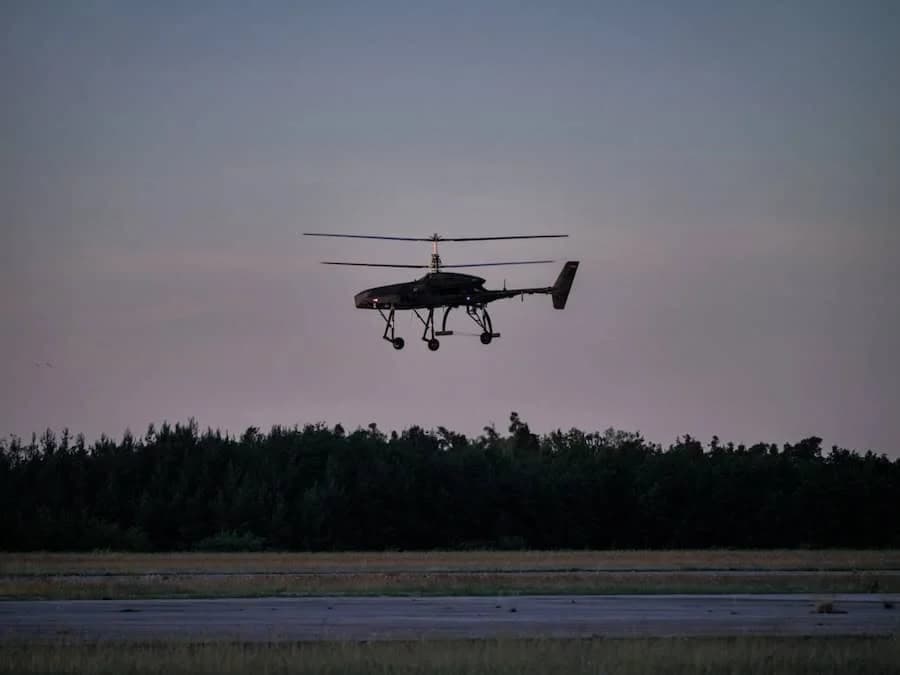
German drone manufacturer Avilus has successfully completed the maiden flight of its first-generation tactical multi-role helicopter drone, the Wespe '9Y-01'. The flight, controlled via the RasCore ground control system, validated the aircraft's flight control stability and maneuverability. The Wespe is available in piston and turbine variants with payload capacities of 200 kg and 350 kg respectively, designed for tactical resupply, CASEVAC, and close air support missions.

Highlights
- Avilus completed the maiden flight of the Wespe '9Y-01' tactical helicopter drone, validating flight control stability through hovering, forward flight, and lateral maneuvering tests.
- The Wespe is available in piston-powered (200 kg payload) and turbine-powered (350 kg payload) variants, designed for CASEVAC, tactical resupply, and close air support.
- The drone features redundant dual flight control systems, autorotation capability, and GNSS-independent jam-resistant navigation for complex electromagnetic environments.
- Chief Engineer Carlos Hünteler confirmed the next development phase will focus on expanding the flight envelope and integrating mission management capabilities.
- The Wespe supports both land-based and maritime operations and offers modular payloads including electro-optical reconnaissance systems and a dedicated medical evacuation pod.
Avilus Wespe Tactical Helicopter Drone Completes Maiden Flight, Demonstrating Stable Performance
German drone manufacturer Avilus has announced the successful completion of the maiden flight test of its first-generation tactical multi-role helicopter drone, the Wespe '9Y-01', demonstrating stable and precisely controllable flight performance.
Maiden Flight Details
The flight was conducted via remote control using the RasCore ground control system. The test profile encompassed hovering, forward flight, and lateral maneuvering, comprehensively validating the real-world performance of the aircraft's flight control system.
Multi-Role Mission Design
The Wespe has been designed for the following operational scenarios:
- Tactical logistics resupply
- Casualty evacuation (CASEVAC)
- Close air support
The platform is offered in both piston-powered and turbine-powered variants, with maximum payload capacities of 200 kg and 350 kg respectively, providing flexibility to meet varying mission requirements.
Key Technical Features
The Wespe supports both land-based and maritime operations and incorporates the following key technical characteristics:
- Redundant avionics: Dual primary and secondary flight control systems to enhance mission reliability
- Autorotation capability: Improved flight safety in emergency situations
- Jam-resistant navigation: GNSS-independent, electromagnetic interference-resistant navigation technology suited to complex electromagnetic environments
- Modular mission payload: Options include airdrop supply pouches, electro-optical reconnaissance systems, and a dedicated medical evacuation pod
Next Development Steps
Following the successful flight test, Avilus will move into the next phase of development, focusing on expanding the flight envelope and integrating mission management capabilities.
Avilus Chief Engineer Carlos Hünteler stated: "The crew and the aircraft were ready. This flight confirmed our confidence. We look forward to continuing development work and flight testing in the phases ahead."
The successful maiden flight of the Wespe marks a significant milestone for Avilus in the tactical unmanned helicopter sector, and the program's further development will be closely watched by the industry.
原文來源: 查看原文
FAQ
Newsletter
Subscribe to our Low-Altitude Industry Newsletter
Daily curated news on low-altitude economy and drone industry, delivered to your inbox.