The Great Drone Debate: Ban Them or Let Them Fly? The Opportunities and Concerns Behind FAA Part 108
The FAA's proposed Part 108 rule would open up BVLOS drone operations across the U.S., creating major opportunities for agriculture, logistics, and public safety. However, pilot associations and even drone industry insiders are raising serious questions about right-of-way, equipment standards, and whether the FAA can actually enforce the new framework.

Highlights
- The FAA's proposed Part 108 rule would allow BVLOS drone operations via operator certification rather than individual waivers, covering Class B through G airspace and flight over people.
- FlyGuys raised $13 million in July 2025 and operates a platform of 18,000+ licensed remote pilots; Zeitview raised $60 million in March 2025, illustrating strong commercial momentum under Part 107.
- AOPA and ALPA strongly oppose Part 108, citing right-of-way conflicts, unproven DAA technology, and inadequate FAA enforcement capacity for the nearly 500,000 existing Part 107 certificate holders.
- The NFL recorded over 2,800 unauthorized drone incursions near stadiums in the 2023 season — more than double 2021 figures — highlighting the FAA's existing enforcement gap under Part 107.
- The Safer Skies Act, enacted in December 2024 as part of the FY2026 NDAA, expanded federal authority to counter rogue drones, though how effectively it will be implemented at the state and local level remains unclear.
The Great Drone Debate: Ban Them or Let Them Fly?
The FAA's Part 107 rule created an entirely new category of professional opportunity for small unmanned aircraft systems (UAS) — commonly known as drones — and has since produced nearly 500,000 Part 107 Remote Pilot Certificate holders.
Yet Dacoda Bartels, Chief Operating Officer of drone services provider (DSP) FlyGuys, argues that Part 107 also created a monster.
"When Part 107 came out, the barrier to entry didn't just get lowered," Bartels said. "It got smashed into the ground."
New Opportunities, New Concerns
FlyGuys, which closed a $13 million funding round in July, is one of the few DSPs that has successfully capitalized on the Part 107 opportunity. Fellow operator Zeitview raised $60 million in March. Bartels describes FlyGuys as a "two-sided marketplace" platform — similar to Uber and other gig economy services — that connects licensed drone pilots with third-party clients. The company now counts more than 18,000 licensed, equipment-owning remote pilots on its platform.
"One of the things we always say is: we're local everywhere," Bartels said. "In almost every case, we can find a pilot within 20 miles of any location."
Pilots working through FlyGuys or Zeitview typically perform aerial data collection missions for software or artificial intelligence companies. Meanwhile, drone delivery operators such as Wing and Zipline are using drones to transport goods — including hot food and cold drinks. Law enforcement agencies are deploying drones as first-responder tools, and public safety agencies are using them for aerial surveillance following natural disasters.
All of these use cases, however, share a common constraint: range.
Without a waiver or exemption, Part 107 operators are prohibited from flying beyond visual line of sight (BVLOS) — that is, beyond the unaided vision of the pilot or a visual observer on the ground. For a farmer needing to spray a 100-acre field, that is a significant limitation.
"Right now, that pilot has to reposition three times to cover those 100 acres," Bartels said. "All that repositioning time is money he could have been making."
What Is Part 108?
The FAA's Part 108 Notice of Proposed Rulemaking (NPRM), published in August, directly addresses BVLOS drone operations and is widely regarded as the most consequential drone regulation since Part 107.
"Under Part 108, that pilot can stand in one spot and cover the entire 100-acre field," Bartels said.
The core change under Part 108 is that operators would no longer need to seek individual BVLOS waivers. Instead, they could apply for a Part 108 authorization or certificate by demonstrating compliance with industry consensus standards, then conduct BVLOS operations across a broad geographic area.
The proposed rule would permit drone flights in Class B, C, D, E, and G airspace — including near airports — as well as in "shielded areas" (within 100 feet / approximately 30 meters of structures). It would also allow flight over people, opening the door to urban drone services.
Safety requirements would be tiered according to risk. Drones flying over large crowds, for example, would face stricter requirements than those operating over open fields. In the highest-risk scenarios, drones would be required to detect all other aircraft, regardless of whether those aircraft are broadcasting position data. In certain situations under the proposal, drones would actually be granted the right-of-way (ROW) over manned passenger aircraft.
Part 108 operations would not require a traditional pilot certificate. Training responsibilities would shift to operators, who would be required to designate an "Operations Supervisor" responsible for overall safety and a "Flight Coordinator" responsible for monitoring individual flights.
What's the Controversy?
The FAA received thousands of public comments on the Part 108 NPRM, many of them critical. The Aircraft Owners and Pilots Association (AOPA) and the Air Line Pilots Association (ALPA) are among the most vocal opponents — though even the broadly supportive FlyGuys has reservations.
"From the manned aviation side, you can imagine how it looks — these toys flying everywhere, operated by people with no knowledge of or respect for the rules, because they may never have heard of them," Bartels said. "Part 107 left a bad impression among pilots… I genuinely hope Part 108 includes more strict limitations."
Right-of-Way (ROW) is one of AOPA's central concerns. The FAA argues that manned aircraft are "highly unlikely" to operate in shielded areas and in Class D, E, and G airspace, and therefore proposes that drones should hold the right-of-way in those contexts. The FAA also proposes that drones should have ROW over manned aircraft that are not broadcasting their position.
Historically, right-of-way priority has been determined by maneuverability rather than equipment type. AOPA argues this principle should be preserved, maintaining that manned aircraft should retain priority regardless of equipment or context. Bartels agrees.
Equipment standards are another major point of contention between the manned aviation community and the drone industry. The FAA's proposal would require Part 108 drones to be capable of detecting all aircraft, including those not broadcasting position data. The drone industry has countered that all manned aircraft should instead be required to carry ADS-B or electronic conspicuity devices, eliminating the need for drones to detect "invisible" aircraft — a suggestion AOPA has rejected.
The reliability of ADS-B and detect-and-avoid (DAA) systems has also been questioned. AOPA cited a notable incident from last October, in which two Amazon Prime Air delivery drones crashed sequentially into the same crane arm.
ALPA and AOPA both contend that drones are simply not yet ready to operate in highly controlled airspace, which requires communication with air traffic control (ATC) and the ability to manage interactions with manned air traffic. Both organizations have also raised concerns about the certification process for Part 108 operators, calling on the FAA to take a more active oversight role.
Bartels further noted that the proposal lacks maintenance standards comparable to the Part 145 repair station certification framework, and questioned how the FAA intends to effectively oversee the influx of new Part 108 operators.
"Writing these rules is one thing. Enforcing them is another," he said. "There are 500,000 certificated operators in the market. Who is going to manage all of them?"
The Enforcement Gap: From Part 107 to Part 108
This is, in fact, a problem the FAA has already been grappling with under Part 107. As the number of registered drones continues to climb, incidents involving unauthorized drone activity at outdoor events, music concerts, and professional sporting events have become increasingly common. During the 2023 NFL season, the league recorded more than 2,800 drone incursions into the temporary flight restrictions (TFRs) established around stadiums — up significantly from approximately 1,300 incursions in 2021. The U.S. military has also reported multiple instances of unauthorized drones appearing over military installations.
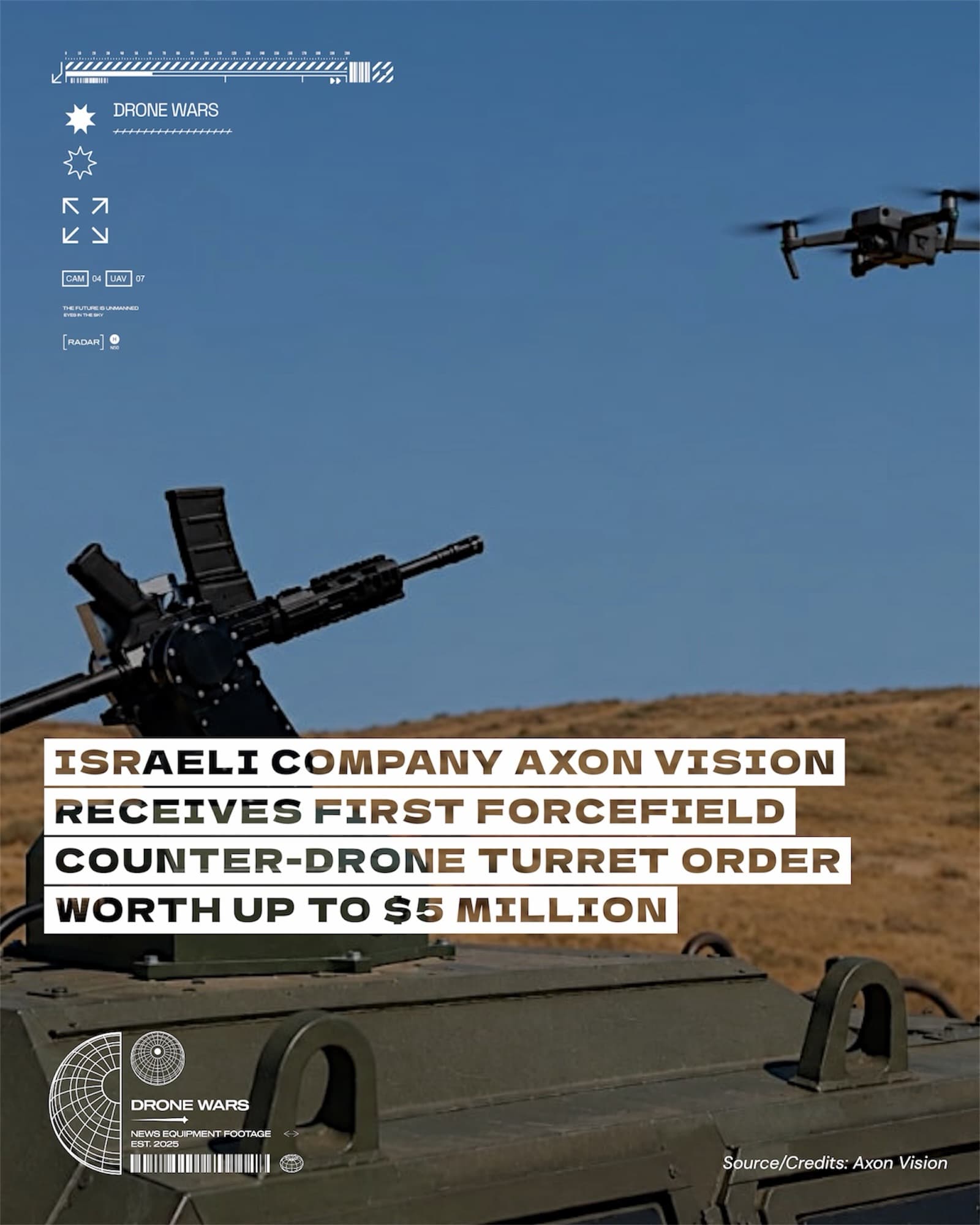
When a drone is spotted during an NFL game, officials halt play and direct players to the sideline for safety. Prior to the passage of the Safer Skies Act in December — enacted as part of the Fiscal Year 2026 National Defense Authorization Act (NDAA) — only a handful of federal agencies had the legal authority to jam, intercept, or shoot down rogue drones. How effectively state and local governments will be able to exercise new authorities under that law remains to be seen.
Enforcement will be a central challenge in the landscape Part 108 would create — particularly around airports. The FAA has an opportunity to learn from the rollout of Part 107 and to take seriously the concerns raised by the manned aviation community. Whether it will do so depends on whether the agency is truly listening to pilots, industry associations, and the drone sector itself.
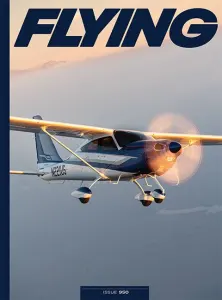
This article was originally published in the print edition of FLYING Magazine, Issue 970 (May 2025).
原文來源: 查看原文
FAQ
Newsletter
Subscribe to our Low-Altitude Industry Newsletter
Daily curated news on low-altitude economy and drone industry, delivered to your inbox.