Skydio X10 Thermal Drone Locates Missing Man in Florida Woods at 3 AM
The Pasco County Sheriff's Office in Florida deployed a Skydio X10 drone equipped with a thermal camera at 3:25 AM on July 2, detecting a missing man's heat signature in dense woodland. Ground deputies were guided directly to his location within minutes. The man was transported to hospital as a precaution and found uninjured.

Highlights
- 帕斯科郡警長辦公室於 2025 年 7 月 2 日凌晨 3 時 25 分出動 Skydio X10 無人機,在佛羅里達樹林中以熱感應相機找到迷路男子,搜救歷時數分鐘。
- Skydio X10 搭載 Teledyne FLIR Boson+(640×512 解析度)熱感應相機與 NightSense 避障系統,可在完全黑暗中貼近樹線低空搜索,單次續航最長 40 分鐘。
- 帕斯科郡的無人機計畫已運作逾十年,機隊部署於自動化停機坪,採「無人機作為第一響應者」模式,服務範圍超過 800 平方英里、近 70 萬居民。
- 同週,愛荷華州、密西根州與南卡羅萊納州執法機構也分別使用熱感應無人機完成類似搜救任務,顯示此技術在美國執法單位的普及趨勢。
- 夜間地面散熱降溫使人體熱訊號對比背景更加清晰,是熱感應無人機在凌晨搜救中優於手電筒地面搜索的關鍵技術原因。
Skydio X10 Thermal Drone Locates Missing Man in Florida Woods at 3 AM
In woodland outside San Antonio, Florida, a race-against-time search-and-rescue operation unfolded in the early hours of July 2. The Pasco County Sheriff's Office received a call at 3:25 AM and immediately launched a drone, using its thermal camera to lock onto a missing man's heat signature in total darkness and guide him safely out of the tree line.
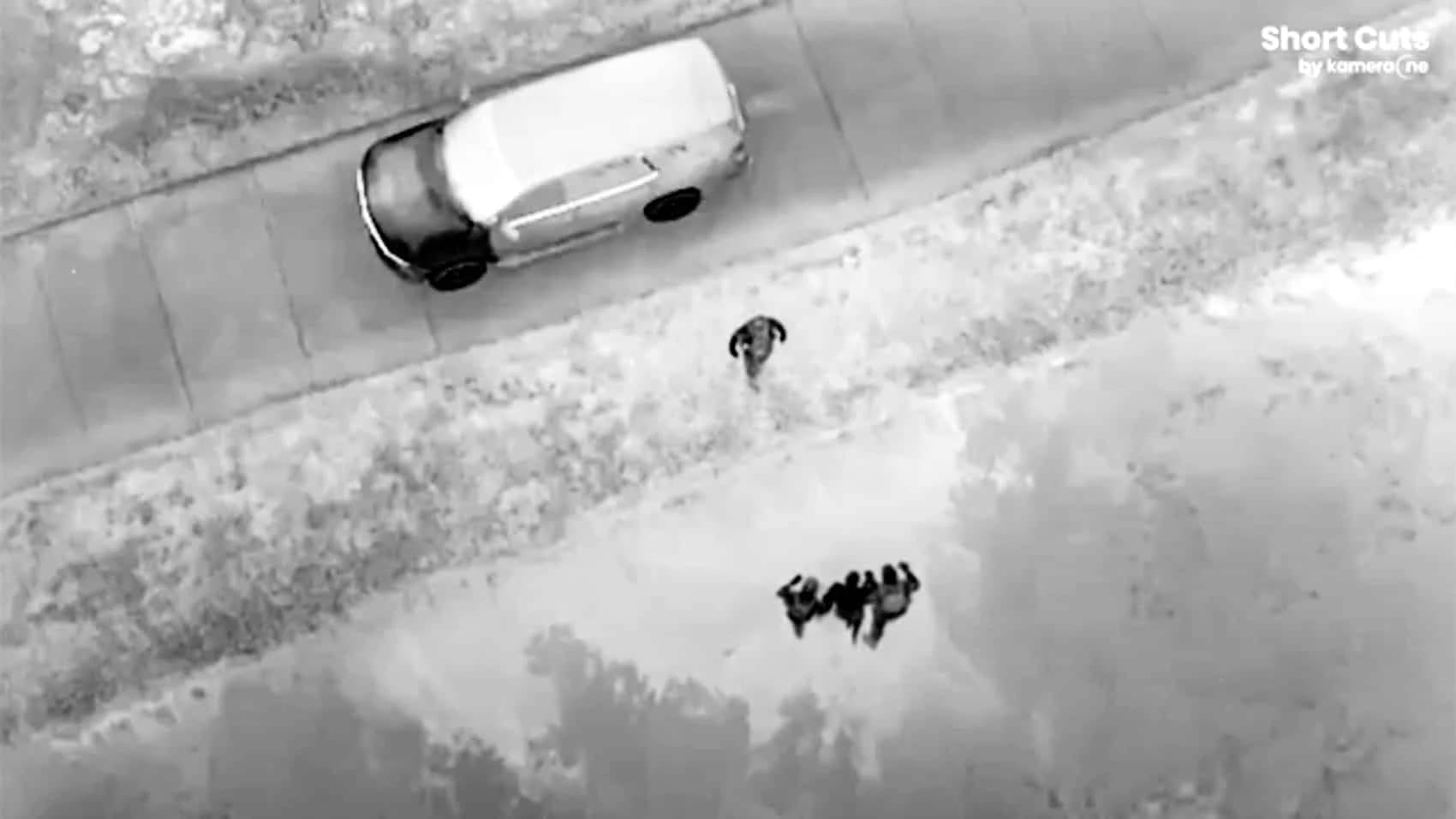
The man had become lost in the woods. Officers subsequently transported him to hospital for a precautionary check, where he was confirmed uninjured. The Sheriff's Office released footage captured by the drone but did not disclose the subject's name or age. The rescue unfolded rapidly: the call came in during the night, the drone launched almost immediately, and within minutes the man was walking out of the tree line alongside deputies — thermal footage shows him waving up toward the aircraft that had found him.
Thermal Imaging Turns a Dark Tree Line Into a Clear Target
The drone conducted its search in infrared mode. Unlike conventional cameras that rely on visible light, thermal cameras read heat energy — and that is precisely what makes them effective when dense canopy and complete darkness would defeat any other sensor. On the thermal feed, the missing man stood out as a clear human silhouette against the cooler surrounding vegetation.
That is the core advantage of operating at 3 AM. Ground searchers carrying flashlights advance slowly through woodland and can be mere meters from a subject without seeing them; the drone overhead can scan an entire area simultaneously and flag the one warm point that matters.
Once the aircraft confirmed the subject's position, the operator guided ground deputies directly to his exact coordinates — no need to sweep the forest section by section. Within a few minutes, the man walked out alongside officers.
The Pasco County Sheriff's Office also noted that nighttime conditions actually favor thermal searches: the ground continues to radiate heat and cool after sunset, making a warm human body stand out even more clearly against the cooler background.
Pasco County Operates One of the Most Active Law Enforcement Drone Programs in the U.S.
Pasco County's drone deployment program has been developing for a decade and has grown into a fleet conducting daily patrol flights, with aircraft stationed in automated drone docks that allow immediate launch without waiting for a pilot to reach the scene.
The agency serves an area of more than 800 square miles and a population of nearly 700,000. Thermal-equipped drones allow them to locate missing or hiding subjects in minutes rather than hours, and this is far from the first time the program has achieved a rescue using heat signatures.
In one earlier case, the same drone program used a thermal drone to locate an abducted child hiding beneath a timber pile after a manned helicopter search had already been called off. The pattern is consistent: the drone detects heat signatures that the naked eye and searchlights miss.
Skydio X10: Built for Exactly These Missions
According to Yahoo News, the drone deployed in this rescue was the Skydio X10 — a U.S.-made autonomous aircraft built by Skydio specifically for public safety operations. It carries the VT300-Z sensor package, which operates in infrared mode and integrates a Teledyne FLIR Boson+ thermal camera with 640×512 resolution alongside a 48-megapixel zoom lens. This combination allows operators to first acquire a heat signature in wide-angle mode, then zoom in for precise confirmation.
Skydio, headquartered in San Mateo, California, equips the X10 with its NightSense system for obstacle detection in darkness, enabling the aircraft to fly low and close to the tree line at 3 AM without being forced to climb to an altitude where a person would disappear beneath the canopy. The aircraft offers a maximum flight endurance of 40 minutes per charge.
The X10 is also compatible with outdoor drone docks and supports autonomous mission launch — the "drone as first responder" model that Pasco County has adopted. For nighttime woodland searches, the combination is purpose-built: autonomous flight keeps the aircraft safe near trees, while the FLIR thermal lens handles the actual target-acquisition work.
Nighttime Thermal Rescues Are Accumulating Across the U.S.
Outcomes like this are becoming a regular fixture in law enforcement drone reporting rather than rare headline events. A thermal drone zeroing in on the only warm silhouette in a cold open environment can close a search that might have taken hours in a matter of minutes.
In late June, an Iowa police department used a thermal drone to flush a felony suspect out of dense cover. Days earlier, a Michigan sheriff's office located a missing child safely with a drone-and-K9 combination. Around the same week, South Carolina search-and-rescue teams were deploying drones to search a 3,000-acre area for a missing four-year-old.
The underlying technology is no longer new. What has changed is how many law enforcement agencies now have thermal-capable aircraft ready to launch the moment a call like this comes in.
DroneXL Perspective
To put it plainly: the thermal camera at the center of every surveillance debate is the same piece of equipment that helped this man walk out of the forest alive.
DroneXL has covered significant pushback this summer — California police departments pulling back drone programs over privacy concerns, cities voting to restrict law enforcement aircraft operations. Those debates are real and deserve serious attention. But what happened in Pasco County on the night of July 2 represents the other side of that equation — it just doesn't generate the same news cycle as a surveillance vote.
The core shift is one of cost and speed. Five years ago, a thermal search-and-rescue at 3 AM was a helicopter job — expensive and slow to mobilize. Today it is an autonomous drone launching from an outdoor dock. In the same week this man walked out of the woods, departments in Iowa, Michigan, and South Carolina were running similar operations. The technology itself is no longer the story; access to it and how it is used are.
The real open question is not whether these drones work, but whether the departments purchasing equipment for 3 AM rescue missions can keep daytime use within boundaries the public finds acceptable. That is a policy problem, not a hardware problem — and Pasco County just made the strongest case yet for the hardware.
Image credits: Pasco County Sheriff's Office, Conroe PD
原文來源: 查看原文
FAQ
Newsletter
Subscribe to our Low-Altitude Industry Newsletter
Daily curated news on low-altitude economy and drone industry, delivered to your inbox.