AeroVironment Secures $405 Million Middle East Order for LOCUST X3 Laser Defense Systems
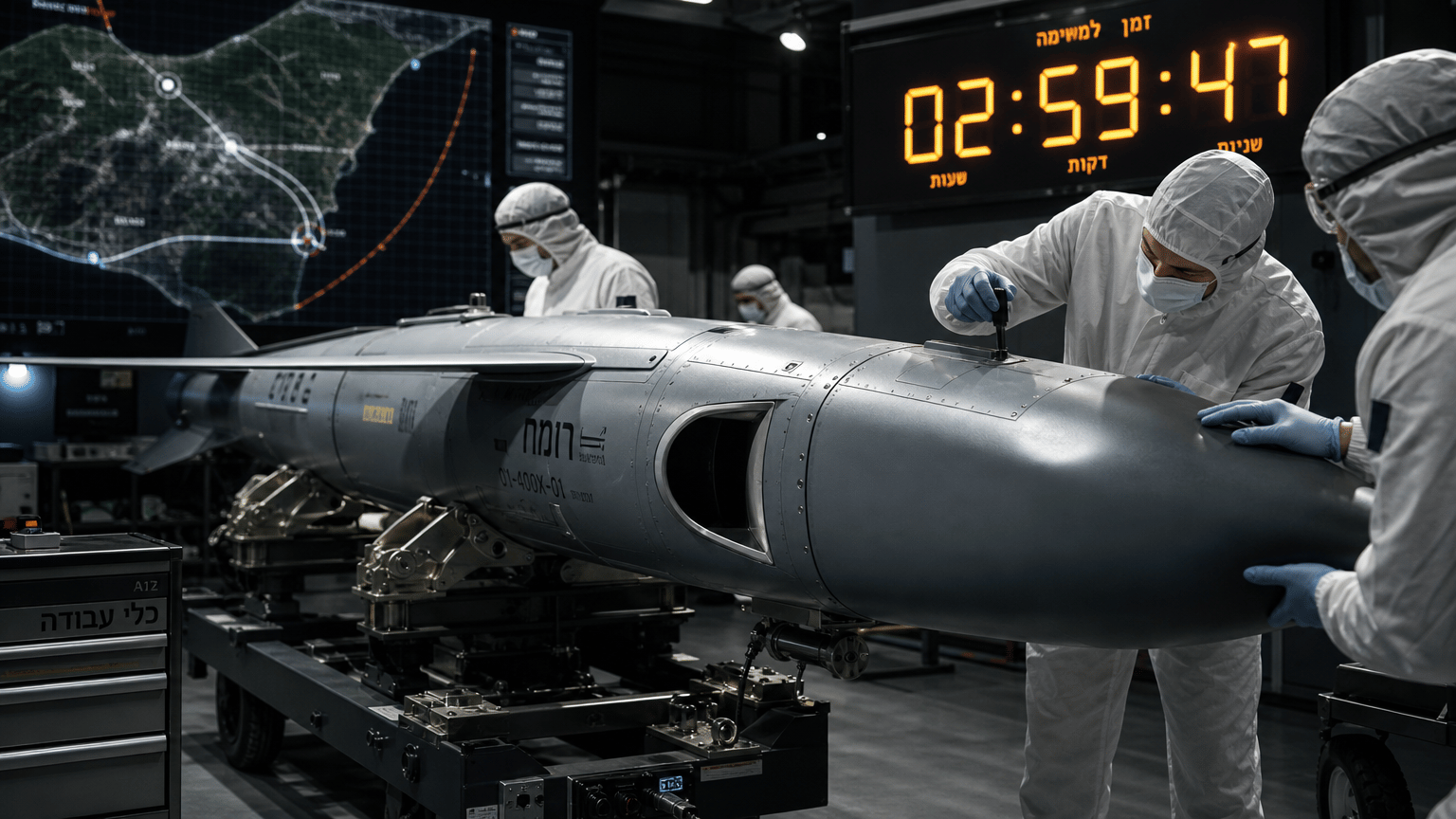
AeroVironment announced a $405 million Direct Commercial Sale order from an undisclosed Middle Eastern customer for LOCUST X3 high-energy laser weapon systems. Designed to counter Group 1 through Group 3 drones, LOCUST X3 combines sensing, tracking and precision laser engagement with radar, command-and-control and kinetic defense systems. AeroVironment also plans to establish an in-country maintenance and logistics center, although it did not disclose the number of systems, delivery schedule or customer identity.
AeroVironment has received a $405 million international order for LOCUST X3 high-energy laser systems, marking a major expansion of lower-cost counter-UAS defenses in the Middle East.
Key points
- AV wins $405M order
- X3 targets Group 1–3
- AV withholds buyer
- Lasers cut shot costs
- AV plans local support
Highlights
- AeroVironment announced a $405 million international Direct Commercial Sale order for LOCUST® X3 systems on November 11, 2026.
- The undisclosed Middle Eastern customer will receive LOCUST X3 high-energy laser weapon systems for counter-UAS defense.
- AeroVironment did not disclose the customer’s identity, procurement quantity or delivery schedule.
- LOCUST X3 is primarily designed to counter Group 1 through Group 3 drones.
- The system integrates sensing, tracking and rapid laser engagement with radar, command-and-control and kinetic interceptors.
Major Middle East order
AeroVironment, Inc. (AV, NASDAQ: AVAV) announced in Arlington, Virginia, on November 11, 2026, that it had secured a $405 million international Direct Commercial Sale order for LOCUST® X3 high-energy laser weapon systems. The systems will be supplied to an undisclosed customer in the Middle East.
The company did not reveal the buyer’s identity, the number of systems covered by the contract or the planned delivery schedule. Despite those omissions, the value of the order signals growing regional demand for directed-energy counter-UAS capabilities that can be deployed alongside established air defense assets.
Countering mass drone attacks
Middle Eastern governments and infrastructure operators face increasingly complex attacks involving large numbers of comparatively inexpensive drones. Shahed-series one-way attack drones and similar systems have been used against energy facilities, airports, military installations and other critical infrastructure.
Mass launches can overwhelm detection and interception networks while forcing defenders to expend costly surface-to-air missiles. AeroVironment said LOCUST X3 is primarily intended to counter Group 1 through Group 3 drones, reducing risks to military facilities, critical infrastructure and civilians.
The system incorporates sensing, tracking and rapid engagement functions. It can also integrate with radar, command-and-control networks and kinetic interceptors, allowing operators to build a layered defense architecture rather than rely on a single type of weapon.
Lowering the cost per engagement
Traditional interceptors used against drones may cost hundreds of thousands or even millions of dollars per engagement. High-energy laser systems offer a substantially lower cost per shot because they do not require a conventional missile or projectile for every target.
LOCUST X3 uses a high-energy laser to engage targets with precision. Its ability to sustain repeated engagements is governed mainly by available electrical power and thermal management, rather than by the need to replenish conventional ammunition after each firing cycle.
This operating model could allow air defense units to reserve expensive kinetic interceptors for larger, faster or more sophisticated threats. Lasers can instead be assigned to suitable lower-tier drone targets, improving the overall economics and endurance of layered air defense operations.
AeroVironment Chairman, President and Chief Executive Officer Wahid Nawabi said customers require mature defense systems that can be deployed quickly and sustained over the long term. He described the order as evidence that directed energy has become an important component of modern layered air defense.
In-country maintenance capability planned
AeroVironment intends to establish a maintenance and logistics support center in the customer’s country. The facility is expected to provide regional repairs, technical support, training and lifecycle services. Local support should shorten maintenance response times and help sustain system readiness after deployment.
The company’s wider portfolio covers autonomous systems, loitering munitions, counter-UAS technology, space platforms, directed energy, cyber capabilities and electronic warfare. AeroVironment also maintains an all-U.S. manufacturing footprint.
The company cautioned that actual results could be affected by contract execution and future orders, regulatory or political changes, supply-chain and component availability, export licensing, international expansion, competition, market growth, product development and broader economic conditions.
Media inquiries are directed to Deb Richardson at pr@avinc.com or 667.356.1377. Investor inquiries are handled by Denise Pacioni at ir@avinc.com or 805.795.4108.
What it means for Taiwan
For Taiwan’s drone industry, the order highlights potential demand for power modules, thermal-management hardware, precision optics, rugged electronics and lifecycle support within counter-UAS supply chains. Taiwanese manufacturers and industry associations should begin mapping U.S. export-control requirements and defense-grade qualification standards during near-term business development, rather than waiting for LOCUST X3 deliveries, whose schedule remains undisclosed. Drone service providers conducting infrastructure inspection, building cleaning or agricultural spraying are unlikely to purchase such systems directly, but expanding laser defenses around military sites, airports and critical infrastructure could introduce temporary airspace closures and laser-hazard zones. Operators should therefore prioritize Remote ID compliance, geofencing, auditable flight logs and coordination procedures, updating contracts and operating manuals before accepting work near protected facilities.
FAQ
Reviewed and published by the LAETimes editorial desk ·