Ukraine and Denmark Set Framework for Expanded Defence AI and Data Cooperation
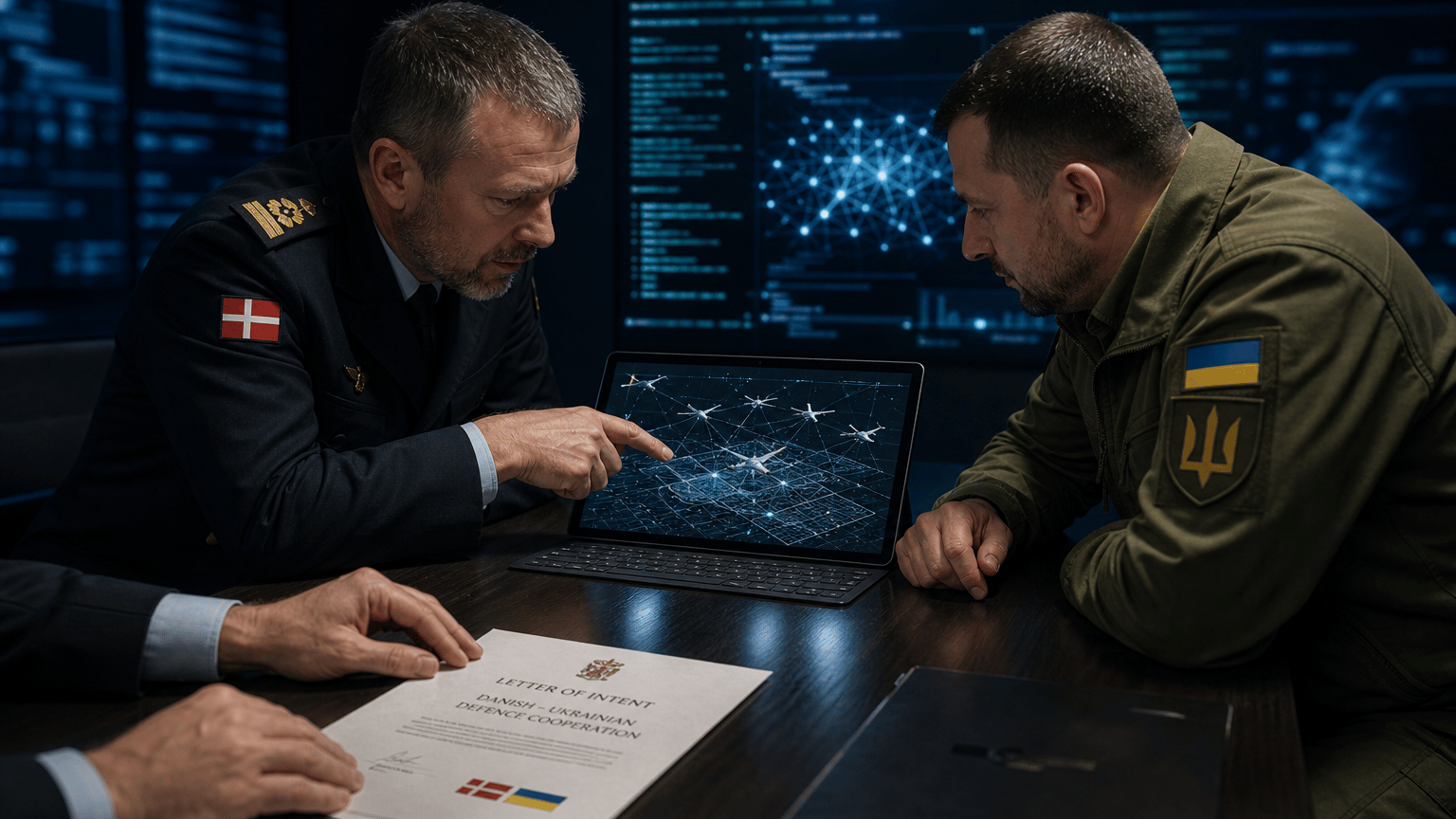
Ukraine and Denmark have signed a letter of intent covering broader cooperation on artificial intelligence and data technologies for defence. The document establishes a policy direction rather than confirming a procurement or deployment programme. Army Technology did not report a signing date, budget, implementation schedule, participating organisations or technical specifications. It also remains unclear whether future work will involve drone data links, ISR, autonomous navigation or counter-UAS systems. Further agreements, funding decisions, security reviews and technical requirements would be needed before the initiative becomes an operational project.
Ukraine and Denmark have signed a letter of intent to deepen defence cooperation involving AI and data technologies, but no projects, budgets, timelines or specific drone platforms have been disclosed.
Key points
- Ukraine and Denmark agreed to expand defence AI and data cooperation.
- No project, budget, implementing organisation or schedule was disclosed.
- No drone platform, AI model or test site was identified.
- Follow-on agreements are required before executable projects can begin.
- Potential UAS, ISR and counter-UAS applications remain unconfirmed.
Highlights
- Ukraine and Denmark signed a letter of intent to expand defence cooperation involving artificial intelligence and data technologies.
- Army Technology did not report the signing date, budget, implementation schedule or implementing organisations.
- The agreement does not confirm a completed procurement, software development programme or operational deployment.
- No specific drone platform, AI model, test range, data-link architecture or deployment volume was disclosed.
- Potential applications involving UAS data links, ISR, autonomous navigation and counter-UAS systems remain unconfirmed.
Ukraine and Denmark have signed a letter of intent to expand cooperation on artificial intelligence and data technologies in the defence sector, according to Army Technology. The agreement signals an effort to bring digital capabilities, data processing and AI more deeply into the two countries’ defence relationship.
However, the information currently available is limited. The report did not provide the signing date, identify the representatives involved or name the organisations that would implement the initiative. No budget, delivery schedule, programme structure or procurement arrangement was disclosed.
A framework rather than a deployment contract
Based on the published details, the letter of intent should be understood as a statement of direction rather than evidence of a completed acquisition or operational deployment. It establishes a basis for further discussions, but it does not confirm that either country has ordered equipment, commissioned software or approved a specific defence technology programme.
The report also did not say whether Ukraine and Denmark plan to establish a joint laboratory, conduct field trials, develop software together or test AI-enabled defence systems. Turning the agreement into executable work would ordinarily require follow-on arrangements defining funding, technical requirements, responsibilities, security controls and expected deliverables.
Data governance is likely to be an important consideration in any subsequent programme. Defence AI projects can require rules covering access permissions, cross-border data transfers, cybersecurity, model-training sources, intellectual property and the handling of sensitive operational information. These issues were not detailed in the announcement and remain matters that may need to be addressed through later agreements and reviews.
Possible defence applications remain unconfirmed
AI and data technologies can support a wide range of defence functions, including image recognition, sensor-data integration, mission planning, predictive maintenance and decision support. In the unmanned systems sector, similar capabilities may be used for ISR processing, autonomous navigation, target classification, communications management and counter-UAS operations.
None of those applications has been confirmed as part of the Ukraine-Denmark initiative. The available report did not identify a drone model, AI model, data-link architecture, test range or planned deployment volume. It therefore remains unclear whether unmanned aircraft will form part of the cooperation or whether the initial focus will fall elsewhere within the defence technology ecosystem.
This distinction is important because a broad commitment to AI and data cooperation does not automatically indicate that autonomous or weapon-related capabilities are being developed. The eventual scope will depend on the institutions selected to participate, the technical standards adopted and the funding and procurement mechanisms approved by the two governments.
Further disclosures will determine industry relevance
The next meaningful indicators will be announcements identifying implementing organisations, named projects, budgets, technical standards or testing arrangements. Procurement notices and contracts would provide stronger evidence that the letter of intent has advanced into a funded programme.
For the drone industry, particular attention will fall on whether later phases address UAS data links, ISR analytics, edge computing, autonomous mission systems or counter-UAS technology. Until such details are released, the confirmed facts are limited: Ukraine and Denmark have signed a letter of intent and agreed to broaden defence cooperation involving AI and data technologies.
What it means for Taiwan
For Taiwan’s drone manufacturers, industry associations and component suppliers, the agreement is a signal to monitor future Danish or Ukrainian requirements for secure data links, edge computing, cybersecurity and AI assurance. No procurement, technical standard or schedule has been announced, so it does not yet create an immediate supply opportunity. If follow-on tenders emerge, Taiwanese vendors may need documented data provenance, export-control screening and interoperable system interfaces. Operators providing infrastructure inspection, exterior cleaning or crop spraying face no direct regulatory change. However, the same emphasis on data governance could influence future purchasing expectations for commercial fleets, particularly regarding cloud storage, cross-border transfers and access controls. Service providers should avoid changing equipment solely on this announcement and instead track any contracts, standards or compliance requirements published later.
FAQ
Reviewed and published by the LAETimes editorial desk ·