Super Ice Adds a 1,000lb Standoff Weapon to Rafael’s Long-Range Portfolio
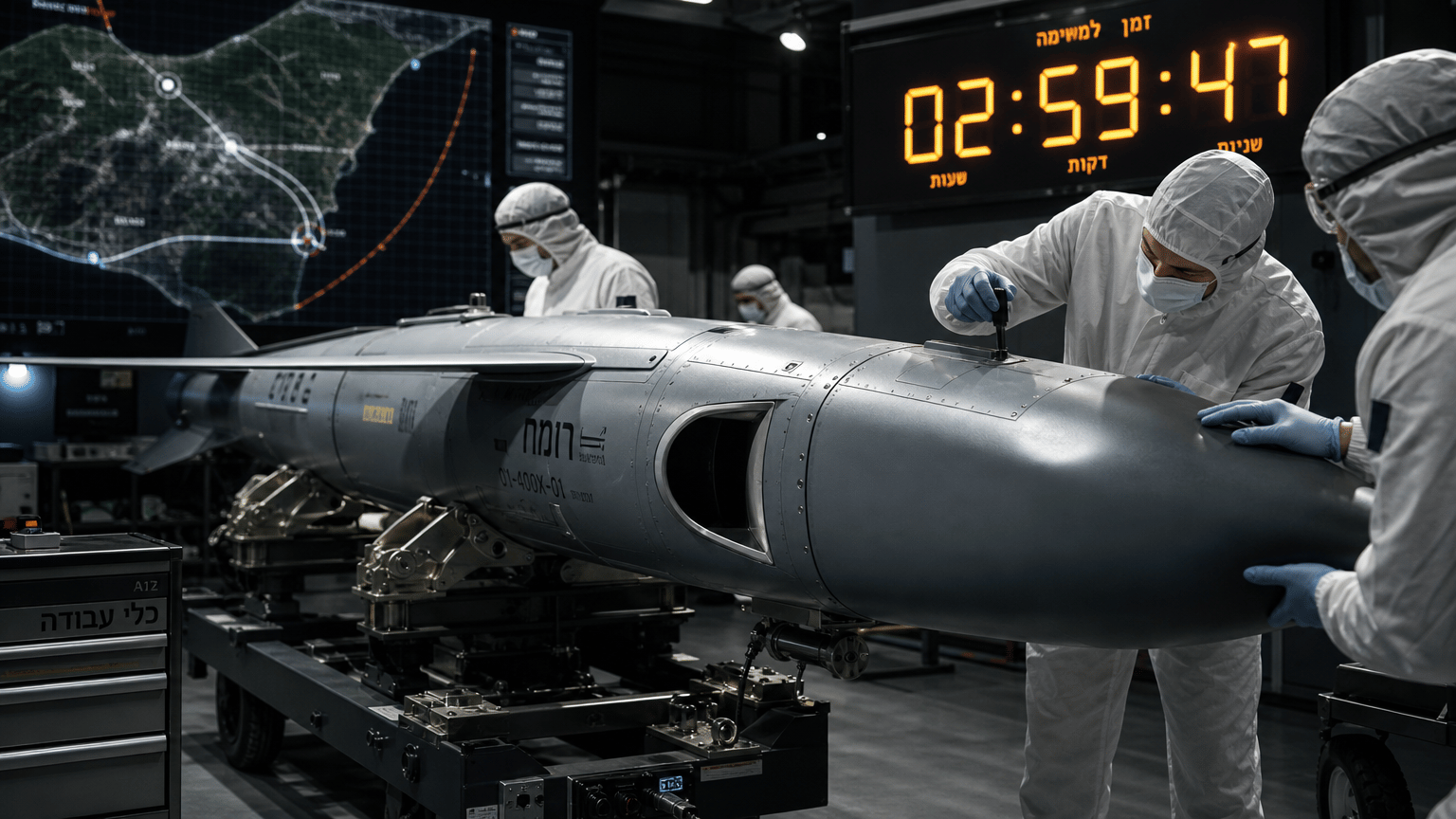
Rafael Advanced Defense Systems has expanded its precision-strike portfolio with Super Ice, a long-range cruise missile designed to engage strategic targets from standoff distances. The weapon carries a 1,000lb warhead, equivalent to approximately 454 kilograms. Rafael has not disclosed its range, speed, guidance architecture, accuracy, launch platforms, testing status, customers or entry-into-service schedule.
Rafael Advanced Defense Systems has introduced Super Ice, a long-range cruise missile carrying a 1,000lb warhead for standoff strikes against strategic targets. Its range, guidance system, launch platforms and deployment schedule remain undisclosed.
Key points
- Rafael introduces Super Ice for long-range standoff strikes.
- The missile carries a 1,000lb warhead.
- Strategic targets are its stated mission focus.
- Range and guidance specifications remain undisclosed.
- Launch platforms and deployment timing are unconfirmed.
Highlights
- Rafael Advanced Defense Systems introduced Super Ice as a long-range cruise missile for standoff attacks against strategic targets.
- Super Ice carries a 1,000lb warhead, equivalent to approximately 454 kilograms.
- Rafael has not disclosed Super Ice’s maximum range, cruise speed, flight altitude or propulsion system.
- Rafael has not identified the missile’s guidance architecture, claimed accuracy, data links or electronic-warfare resistance.
- No aircraft, naval or land-based launch platform has been confirmed for Super Ice.
Rafael Advanced Defense Systems has introduced Super Ice, a new long-range cruise missile intended for standoff attacks against strategic targets. According to Army Technology, the weapon carries a 1,000lb warhead and is designed to allow its launch platform to remain farther from the target and the most heavily defended threat areas.
The announcement adds another long-range precision-strike product to Rafael’s defense portfolio. However, the limited information released so far leaves major questions about the missile’s operational capabilities, maturity and potential customers.
A heavy warhead for strategic missions
The confirmed 1,000lb warhead is equivalent to approximately 454 kilograms. A payload of that size could support missions against high-value, hardened or geographically extensive targets, depending on the warhead design and the missile’s accuracy. Rafael has not identified the warhead type, damage mechanism, fuzing options or whether multiple payload configurations will be available.
The company has positioned Super Ice as a long-range cruise missile for standoff strikes. Such weapons are intended to reduce the need for aircraft, ships or ground-based launch units to enter the effective range of hostile air-defense systems. Potential target categories can include command facilities, logistics infrastructure and other strategic assets, although Rafael has not published a specific target set for Super Ice.
Range, guidance and platforms remain unknown
No maximum range has been disclosed. Rafael also has not released information about the missile’s cruise speed, flight altitude, propulsion system, dimensions or overall weight. Without those figures, it is not yet possible to compare Super Ice directly with other long-range cruise missiles or determine how it fits within existing force structures.
The guidance architecture is similarly unclear. Available reporting does not specify whether Super Ice uses satellite and inertial navigation, terrain-referenced navigation, electro-optical terminal guidance or another seeker configuration. Rafael has also withheld details about claimed accuracy, target-recognition functions, in-flight updates, data links and resistance to electronic interference.
Launch compatibility is another unresolved issue. Public information does not establish whether Super Ice is intended for deployment from combat aircraft, naval vessels, land-based launchers or a combination of platforms. Platform integration will be a significant factor in determining which armed forces could adopt the weapon and how quickly it could enter operational service.
Program status has not been disclosed
Rafael has not said whether Super Ice has completed flight testing, entered production or secured orders from any country. No timeline has been announced for qualification, delivery or entry into service. Potential customers and export plans also remain unconfirmed.
These omissions mean the introduction should currently be viewed as an initial product disclosure rather than evidence of an operational deployment. Future test results, integration announcements and procurement contracts will provide clearer indications of the program’s maturity.
More than warhead size
For long-range standoff weapons, combat effectiveness depends on more than payload weight. Navigation accuracy, mission planning, target identification, survivability, electronic-warfare resistance and launch-platform integration can all determine whether a missile can reliably reach and engage a defended target.
At present, the confirmed facts are limited to the Super Ice name, its classification as a long-range cruise missile, its 1,000lb warhead and its intended role against strategic targets from standoff distances. Whether it becomes the foundation of a broader next-generation precision-strike family will depend on the specifications, testing evidence and procurement decisions Rafael releases later.
What it means for Taiwan
For Taiwan’s drone manufacturers, industry associations and defense supply chain, Super Ice highlights growing demand for resilient navigation, secure data links, electronic-warfare protection and mission-planning technologies shared across unmanned and precision-strike systems. Suppliers considering defense work should monitor export controls, cybersecurity requirements and component traceability before committing capacity. For commercial operators conducting infrastructure inspection, exterior cleaning or crop spraying, the announcement creates no immediate purchasing or compliance change because no deployment location or schedule has been disclosed. The practical issue is longer-term airspace coordination: any future regional deployment or military exercise could produce temporary restrictions, GNSS interference or communications disruption. Operators should therefore maintain notice-monitoring procedures, backup navigation practices and documented return-to-home or mission-abort protocols.
FAQ
Reviewed and published by the LAETimes editorial desk ·