Ukraine Seeks EU Funding Approval for Equipment Available Through DOT-Chain
Ukraine is seeking European funding approval for defence equipment available through the DOT-Chain procurement network. The submission could connect an existing digital purchasing channel with EU financing, but the equipment list, requested amount, supplier rules and review timetable have not been disclosed. No drone or counter-UAS procurement has been confirmed.
Ukraine has submitted a DOT-Chain equipment list to the European Commission for funding review, potentially connecting its digital defence procurement network with European financing.
Key points
- Ukraine submitted a defence equipment list for EU funding review.
- All listed equipment is available through the DOT-Chain network.
- The European Commission will assess funding eligibility.
- Equipment types, funding value and review dates remain undisclosed.
- No drone models, quantities or suppliers have been confirmed.
Highlights
- Ukraine submitted a defence equipment list to the European Commission for European funding approval.
- Every item in Ukraine’s submission is available through the DOT-Chain procurement network.
- The report disclosed no equipment categories, funding amount, supplier eligibility rules or expected approval date.
- The submission does not confirm orders for drones, counter-UAS systems, communications equipment or other military hardware.
- Any procurement will depend on European Commission approval and Ukraine’s subsequent operational requirements.
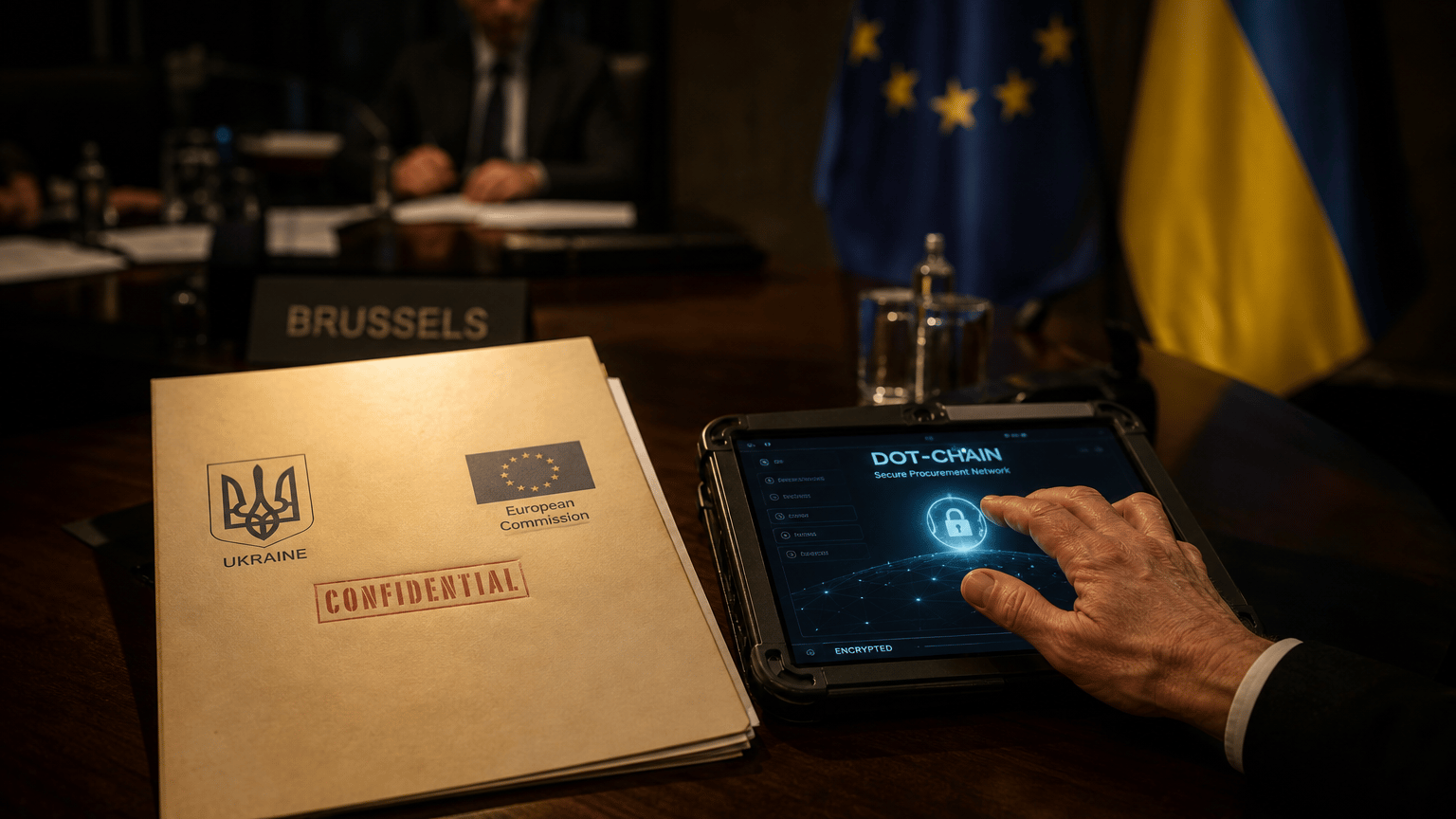
Ukraine has submitted a list of defence equipment to the European Commission for consideration under European funding mechanisms, according to Army Technology. Every item on the list is currently available through the DOT-Chain procurement network, indicating that Kyiv is seeking to connect an established digital purchasing channel with European financial support.
The submission is not a product announcement or a confirmed procurement award. Instead, Ukraine has assembled equipment already accessible through DOT-Chain and presented it to the European Commission for a funding eligibility review. If approved, European financing could support future Ukrainian purchases based on operational requirements. The implementation model, however, will depend on the Commission’s decision and any conditions attached to the funding.
Procurement list remains confidential
The original report did not identify the equipment included in the submission. It therefore remains unclear whether the list covers drones, counter-UAS systems, communications equipment, electronic systems or other military hardware.
No requested funding amount was disclosed. The report also provided no information on eligible suppliers, product-origin restrictions, procurement volumes or the expected approval date. Without those details, it is not yet possible to determine which manufacturers, distributors or technology categories could benefit.
DOT-Chain’s immediate role is to provide a pool of equipment that can already enter Ukraine’s procurement process. Using an existing network may allow operational demand, available supply and external funding review to be handled within a more connected framework rather than requiring a new equipment catalogue to be built from the ground up.
That does not mean the submitted products have been ordered. The European Commission must first determine whether the equipment qualifies for the relevant funding, after which Ukraine would still need to define its purchasing requirements and complete the applicable procurement steps.
Drone implications remain unconfirmed
Ukraine’s demand for unmanned systems has attracted close attention across the global defence sector, particularly among manufacturers of reconnaissance drones, FPV platforms, communications equipment and counter-UAS technology. Nevertheless, the DOT-Chain submission should not be interpreted as confirmation that any drone product, model or supplier has secured European-backed orders.
For drone companies, the most important unresolved issues include supplier eligibility, delivery capacity, cybersecurity requirements, component origin, maintenance support and any restrictions attached to European funding. These conditions could determine whether products from European, Ukrainian or other international manufacturers are eligible for procurement.
Product-origin rules may be especially significant for platforms assembled from components sourced across several countries. Drone manufacturers often depend on international supply chains for flight controllers, cameras, communications modules, motors, batteries and other hardware. Any future sourcing or security conditions could therefore affect not only aircraft manufacturers but also component vendors and systems integrators.
Delivery and support requirements could also influence procurement outcomes. Equipment intended for sustained operational use may require replacement parts, training, software support and maintenance capacity in addition to initial production volume. Vendors that cannot meet those obligations may face barriers even if their products are technically available through the network.
Funding review is the next milestone
The next meaningful development will be the European Commission’s decision on the scope of eligible funding. Publication of approved equipment categories, supplier conditions, financing levels or procurement schedules would provide a clearer indication of the commercial impact.
Until those details emerge, the submission is best viewed as a procedural step toward aligning Ukraine’s existing procurement network with European defence financing. It signals an effort to accelerate access to equipment, but it does not yet establish contracts, order volumes or confirmed opportunities for drone suppliers.
What it means for Taiwan
For Taiwan’s drone manufacturers, industry associations and component suppliers, the submission highlights how access to European-funded defence procurement may depend on more than platform performance. Supplier eligibility, cybersecurity, component origin, production capacity and maintenance support could determine whether Taiwanese products or parts qualify once the European Commission publishes its conditions. Companies should map their supply chains and prepare documentation now, but should not treat the review as an order opportunity. For Taiwanese operators providing infrastructure inspection, building cleaning or agricultural spraying, there is no immediate operational or regulatory change. The practical impact is more likely to emerge through procurement: defence demand could tighten supplies of batteries, communications modules, motors or cameras, affecting prices and delivery times after funding approval and actual orders are confirmed.
FAQ
Reviewed and published by the LAETimes editorial desk ·