Vancouver Police Launch Canada's First Rooftop Dock Drone-as-First-Responder System
The Vancouver Police Department has become Canada's first agency to deploy a rooftop dock-based Drone as First Responder (DFR) system, using six Skydio X10 drones at strategic locations citywide. Approved by Transport Canada, the system can autonomously launch within seconds of a 911 call—often arriving before patrol cars. The deployment is partly driven by the city's role as a 2026 FIFA World Cup host.
Highlights
- The Vancouver Police Department deployed six Skydio X10 drones on rooftop automated docks, making Vancouver the first city in Canada to operate a Drone as First Responder (DFR) system, approved by Transport Canada on June 10.
- The Skydio X10 features a Teledyne FLIR Boson+ thermal sensor (640×512 resolution), a 64-megapixel optical payload, NightSense infrared obstacle avoidance, ~40 minutes of endurance, and a top speed of 72 km/h.
- Integration with Axon body cameras allows an officer to trigger an autonomous drone dispatch to their exact GPS location with three taps on the camera—designed for rapid response when an officer is under attack.
- Skydio was selected over DJI primarily due to data sovereignty: a dedicated Canadian-hosted cloud instance keeps all imagery and flight data within Canada, combined with an NDAA-compliant, US-assembled supply chain.
- The deployment is timed to Vancouver's role as a 2026 FIFA World Cup host city, and the rooftop dock infrastructure will remain in place permanently after the tournament ends.
Canada First: Eyes in the Sky for the World Cup
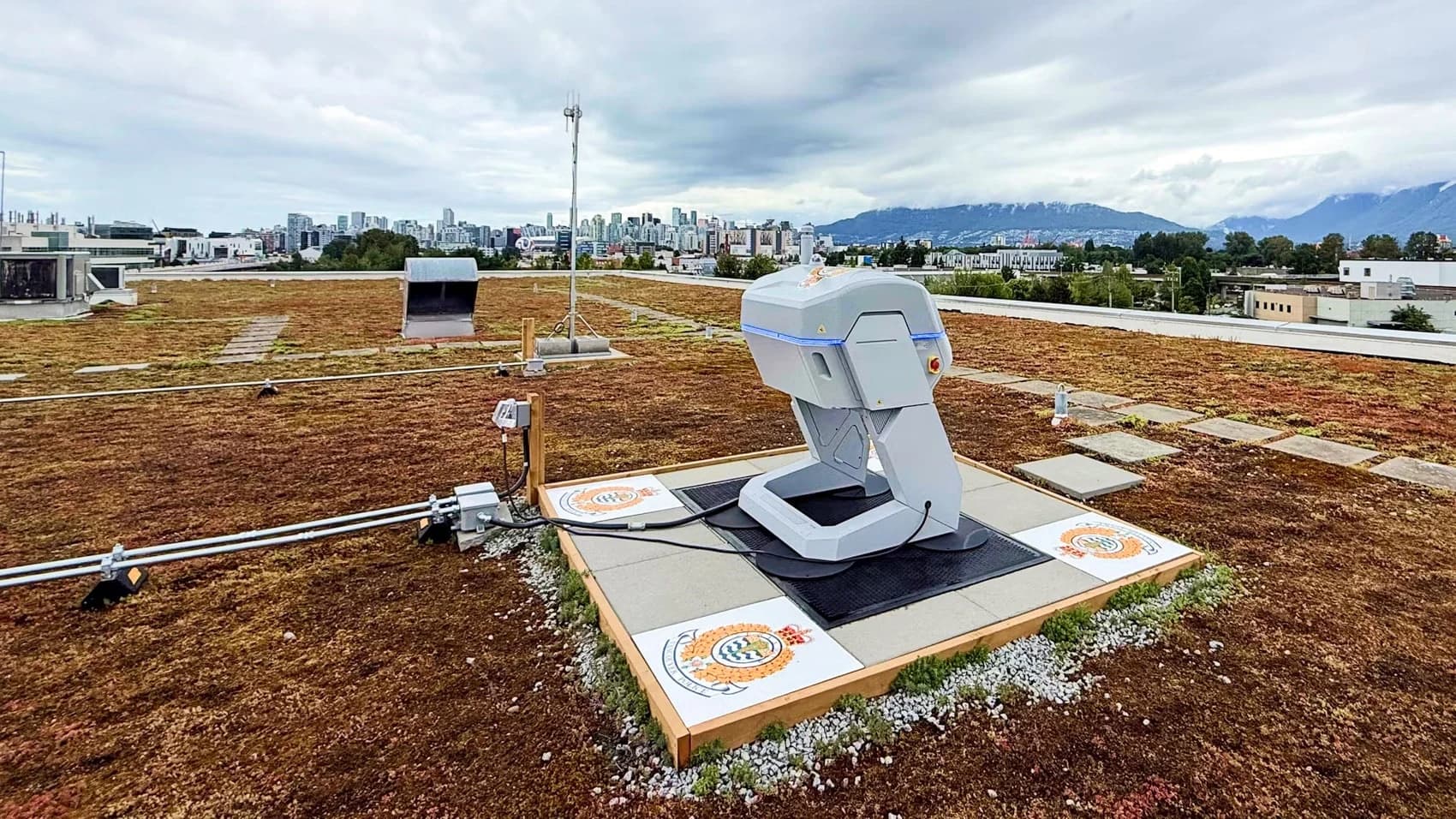
Vancouver has officially become the first city in Canada to deploy rooftop-docked police drones capable of launching autonomously within seconds of a 911 call. The Vancouver Police Department (VPD) announced on June 10 that it has established a Drone as First Responder (DFR) system, placing six Skydio X10 drones at strategic locations across the city—including the department's Tactical Training Centre—each paired with a weatherproof automated docking station. The program has received approval from Transport Canada.
When a 911 call comes in, a drone launches autonomously from its rooftop dock, flies to the incident location, and streams live video to both a remote pilot at a command centre and officers responding on the ground—typically arriving well ahead of any patrol vehicle.
The timing is deliberate. Vancouver is one of the host cities for the 2026 FIFA World Cup, and the VPD has explicitly positioned the drone fleet as a security tool for real-time monitoring of crowds, transit hubs, and event zones. Metro Vancouver's transit police are also developing their own drone programs, with World Cup preparations accelerating the broader regional security rollout.
Triple-Tap to Safety: A New Tool for Officer Protection
Perhaps the system's most operationally significant feature is its integration with Axon body-worn cameras. According to Skydio's product documentation, VPD Insp. Wade Rodrigue of the Use of Force Options Training Unit explained that when an officer is in danger—such as being attacked—three rapid taps on their body camera trigger the automatic dispatch of a Skydio X10 drone to that officer's precise location, with a remote pilot taking command of the mission.
The design streamlines the call-for-help process to a single gesture, with no additional steps required. Pilots can also proactively dispatch drones to the scene of a reported crime before patrol units arrive, sharing the live feed with all responding personnel in real time.
Skydio X10: Core Specifications
The X10 is Skydio's flagship platform, engineered around advanced autonomous flight:
- 360-degree awareness: Six onboard navigation cameras provide full situational awareness
- NightSense: Infrared-enabled obstacle avoidance for flight in complete darkness
- Thermal imaging: The first drone to integrate a Teledyne FLIR Boson+ thermal sensor at 640×512 resolution
- Optical payload: Up to 64-megapixel wide-angle lens combined with a telephoto zoom, capable of reading faces or licence plates from a safe standoff distance
- Flight endurance: Approximately 40 minutes
- Top speed: ~72 km/h (45 mph)
- Operating temperature: -20°C to 45°C
Notably, the X10 is NDAA-compliant and assembled in the United States, making it fully compatible with government procurement rules that restrict Chinese-manufactured hardware.
Why Skydio Over DJI?
DJI hardware offers strong performance at lower price points, and many police agencies continue to use it. Vancouver chose a different path, and the deciding factor was data sovereignty.
Skydio established a Canadian-hosted cloud instance specifically for this deployment, keeping all imagery and flight data within Canada's borders. For a police service building out surveillance infrastructure ahead of a global event, the question of where data resides—and who can access it—is a substantive security decision, not a marketing point.
Data sovereignty combined with an NDAA-compliant supply chain is Skydio's core competitive argument against DJI. Its autonomous flight software is widely regarded as best-in-class, though hardware costs remain higher than comparable DJI platforms.
Surveillance Concerns Deserve Scrutiny
The drone system arrives alongside an automatic licence plate reader network and upgraded body cameras capable of real-time translation in dozens of languages—a comprehensive expansion of surveillance capability.
The rooftop DFR fleet will not be dismantled when the World Cup ends. The docks and the command infrastructure will remain, and the policies governing how often these drones fly and who they track will outlast the event that accelerated their deployment.
The VPD's announcement did not disclose flight frequency limits, video retention periods, or audit mechanisms. For a system of this capability, those answers matter as much as response times.
Industry Takeaway
Canada has long been a DJI-dependent market, but with the 2026 World Cup approaching, Vancouver's police chose Skydio as their trusted vendor. The deciding factor was not price—it was data residency. A Canadian-hosted cloud ensures footage stays in-country, backed by an NDAA-compliant, China-free supply chain.
At a deeper level, this deployment is about more than drones. It represents an integrated security ecosystem: semi-autonomous aerial platforms, rooftop docks, licence plate recognition cameras, and real-time translation body cameras—precisely the kind of layered solution a country preparing to welcome millions of international visitors needs.
原文來源: 查看原文
FAQ
Reviewed and published by the LAETimes editorial desk ·