Octopus-Inspired Robotic Arm with 'Thinking Suckers' Developed by Italian Researchers for Deep-Sea Exploration
Researchers at the Italian Institute of Technology (IIT) have developed a bionic robotic arm modeled on the octopus, featuring distributed intelligence that allows each sucker unit to sense and respond to environmental changes autonomously—without relying on a central processor. Drawing on 500 million years of biological evolution, the design aims to overcome the limitations of conventional underwater robots operating in unpredictable currents, low visibility, and complex terrain.
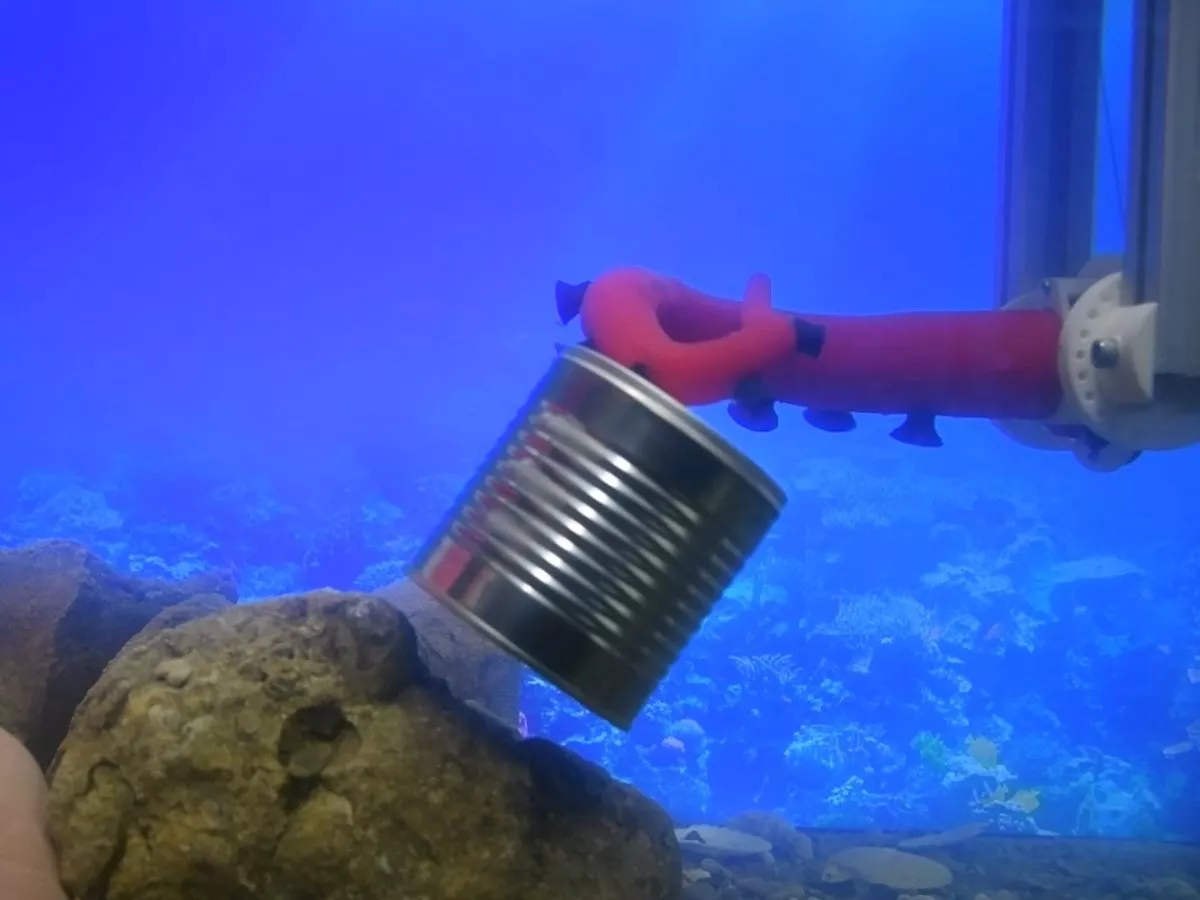
Highlights
- IIT researchers developed an octopus-inspired robotic arm in which each sucker unit operates with distributed intelligence, sensing and reacting autonomously without a central processor.
- The design is modeled on the octopus nervous system, where roughly two-thirds of neurons reside in the eight arms—an evolutionary architecture refined over 500 million years.
- The arm's flexible, distributed-sensing structure directly addresses three key limitations of conventional seafloor robots: current interference, low visibility, and complex terrain.
- The research advances the field of bio-inspired robotics and may inform future soft robotics development beyond marine science applications.
Most robots currently used to explore the seafloor rely on pre-programmed movements, central processors, and rigid structures to carry out their tasks. But the ocean environment is anything but predictable—currents shift without warning, visibility can drop suddenly, and the terrain may change in unexpected ways. These factors place significant demands on robots built around conventional architectures.
Now, researchers at the Italian Institute of Technology (IIT) have turned to a radically different source of inspiration—one refined by 500 million years of evolution: the octopus.
Bionic Design: Suckers That 'Think for Themselves'
The central concept behind the octopus-inspired robotic arm is the delegation of sensing and response capabilities to individual sucker units, realizing what the team calls 'distributed intelligence.' Unlike conventional robots that must relay all sensor data to a central processor before issuing commands, each sucker on this arm can independently perceive its surroundings and react in real time. This dramatically reduces response latency and improves adaptability in complex environments.
The octopus is nature's premier example of a distributed nervous system—roughly two-thirds of its neurons are located in its eight arms rather than in its brain. This arrangement allows each tentacle to act semi-autonomously, without waiting for the brain to issue every individual command. The IIT research team drew directly on this evolutionary advantage, applying the principles of biomimicry to robotic engineering design.
Addressing the Bottlenecks of Current Seafloor Exploration
Conventional underwater exploration robots face a number of persistent challenges:
- Current interference: Sudden water currents can disrupt pre-set movement sequences
- Low visibility: Visual sensors perform poorly in turbid water conditions
- Terrain complexity: Irregular seabed topography is difficult to model in advance
The flexible structure and distributed sensing design of the octopus-inspired arm allow it to handle these challenges with greater agility, delivering improved stability and adaptability when grasping objects, conducting surveys, or collecting seafloor samples.
The Future of Bio-Inspired Robotics
This research represents a significant advance in the field of bio-inspired robotics. Beyond its practical value for marine science exploration, the distributed control architecture underlying the design may also inform future developments across the broader field of soft robotics.
IIT's work is a compelling reaffirmation of the engineering philosophy of learning from nature—a reminder that 500 million years of evolution can sometimes produce answers far more elegant than anything a human engineer might design from scratch.
原文來源: 查看原文
FAQ
Reviewed and published by the LAETimes editorial desk ·