Lee County Sheriff's Office Releases Video of Man Shooting at Drone with BB Gun, Recording a Federal Felony in Real Time
A Drone First Responder (DFR) drone operated by the Lee County Sheriff's Office in southwest Florida captured footage of a man firing a BB gun at the aircraft at least twice during a black bear search mission. The suspect was arrested the same day. Under 18 U.S.C. § 32, deliberately shooting at any aircraft—including a drone—carries a maximum penalty of 20 years in federal prison.
Highlights
- A Lee County Sheriff's Office DFR drone recorded a man firing a BB gun at the aircraft at least twice during a black bear search mission in Florida; the suspect was arrested the same day.
- Under 18 U.S.C. § 32, deliberately shooting at any aircraft—including a drone—is a federal felony punishable by up to 20 years in prison, regardless of weapon type or whether the aircraft sustains damage.
- Drones are legally classified as 'aircraft' under 18 U.S.C. § 31(a)(1), a definition the FAA confirmed extends federal aircraft-destruction statutes to unmanned aerial vehicles.
- The LCSO stated its DFR drones are marked with LCSO insignia and display red and blue lights while airborne, providing clear visual identification to anyone on the ground.
- The incident highlights the dual nature of DFR programs: the always-on camera that enabled a real-time arrest is the same capability that draws civil liberties scrutiny of law enforcement drone surveillance.
Lee County Sheriff's Office Releases Video of Man Shooting at DFR Drone, Capturing a Federal Felony on Camera
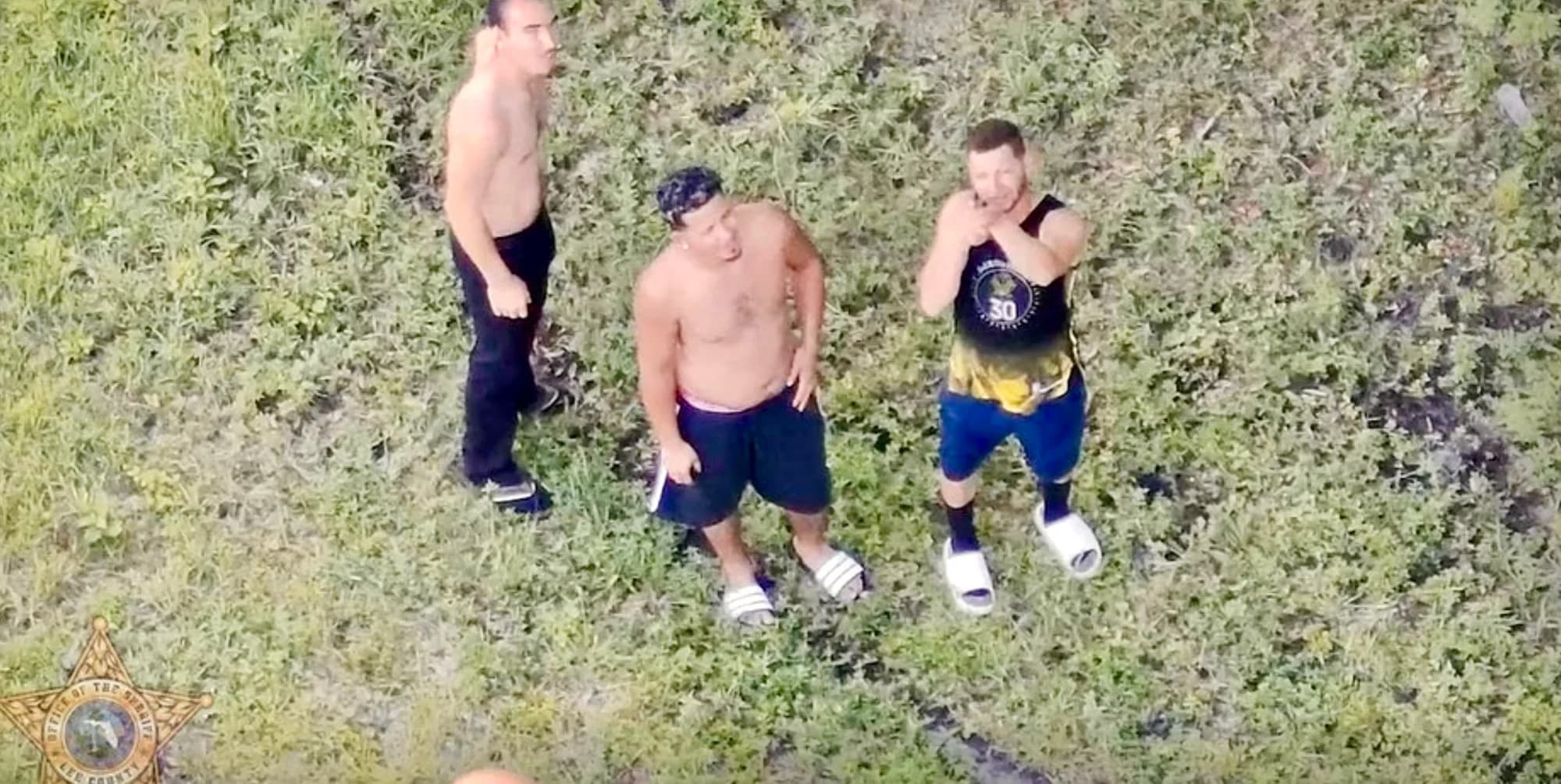
A law enforcement drone operated by the Lee County Sheriff's Office (LCSO) in southwest Florida recorded a man firing a BB gun at the aircraft at least twice while the drone was conducting a black bear search mission—capturing a federal felony in real time. The suspect was arrested the same day (Saturday), and the agency subsequently released both the drone footage and video of the arrest. The man now faces criminal charges, with the key evidence against him coming from the very aircraft he targeted.
The Drone Recorded Everything
The drone was operating as part of the LCSO's Drone First Responder (DFR) program when its operator spotted a group of men who appeared to be shooting toward a wooded area. The camera then captured a more critical moment: a man on the ground raised what investigators later confirmed was a BB gun and fired at the law enforcement drone twice.
The agency stated that the live video feed allowed deputies to gather real-time evidence and make a swift arrest. Because the drone never stopped recording, the case does not rely on officers' after-the-fact testimony—the footage itself is the primary witness.
"The DFR program is an incredibly valuable resource that can be on scene within minutes, often before deputies arrive," the sheriff's office said in a statement. "Real-time information allows deputies to prepare before they get there, improving officer safety."
The drone arrived on scene, identified the threat, and streamed live footage to waiting deputies before any uniformed officer was present. This is the DFR program working exactly as designed—documented in a single video clip. The outcome echoes an early case from the Dallas Police Department's DFR program, in which a Skydio drone located a man who had wandered onto a highway before patrol units arrived.
Shooting at Any Aircraft—Including a Drone—Is a Federal Felony: 18 U.S.C. § 32
The applicable federal statute is 18 U.S.C. § 32, "Destruction of aircraft or aircraft facilities." The law states that willfully setting fire to, damaging, destroying, disabling, or wrecking any aircraft in the special aircraft jurisdiction of the United States constitutes a felony punishable by up to 20 years in prison, a fine, or both. The sheriff's office noted in its statement that firing a weapon at an aircraft—including a drone—is a federal crime.
The legal basis for classifying drones as "aircraft" comes from the preceding statute. 18 U.S.C. § 31(a)(1) defines "aircraft" as any contrivance invented, used, or designed to navigate, fly, or travel in the air. A quadcopter drone meets that definition just as fully as a Cessna. The FAA confirmed years ago that shooting at unmanned aircraft falls within the scope of Section 32, and federal prosecutors have pursued charges accordingly. The weapon does not need to be a rifle, and the drone does not need to be brought down—the act of firing at it is sufficient to constitute the offense.
This mirrors a legal tension this publication has covered before: Wisconsin legislators once proposed a bill that would allow police to shoot down drones, a measure in direct conflict with Section 32's broad protection of aircraft. Each time a similar incident arises, the statute bears revisiting—from a Michigan man charged with allegedly shooting down a police DJI Air 3, to broader discussions about what drone pilots should do when fired upon. The law has not changed. What changes is the clarity with which each incident is documented—and this one is among the most clearly documented cases on record.
The Agency Addresses Markings and Surveillance Concerns
The LCSO stated that its drones are marked with LCSO insignia and operate with red and blue lights whenever airborne, giving anyone on the ground a clear visual indication that the aircraft belongs to a law enforcement agency. The department also told the community that its drone operations comply with strict internal policies and state and federal regulations, and that it does not conduct random surveillance of residents.
The assurance against random surveillance is the central point of friction that every DFR program eventually faces. A drone that arrives before deputies do is also a camera that arrives before deputies do. Agencies that publicly document retention periods, flight logs, and mission-type breakdowns tend to sustain community trust over time far better than those that ask residents to accept policy statements on faith—a pattern consistently observed while tracking DFR programs from Kansas City to Bloomington, Minnesota. Markings and visible lights are the easy part; what happens to footage after a flight ends is the harder question, and one with a lifespan far longer than any single arrest.
DroneXL Editorial Perspective
The surface narrative here writes itself, which is precisely why it is worth slowing down to examine carefully. A man shoots at a drone, the drone records him doing it, and he is in handcuffs within minutes. Clean story. But the detail that is legally significant—and that the sheriff's office got right in its statement even if most coverage will not go deep on it—is this: the fact that the weapon was a BB gun is irrelevant, and so is the fact that the drone was undamaged. The liability under Section 32 attaches to the act of firing at an aircraft, and a drone has been an aircraft under 18 U.S.C. § 31 from the start.
Across the many similar cases DroneXL has tracked over the years, the pattern is consistent: the federal felony statute is real, but it rarely results in a 20-year sentence. Federal charges, equipment forfeiture, and a criminal record are the realistic outcomes—not a maximum-term sentence. And yet people continue to shoot at drones, typically because they regard a small UAV flying over what they consider their property as a legitimate target. It is not—and the gap between that assumption and the actual law is exactly what puts people in legal jeopardy. A BB gun does not reduce culpability; the FAA's own armed drone guidance treats CO2-powered pneumatic guns as dangerous weapons, and the felony standard for shooting at an aircraft is set by the conduct, not the caliber.
What the video actually represents is the DFR program's strongest argument and its most difficult challenge appearing in the same clip. The strongest argument: the drone captured a crime committed against itself in real time, with footage clear enough to support an on-scene arrest. The most difficult challenge: that same always-on camera is exactly what civil liberties advocates point to when questioning police drones patrolling communities. The LCSO says its drones are marked, lit, and policy-governed. Whether that framework holds community credibility the next time a DFR drone records something more ambiguous than a man pointing a BB gun at it is an open question—and not one that any single highlight-reel video can answer.
Source: FOX 5 New York, reporting based on information provided by the Lee County Sheriff's Office. Statutory reference: 18 U.S.C. § 32, Office of the Law Revision Counsel of the United States.
DroneXL uses automated tools to assist with research and fact-finding. All reporting and editorial commentary is written by Haye Kesteloo.
原文來源: 查看原文
FAQ
Reviewed and published by the LAETimes editorial desk ·