Toy Drones Win Big in Washington While Professional Operators Keep Losing
The Toy Association secured a federal exemption allowing foreign-made toy drones to continue entering the U.S. market, following months of lobbying across three agencies. Meanwhile, DJI and Autel remain banned from selling new products in the U.S., leaving commercial drone operators — who depend on those platforms for their livelihoods — without a comparable policy win. The outcome highlights how organized, well-funded lobbying determines market access in U.S. drone policy.
Highlights
- The Toy Association secured an FCC exemption (DA 26-588) this week allowing foreign-manufactured toy drones to continue entering the U.S. market, following months of lobbying across three federal agencies.
- DJI and Autel remain banned from selling new drone models in the U.S.; DJI-authorized products must have been cleared before December 22, 2025 to remain legal.
- DJI holds an estimated 70% share of the global drone market, and over 90% of U.S. first-responder drone fleets use DJI or Autel aircraft, meaning the ban directly affects public safety operations.
- Skydio's annual federal lobbying spending grew from ~$10,000 in 2019 to ~$560,000 in 2023, illustrating the scale of investment domestic manufacturers made to shape U.S. drone policy.
- DJI's challenge to its Covered List designation is docketed as case 26-1029 in the Ninth Circuit Court of Appeals, and is considered the primary legal avenue for operators seeking to overturn the ban.
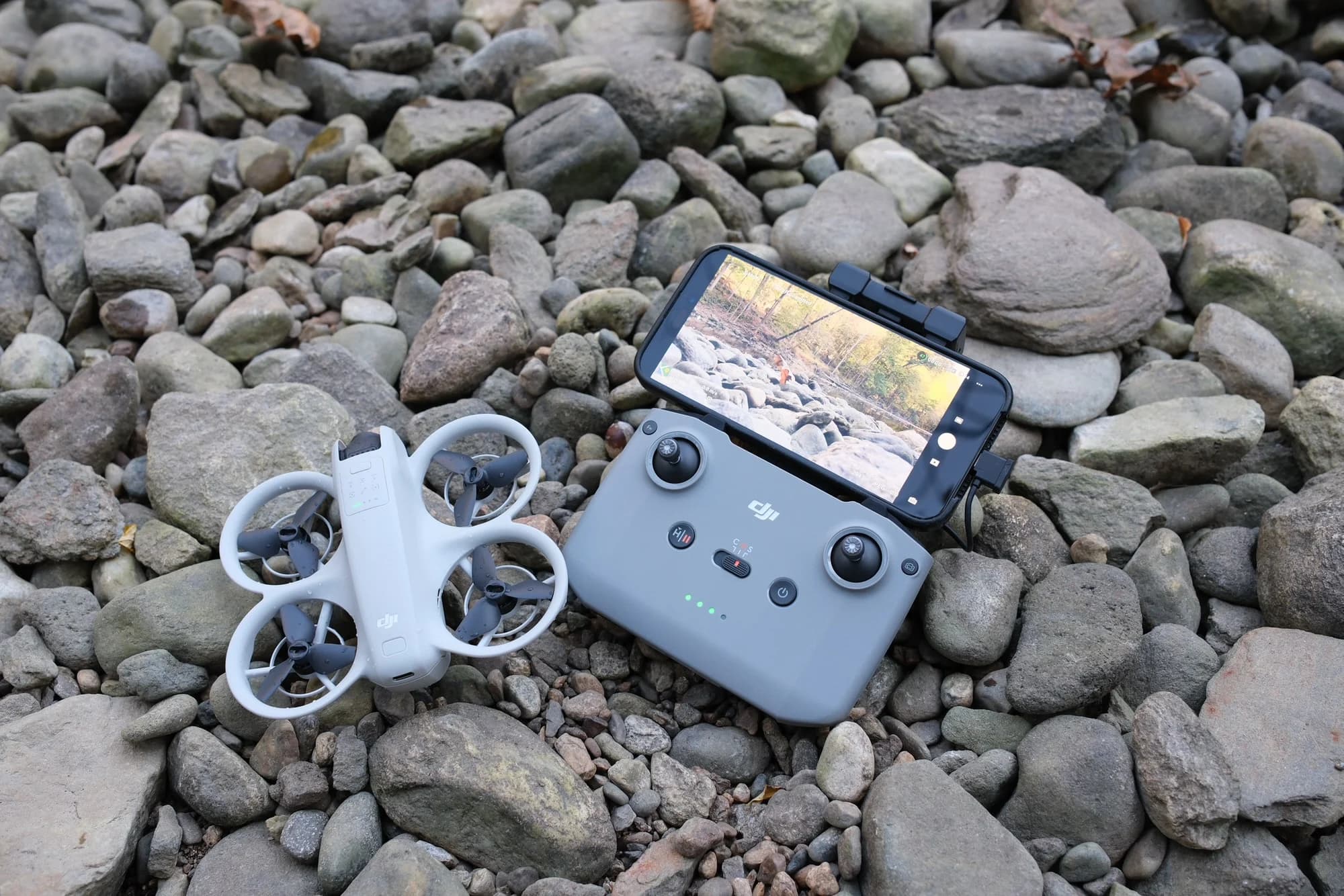
The Toy Association spent months lobbying the FCC, the Department of Homeland Security, and the Department of Defense, and last week sent representatives to Capitol Hill for its annual Washington advocacy event. On Tuesday, it got what it came for: an exemption allowing foreign-manufactured toy drones to continue entering the U.S. market took effect, with the FCC publishing the corresponding order the same day. The trade group announced its victory within hours.
This is what it looks like when an industry shows up in an organized, disciplined way. The toy lobby identified a narrow, winnable target, made a clean safety argument, and prevailed. The contrast with what happened on the other side is stark: DJI and Autel remain barred from selling new products in the United States — including the DJI Osmo Pocket 4 camera, which never found a path to legal sale. The drone industry watched two very different factions achieve their lobbying goals this week. The people who actually fly drones for a living were not among them.
The Toy Association Won a Clean, Well-Executed Fight
The Toy Association's win came from months of coordinated outreach across three federal agencies, capped by last week's in-person meetings with lawmakers on the Hill. Their argument was consistent throughout: children's toys are not surveillance platforms.
The trade group leaned on a point regulators found easy to accept: toy drones are lightweight, low-powered, short-range, and lack GPS or meaningful connectivity — and therefore simply cannot do the things the government is worried about. They also noted that children's toys must already meet rigorous federal safety standards before reaching shelves — specifically ASTM F963, the toy safety specification. Toy Association Chief Policy Officer Kathrin Belliveau said the outcome proves that toy drones can finally be evaluated on their actual capabilities rather than being swept into a broad prohibition. She said the result reflects the association's advocacy work across agencies and policymakers, and preserves market access for products that do not carry the risks associated with advanced drone systems.
This was a textbook advocacy win. The ask was narrow, the argument was simple, and the product category was easy to sympathize with. No official in Washington wanted to be known for banning a 100-gram children's toy on national security grounds, so the exemption moved. The Department of Defense's determination that the products in question are "technically unsophisticated, low-risk toys" gave the FCC a clear basis to carve them out of the Covered List — the roster of foreign drones subject to prohibition that was established six months ago and is set to take full effect on June 15.
Commercial Drone Manufacturers Proved the Same Playbook Works Years Ago
Years before the Toy Association's win, U.S. commercial drone manufacturers ran the same script in reverse — lobbying not to protect their own products, but to push competitors out of the market. The spending is on the federal record, and the results speak for themselves.
According to OpenSecrets data compiled by DroneXL in December, Skydio's federal lobbying expenditure climbed from roughly $10,000 in 2019 to approximately $560,000 in 2023, with registered lobbyists growing from 6 to 24 over the same period. BRINC Drones spent $240,000 on federal lobbying in 2024. These figures, combined with Silicon Valley-backed efforts to promote domestic police drone programs, paint a picture of a multi-year campaign, not a one-off action.
Skydio CEO Adam Bry testified before the House Select Committee on the Chinese Communist Party in June 2024, telling lawmakers that Beijing was resourcing a national drone champion while undercutting American competitors. Bry has publicly stated that Skydio had no connection to the Counter-CCP Drones Act and did not lobby for it, while also acknowledging the company did engage policymakers on the risks posed by Chinese drones. As this publication has noted previously, at that level of spending and with that congressional testimony on the record, the line between "advocating for domestic industry growth" and "lobbying against specific competitors" becomes very thin.
The point is not that Skydio or BRINC broke any rules — they worked the system as designed. They identified a policy objective, invested in Washington over time, and achieved outcomes favorable to their business. The toy industry did the same in the opposite direction. Both succeeded because both arrived at the table with money, a focused target, and a clear ask.
Operators Have a Voice, but That Voice Is Structurally Disadvantaged
Recreational flyers and drone service businesses have not been silent. They have organized, submitted comments, and shown up in person. The problem is that the coalition speaking for them faces structural disadvantages from the start — and specifically three simultaneous headwinds.
First, the primary vehicle for end-user advocacy — the Drone Advocacy Alliance — was founded in 2023 with DJI as a founding sponsor and website maintainer. DroneXL is a partner of the alliance, and this publication considers its grassroots work to be genuine and valuable. But its funding source gives opponents a ready rebuttal: "This is a front for a foreign company, not a citizen movement." The Toy Association never faced that problem, because no one can credibly accuse a children's product trade group of running cover for a foreign government.
Second, the operator community is defending an incumbent that the government has already decided to remove. Asking Washington to keep a Chinese company in the market is a fundamentally harder argument than asking the government to leave a harmless children's toy alone.
Third, the operator coalition is itself fragmented. The same dynamic that allowed routers and drones to be added to the Covered List with minimal resistance applies here: tens of thousands of small businesses, hobbyists, and public safety agencies share no common trade association, no common budget, and no ability to deliver a unified message the way the toy industry can.
Operators did at least make themselves heard at the institutional level. The Drone Service Providers Alliance (DSPA), representing more than 33,000 remote pilots, submitted comments to the FCC in May arguing that the agency was hearing mostly from Washington policy circles and domestic manufacturers, while the people who make their living flying these aircraft were underrepresented. The argument is correct. But it has not yet produced a toy-industry-style win, because what operators are fighting for is precisely what the government spent years deciding to reject.
What Operators Are Fighting for Is a Livelihood, Not a Toy
The gap between these outcomes matters because operators are not fighting for toys — they are fighting for the equipment that professional workers depend on for their income, and the dependency numbers are significant.
According to data compiled by DroneXL across this series of reports: DJI holds an estimated 70% share of the global drone market; roughly two-thirds of DSPA members say they would face closure without access to DJI products; and more than 90% of first-responder drone fleets in the United States use DJI or Autel aircraft. The ban does not touch the toy category that just won an exemption, but it does directly affect search-and-rescue teams, survey companies, power line inspection operators, agricultural operators, and photographers who have built workflows around tools like the Osmo Pocket line. Farmers relying on affordable, capable drones for crop monitoring face the same bind. None of these people won anything in this week's lobbying battle.
For operators, Tuesday's news changed nothing on the ground: DJI and Autel products authorized before December 22, 2025, may still be legally owned, flown, and resold. But all new models will remain blocked beyond that date, with narrow exceptions for toys. The Osmo Pocket 4 remains unavailable in the U.S. market, as does the next generation of Mavic, Air, and Mini aircraft — and the FCC's self-granted retroactive authorization authority means even approved models carry uncertainty, unless a court ruling or future executive determination changes the equation.
DroneXL's Perspective
Having watched various lobbying factions operate in Washington over the years, this week's lesson is not that lobbying is corrupt — it is that lobbying works, but its benefits are distributed very unevenly. The toy industry won because it asked for something small, defensible, and politically safe. Commercial drone manufacturers won because they spent real money for years pushing a competitor out of the market. Operators keep losing not because they are lazy or silent, but because they drew the hardest hand: defending a foreign incumbent, through a coalition opponents can easily dismiss as a DJI front, on behalf of a constituency too fragmented to speak with a unified budget.
Honesty about this publication's own position is warranted: DroneXL is a partner of the Drone Advocacy Alliance, and this reporter believes in what the alliance and the DSPA are trying to do. But pretending that the operator coalition is as effective as the toy lobby would be false. The DSPA's own FCC filing essentially conceded the point: the agency is not hearing enough from people in the field. That filing was the right move, but it came late relative to the spending the other side has been doing since 2019.
What remains to be seen is whether operators can convert real numbers into real leverage. DJI's challenge to the Covered List designation — docketed as case 26-1029 in the Ninth Circuit Court of Appeals — is the only venue where the operator community's core argument, that the ban lacks an evidentiary foundation, can be tested on the facts rather than fought out in lobbying meetings. If the court compels the government to disclose its basis for the designation, the operator case becomes substantially stronger overnight. If the court defers, this week's lesson hardens into a rule: in U.S. drone policy, you get what you organize and pay for — and right now, the people who make their living flying are being outplayed by the people who make their living selling toys. Whether that changes depends on whether the industry can ultimately show up at the table the way the Toy Association did.
Sources: The Toy Association; FCC Public Notice DA 26-588.
DroneXL uses automated tools to assist with research and source compilation. All reporting and editorial perspective by Haye Kesteloo.
原文來源: 查看原文
FAQ
Reviewed and published by the LAETimes editorial desk ·