Oakland County Sheriff's Drone and K-9 Units Search for Missing Toddler Who Had Already Returned Home
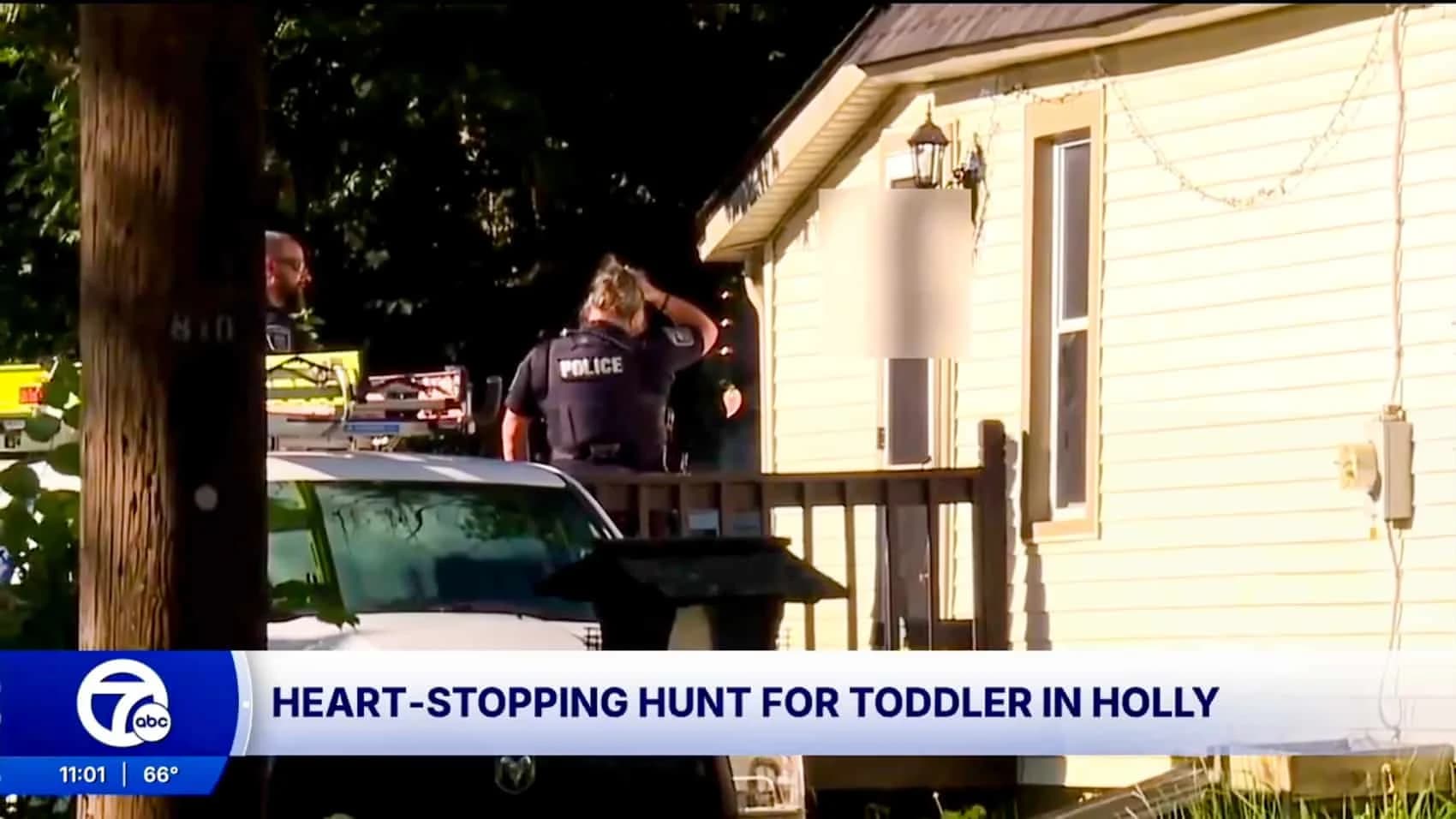
On June 19, 2025, a large-scale search was launched in Holly, Michigan after a doorbell camera captured an unaccompanied 18-month-old boy walking alone on Elm Street. The Oakland County Sheriff's Office deployed drones and K-9 units for an afternoon-long search, only to discover the child had returned home on his own — while his parents had denied three times to officers that the boy was theirs.
Highlights
- On June 19, 2025, Holly Police and the Oakland County Sheriff's Office launched a search after a doorbell camera captured an unaccompanied 18-month-old boy on Elm Street in Holly, Michigan.
- Oakland County Sheriff's drones flew grid-search patterns over the community for an entire afternoon alongside K-9 units, covering 8–10 city blocks per pass compared to one block on foot.
- The boy's parents lied to responding officers three times, denying the child in the footage was theirs; on the fourth visit, they admitted he had wandered out and self-returned home.
- The child was confirmed safe at 7:20 p.m. — he had walked home on his own — making the entire aerial search operationally unnecessary in retrospect.
- The case illustrates that police drones function as clearance tools that extend door-to-door canvassing, but cannot substitute for ground-level human judgment in missing persons investigations.
Doorbell Camera Footage Triggers Search Operation
At 11:54 a.m. on June 19, 2025, a homeowner's doorbell camera in Holly, Michigan captured footage of an 18-month-old boy walking unaccompanied through the 500 block of Elm Street. The child was alone in a residential neighborhood in broad daylight.
Holly Police Department promptly released a still image from the footage, asking anyone who recognized the boy to contact the dispatch center at 248-858-4911. Holly is a town of just over 6,000 residents located approximately 50 miles (80 km) northwest of Detroit in southern Oakland County, surrounded by lakes, woodlands, and the Holly State Recreation Area. For a toddler, that terrain posed a potentially vast and complex search environment.
Oakland County Sheriff's UAS Unit Joins the Search
Holly police requested assistance from county-level resources within the same hour. The Oakland County Sheriff's Office operates a well-established Aviation and Unmanned Aircraft Systems (UAS) capability across southeast Michigan, with a track record in missing persons searches, fugitive apprehension, accident reconstruction, and tactical surveillance. That afternoon, the department deployed drones over the area while simultaneously directing K-9 units to search surrounding streets.
Searching for a toddler by drone in June in Michigan comes with real operational constraints: midday ground temperatures reduce the effectiveness of thermal imaging compared to dawn or dusk conditions. Nevertheless, aerial assets still offer a decisive advantage in area coverage — a drone can visually sweep eight to ten city blocks in the time it takes a ground officer to cover one. K-9 units worked in close proximity, tracking scent on the ground. The combination allowed the search team to clear multiple blocks per hour, with officers simultaneously conducting door-to-door inquiries.
Officers Knocked on the Right Door — Three Times
The most significant detail in this case is often the one agencies are least willing to publicize.
According to Holly Police, officers visited the boy's actual residence three times during the search. Each time, the child's parents told responding officers that the toddler in the doorbell footage was not their son. It was not until a fourth visit — when the search team returned with additional information — that the parents finally admitted the boy had wandered out of the home on his own and had walked back by himself at some point during the afternoon.
At 7:20 p.m., the child was confirmed safe. He had returned home under his own power. The crux of the entire operation: Oakland County's drone had flown over the community for an entire afternoon, while the answer had been behind a door that officers had already knocked on three times.
What Aerial Search Can and Cannot Do
This case should not be interpreted as an argument against deploying drones in missing child searches. In a county like Oakland — with extensive forested terrain and lakefront geography — UAS assets have proven critical in genuinely complex cases where a missing person has entered dense woods, entered water, or is located somewhere ground units cannot quickly reach.
The Holly case only looks straightforward in hindsight. At the time the search was underway, no one knew where the child was.
What this case does illustrate is that aerial assets are not a substitute for door-to-door canvassing — they are an extension and enhancement of it. A grid scan from 200 feet (approximately 61 meters) gives ground teams greater confidence to spend more time at each door, ask more probing questions, and not rush to the next address. That is precisely the core value argument agencies should be making when seeking UAS budget approval from local councils.
DroneXL Editorial Perspective
The Holly case is worth studying carefully for anyone involved in discussions around police drone programs in 2025 and 2026.
The drone did what it was supposed to do: it cleared search areas faster than four patrol cars could have. It did not find the child — not because of equipment failure, but because the child was not in any area the drone could have seen. He was inside a house whose door had already been knocked on three times by officers who were given false information.
This is a workflow problem, not a hardware problem. For Oakland County and for every agency integrating drones into missing persons protocols, the lesson is clear: drones are a clearance tool, not a deception-detection tool. If frontline officers cannot identify a behavioral anomaly in a parent's response during a child search, the drone flying overhead will do all the work — and search all the wrong areas.
Drones are tools. They are here to enhance traditional capabilities, not replace them. They will continue to be welcomed by the agencies that need them, regardless of where they are manufactured.
Image credit: WXYZ Detroit
原文來源: 查看原文
FAQ
Reviewed and published by the LAETimes editorial desk ·