The Silent Revolution in Battery Technology: How 3D Printing Is Rewriting the Future of Energy Storage
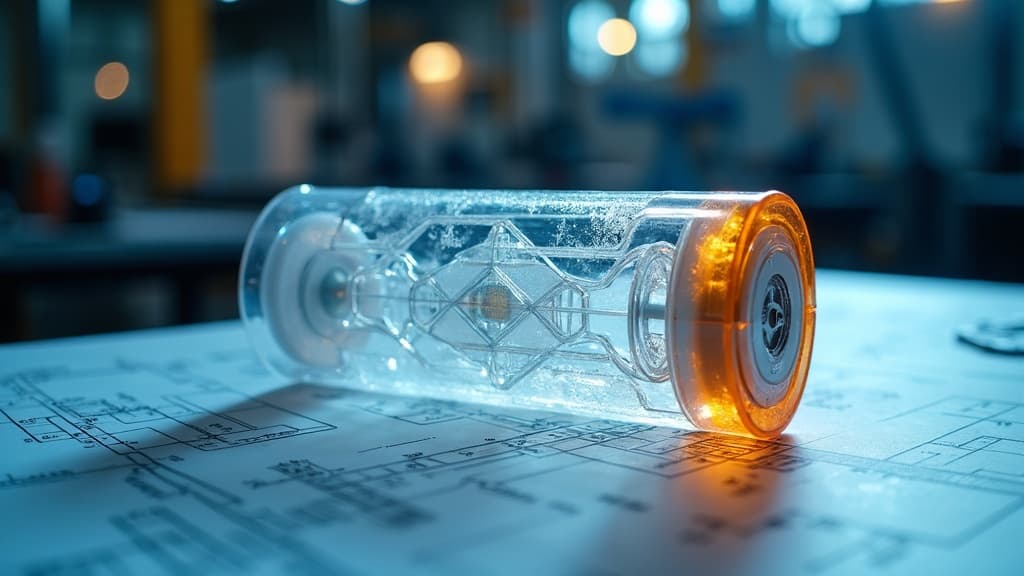
The Wall Street Journal reports that 3D-printed battery technology is quietly transforming energy storage by enabling batteries to be manufactured in virtually any shape. Unlike conventional innovation focused on battery chemistry, this approach reshapes physical form — unlocking applications from thinner consumer electronics and longer-endurance military drones to nanoscale robots, potentially rivaling the impact of solid-state batteries.
Highlights
- 3D-printed battery technology shapes batteries into any physical form, enabling energy storage to be integrated into devices and spaces incompatible with conventional rectangular or cylindrical batteries.
- Military drone applications are a primary use case: custom-shaped batteries conforming to airframe structures can maximize energy density and significantly extend flight endurance.
- Unlike solid-state battery innovation — which focuses on chemistry — 3D-printed batteries represent a manufacturing and structural paradigm shift.
- Potential applications span consumer electronics, long-endurance military drones, and nanoscale robots, according to a Wall Street Journal report.
- Industry analysts suggest the impact of 3D-printed battery technology could rival that of solid-state batteries, positioning it as a key energy breakthrough of the next decade.
A quiet revolution in battery technology is unfolding in plain sight, according to a recent report by The Wall Street Journal — and it centers on 3D-printed batteries.
Beyond Chemistry: A Revolution in Shape and Structure
For decades, innovation in the battery space has focused almost exclusively on changes to chemical composition, including:
- Cheaper, more durable batteries for electric vehicles
- The much-coveted solid-state battery, widely regarded as the industry's holy grail
3D-printed battery technology takes an entirely different approach. Rather than altering what a battery is made of, it transforms how batteries are manufactured and what physical form they take.
Energy Storage That Fits Into Anything
The core advantage of 3D printing in this context is the ability to fabricate batteries in virtually any shape, enabling energy storage modules to be embedded in spaces and devices that could never accommodate conventional batteries.
The range of potential applications is sweeping:
- Consumer electronics: Thinner, lighter wearables and mobile devices with longer battery life
- Long-endurance military drones: Custom-shaped batteries that conform to airframe structures, maximizing energy density and significantly extending flight duration
- Nanoscale robots: Miniaturized power solutions precisely sized for micro-scale machines
Implications for the Drone Industry
For the drone industry, battery endurance has long been one of the most persistent technological bottlenecks. Conventional batteries — constrained by standardized rectangular or cylindrical form factors — consume large portions of an airframe's interior volume, while leaving irregular cavities inside wings and fuselages unutilized.
If 3D-printed battery technology reaches commercial maturity, drone manufacturers could tailor battery geometry directly to their airframe designs — maximizing energy storage capacity while simultaneously reducing overall weight. This would open the door to entirely new mission profiles requiring extended range and prolonged flight endurance, including BVLOS operations and persistent surveillance missions.
Outlook
While the technology remains largely in the development phase, industry observers broadly agree that the manufacturing paradigm shift represented by 3D-printed batteries could prove as consequential as the chemical revolution promised by solid-state batteries. This "revolution hiding in plain sight" may well emerge as one of the most pivotal energy technology breakthroughs of the next decade.
Sources: The Wall Street Journal, Slashdot
原文來源: 查看原文
FAQ
Newsletter
Subscribe to our Low-Altitude Industry Newsletter
Daily curated news on low-altitude economy and drone industry, delivered to your inbox.
Reviewed and published by the LAETimes editorial desk ·