Korean Researchers Develop Self-Healing Contact Lens Material That Repairs Scratches in One Hour of UV Exposure
South Korean researchers have developed a new hydrogel material capable of repairing surface scratches on contact lenses through one hour of 365-nanometer UV light exposure, triggering a disulfide exchange reaction. The material also features antibacterial and anti-scratch coatings with only about 2% loss in transparency. The study, funded by the National Research Foundation of Korea, has been published in ACS Applied Polymer Materials.
Highlights
- South Korean researchers developed a hydrogel contact lens material that repairs surface scratches after just one hour of 365 nm UV light exposure at room temperature.
- The self-healing mechanism is based on disulfide exchange reactions, in which sulfur bonds break and re-form to rebuild the damaged polymer network—no heat required.
- An additional polymer coating provides both antibacterial protection and scratch resistance, with transparency loss of only approximately 2% after repeated abrasion testing.
- The hydrogel's water retention and mechanical properties match those of commercially available soft contact lenses, making it practically viable for daily wear.
- The study, titled 'Room-Temperature UV-Induced Self-Healing Hydrogels with Antifouling and Antiscratch Surfaces for Soft Contact Lenses,' was funded by the National Research Foundation of Korea and published in ACS Applied Polymer Materials.
Korean Researchers Develop Self-Healing Contact Lens Material That Repairs Scratches with One Hour of UV Exposure
A scratched contact lens typically means an expensive replacement, even when the damage is minor. Researchers in South Korea have now developed a self-healing material that can repair such micro-damage using just one hour of ultraviolet light exposure, opening the door to significantly more durable soft contact lenses.
The new hydrogel-based material can self-repair at room temperature, potentially allowing users to extend the lifespan of their lenses without discarding them after routine daily wear. The technology is also paired with a protective coating that is both antibacterial and scratch-resistant, adding another layer of durability to future lens designs.
UV Light Triggers the Repair Process
Researchers Jung-Hyun Choi and Byoung-Ki Cho developed the material using hydrogel—a water-rich polymer network already widely used in soft contact lenses—and redesigned its structure so that UV light, rather than heat, activates the self-healing process.
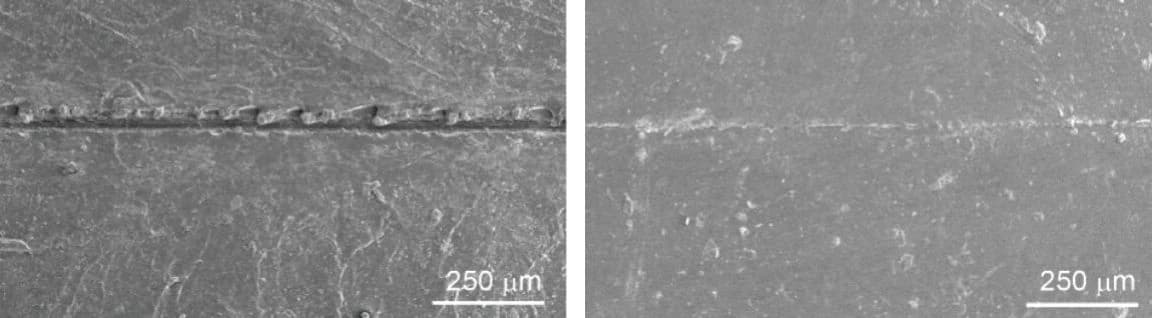
Exposure to UV light at a wavelength of 365 nanometers for one hour triggers a chemical process known as disulfide exchange. During this reaction, sulfur bonds temporarily break and re-form with neighboring atoms, gradually rebuilding the damaged polymer network.
The research team had previously demonstrated a heat-driven self-healing hydrogel, but that approach required hours of heating. Prolonged heat exposure causes contact lenses to lose moisture, limiting their practical suitability for everyday wear. A room-temperature repair method is therefore far more practical. Laboratory tests showed that the repair process restored scratched samples with high efficiency, returning surfaces to a near-original condition that was difficult to detect with the naked eye.
Protective Coating Enhances Durability
The researchers also applied an additional polymer coating to the hydrogel surface, designed to inhibit bacterial growth and protect against surface abrasion. This coating performed well in durability testing: even after repeated rubbing with fine-grit sandpaper, the coated material maintained its clarity, with transparency decreasing by only approximately 2%—indicating that everyday scratches would have minimal impact on optical quality.
The hydrogel also matched commercially available soft contact lenses in terms of water retention and mechanical properties. These characteristics are critical, as a lens's ability to maintain moisture throughout an entire day of wear directly affects wearing comfort.
The researchers noted that users may in the future be able to repair minor lens damage at home using UV light sources already available to consumers, such as devices used for sterilization or curing gel nail polish. The repair process can also be repeated, allowing the material to recover from multiple wear-and-tear cycles.
Further Testing Required Before Commercialization
Several hurdles remain before self-healing contact lenses can reach the market. The material must undergo additional stability assessments and regulatory review to confirm that it can withstand long-term use and multiple repair cycles.
If those challenges are overcome, the technology could reduce replacement costs and waste for millions of contact lens users worldwide. Future lens designs might no longer treat every scratch as the end of a lens's useful life, but instead recover from everyday damage and remain in service for far longer.
The research was funded by the National Research Foundation of Korea. The study, titled Room-Temperature UV-Induced Self-Healing Hydrogels with Antifouling and Antiscratch Surfaces for Soft Contact Lenses, has been published in the academic journal ACS Applied Polymer Materials.
原文來源: 查看原文
FAQ
Newsletter
Subscribe to our Low-Altitude Industry Newsletter
Daily curated news on low-altitude economy and drone industry, delivered to your inbox.
Reviewed and published by the LAETimes editorial desk ·