Bye Aerospace Reveals Supplier Network as eFlyer 2 All-Electric Trainer Approaches First Flight
Denver-based Bye Aerospace has unveiled its global supplier ecosystem ahead of the first flight of its eFlyer 2 two-seat all-electric trainer. Key partners include Safran, MagniX, Garmin, and Siemens. Combined orders for the eFlyer 2 and four-seat eFlyer 4 have surpassed 1,000 aircraft, with the eFlyer 2 priced at an estimated $745,000.
Highlights
- Bye Aerospace has revealed a global supplier network for the eFlyer 2 ahead of its first flight, with partners including Safran, MagniX, Garmin, and Siemens.
- Combined orders for the eFlyer 2 and eFlyer 4 have surpassed 1,000 aircraft, with the eFlyer 2 priced at an estimated $745,000.
- The eFlyer 2's estimated operating cost is $35 per flight hour, with a battery capacity of 80–100 kWh comparable to current electric vehicles.
- Flight training customers include Spartan College of Aeronautics and Technology, Skyborne Airline Academy, Flex Air Flight School, and KLM Flight Academy.
- Aviation charging stations can simultaneously charge two eFlyer aircraft and be positioned up to 100 feet from a hangar without apron trenching.
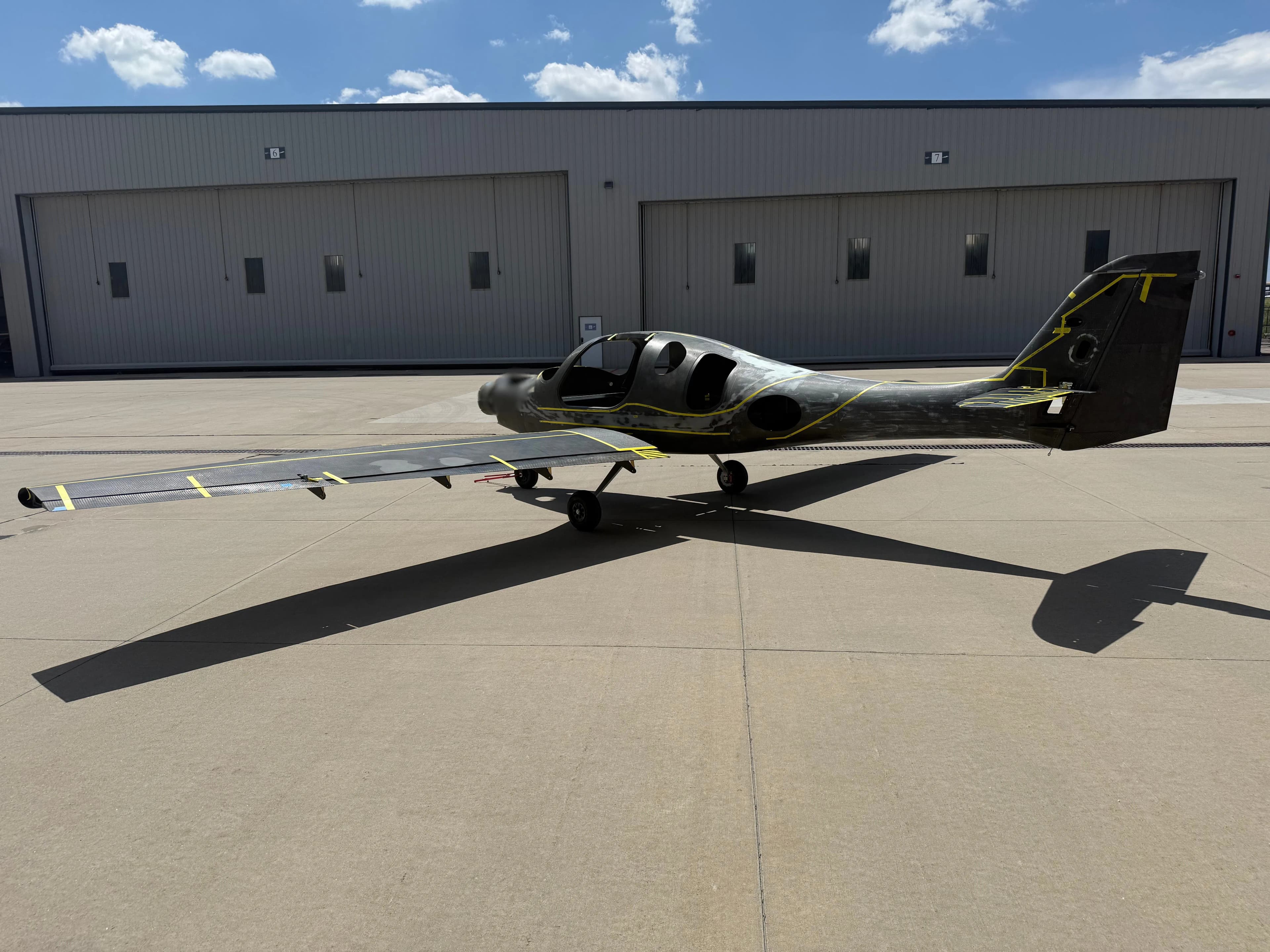
Denver, Colorado-based Bye Aerospace is preparing for the first flight of its eFlyer 2 two-seat all-electric trainer aircraft. Ahead of this key milestone, the company has officially introduced the global supplier network supporting the program.
"The partners supporting the eFlyer 2 program represent some of the most respected names in aviation," said Bye Aerospace CEO Rod Zastrow in a press release. "Their involvement reflects the program's low-risk development strategy and technical progress, as well as growing confidence in electric aviation. As first flight approaches, this milestone represents years of focused development and close collaboration with our partners to bring the eFlyer 2 from concept to a flyable aircraft."
Core Supplier Lineup
Bye Aerospace noted that its supplier ecosystem reflects the diverse technology integration required to bring an FAA-certified electric aviation platform to market. Key suppliers include:
-
Safran Electrical & Power: Supplying the ENGINeUS 100B1 electric motor for the eFlyer 2. This EASA-certified electric propulsion system is designed for reliable, high-performance power output while supporting low-noise operation, energy efficiency, and reduced emissions.
-
MagniX USA: Providing the aircraft's energy storage system, including advanced battery modules, redundant power distribution, and charging technology to support the eFlyer 2's high energy density and long-endurance all-electric flight capability.
-
Siemens Digital Industries Software: Delivering the digital engineering tools used in the design and development of the eFlyer 2, encompassing aircraft design, structural analysis, simulation, and project management software.
-
Toray Composite Materials America: Supplying advanced composite materials used throughout the airframe structure. These lightweight, high-strength materials reduce overall weight while ensuring durability and structural performance.
-
Composite Approach: Selected to complete the manufacturing and assembly of the eFlyer 2 full-scale prototype (serial number 001), supporting development and integration work ahead of the flight test program.
-
Garmin: Providing the Garmin G500 TXi avionics suite, including touchscreen flight displays and navigation functionality, designed to simplify cockpit management and enhance pilot situational awareness.
-
Sensenich Propellers: Drawing on decades of advanced propeller design and manufacturing expertise to supply propellers for the eFlyer 2.
-
Risse Racing: Providing precision-machined components for the eFlyer 2, including the nose landing gear and motor mount, ensuring ground handling reliability and structural integrity.
-
Flying S: Selected to complete composite manufacturing of the eFlyer 2 empennage assembly, supporting tail section structural integrity and performance through precision fabrication.
-
M4 Engineering: Completing composite manufacturing of the eFlyer 2 doors, delivering lightweight, high-quality components that meet the program's structural and airworthiness certification requirements using advanced manufacturing techniques.
Final Preparations for First Flight
Bye Aerospace stated that first-flight preparations for the eFlyer 2 have entered their final phase. The aircraft has completed a series of rigorous tests, including structural load and ultimate load testing of the wings, fuselage, and flight control surfaces, as well as high- and low-speed ground runs at various angles of attack as a critical pre-flight check.
Combined orders for the two-seat eFlyer 2 and four-seat eFlyer 4 have now exceeded 1,000 aircraft.
Strong Demand from Flight Training Schools
According to a Bye Aerospace spokesperson, referencing annual commercial pilot demand forecasts published by Boeing, CAE, and Airbus, the company believes market demand for new trainer aircraft far exceeds the current supply capacity of Part 23-certified and light sport aircraft original equipment manufacturers.
Several leading flight training academies have already placed orders for the eFlyer, including Spartan College of Aeronautics and Technology, Skyborne Airline Academy, Flex Air Flight School, and KLM Flight Academy, the flight training arm of KLM Royal Dutch Airlines.
The aircraft also holds growth potential in the air taxi and personal travel segments. Bye Aerospace noted that one eFlyer customer stated, "A key reason we want the eFlyer is that we can deploy it directly into our air taxi operations."
Charging Infrastructure and Operating Costs
As with electric vehicles, aircraft owners and operators will need to ensure the aircraft can be recharged between flights. The eFlyer's battery capacity is comparable to current production electric vehicles, at approximately 80–100 kWh, requiring similar charging volumes and equipment.
Leading aviation charging equipment manufacturers have already introduced retractable charging stations capable of simultaneously charging two aircraft. These units can be positioned up to approximately 100 feet (roughly 30 metres) from a hangar or fence line, eliminating the need to trench cable conduits across the apron and significantly reducing ground infrastructure complexity.
Pricing and Operating Cost Advantages
Bye Aerospace estimates the eFlyer 2 will be priced at $745,000. Compared to conventional fuel-powered trainers, the eFlyer offers significantly lower operating costs, estimated at just $35 per flight hour, along with reduced noise levels and a simpler powertrain architecture.
原文來源: 查看原文
FAQ
Reviewed and published by the LAETimes editorial desk ·