Boeing Secures $119.7m Upgrade Deal for Nine US and Australian P-8A Aircraft
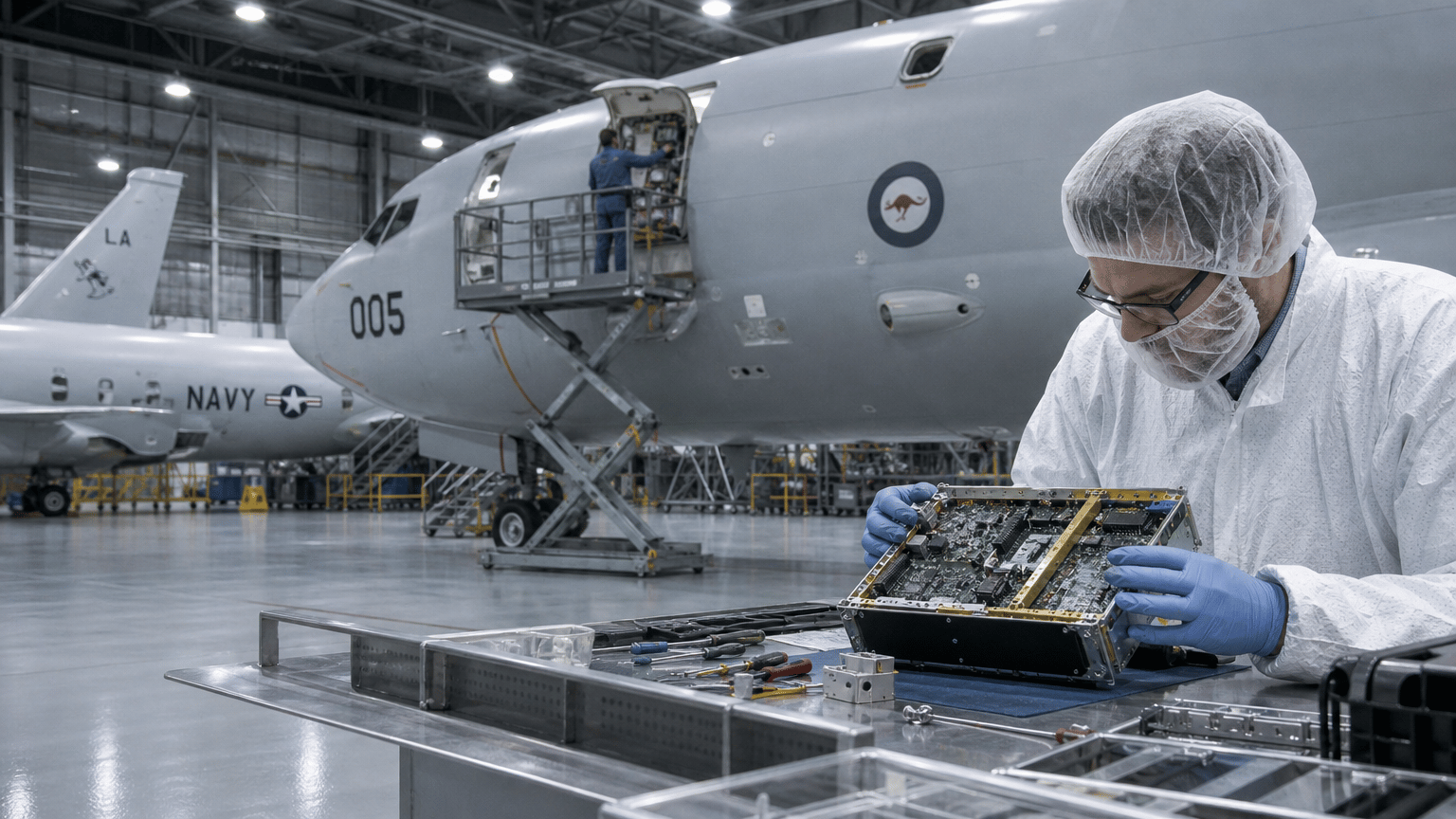
Boeing has received a $119.7m contract modification covering upgrades to nine P-8A Poseidon aircraft operated by the US Navy and Royal Australian Air Force. Public information does not identify how the aircraft are divided between the two services or whether the work covers sensors, communications, mission systems, software or airframe changes. Although the P-8A is crewed, future communications or data-fusion upgrades could affect its ability to coordinate with drones, satellites and other maritime platforms.
A $119.7m contract modification will fund Boeing upgrades to nine P-8A Poseidon aircraft operated by the US Navy and Royal Australian Air Force, although the technical scope, fleet allocation and delivery schedule remain undisclosed.
Key points
- Boeing receives $119.7m contract modification
- Nine US and Australian P-8As will be upgraded
- Aircraft allocation remains undisclosed
- Technical scope and schedule are not public
- Future upgrades could support unmanned coordination
Highlights
- Boeing received a $119.7m contract modification covering upgrades to nine P-8A Poseidon aircraft.
- The nine P-8A aircraft are operated by the US Navy and Royal Australian Air Force.
- The aircraft allocation between the United States and Australia has not been disclosed.
- The announcement does not identify the upgrade package, modification locations, delivery milestones or completion date.
- The P-8A Poseidon is a crewed Boeing 737-derived aircraft used for maritime surveillance, anti-submarine warfare, anti-surface warfare and ISR.
Boeing has secured a $119.7m contract modification to upgrade nine P-8A Poseidon aircraft operated by the US Navy and the Royal Australian Air Force. The award continues US and Australian investment in a common maritime patrol platform, but the information released so far provides few details about the work Boeing will perform.
The nine-aircraft total has been confirmed, but the allocation between the two operators has not been disclosed. It is therefore unclear how many US Navy aircraft and how many Royal Australian Air Force aircraft are included. No modification locations, delivery milestones or completion date have been announced.
Upgrade package remains undisclosed
The public announcement does not specify whether the $119.7m modification covers sensors, mission-management systems, communications equipment, software, airframe configurations or a combination of these areas. It also does not state whether testing, training, spare parts and follow-on support are included.
Without that breakdown, the contract value cannot be used to calculate a reliable per-aircraft upgrade cost. Dividing the total amount by nine would not account for possible non-recurring engineering, system integration, certification, testing or support work shared across the program.
A contract modification generally adds funding or work to an existing procurement, sustainment or support framework. In this case, it confirms Boeing's continuing role in updating the two countries' P-8A fleets, but it does not reveal the resulting aircraft configuration or operational capability.
A shared maritime mission platform
The P-8A Poseidon is a crewed military aircraft derived from Boeing's 737 family. It is used for maritime surveillance, anti-submarine warfare, anti-surface warfare and ISR missions. Both the US Navy and Royal Australian Air Force operate the type, making configuration management and common upgrade pathways important to joint operations.
Operating the same aircraft can support interoperability, shared training practices and more efficient logistics. Common systems may also simplify mission planning and information exchange during multinational exercises or combined maritime operations. However, the extent to which this contract modification advances those objectives will remain uncertain until Boeing or the procurement authorities release additional documentation.
Potential relevance to unmanned systems
The P-8A is not a drone, but maritime operations increasingly depend on information moving between crewed aircraft, unmanned platforms, satellites, ships and shore-based command systems. A P-8A can serve as part of a broader network in which multiple sensors contribute to a shared operational picture.
If the upgrade includes communications, sensor-data fusion or mission-management capabilities, it could influence how the aircraft exchanges information with maritime drones and other remote platforms. Such functions could help distribute surveillance tasks, extend coverage or allow operators to evaluate data collected by several systems.
That possibility remains conditional. The available announcement does not confirm any drone-control capability, autonomous technology or specific crewed-uncrewed teaming feature. It would therefore be premature to describe the award as an unmanned-systems program.
Further disclosures will define the impact
The next material details will be the division of the nine aircraft between the two services, the technical content of the upgrade package and the implementation schedule. Information about testing, training, spares and long-term support would also clarify how much of the $119.7m is dedicated directly to aircraft modification.
Until those details emerge, the award should primarily be viewed as a continued investment in US-Australian maritime aviation interoperability. Its significance for the drone sector will depend on whether the final configuration introduces new communications, networking or data-fusion functions that connect the P-8A more closely with unmanned assets.
What it means for Taiwan
For Taiwan's drone manufacturers, industry associations and defense supply chain, the contract is most relevant as a potential indicator of future demand for secure datalinks, sensor fusion, rugged computing and interoperable maritime mission systems. Suppliers should monitor subsequent Boeing and government disclosures before committing engineering or certification resources because no technical scope or schedule has been released. For Taiwan-based inspection, exterior-cleaning and crop-spraying service providers, the award creates no immediate procurement or regulatory change because it concerns crewed military aircraft. Maritime drone operators may face a longer-term impact if future P-8A configurations establish new requirements for communications security, data formats or platform interoperability. Until specifications appear, operators should avoid buying equipment solely on assumptions about compatibility and continue following Taiwan's existing aviation, spectrum and operational compliance requirements.
FAQ
Reviewed and published by the LAETimes editorial desk ·