Coast Guard Launches MQ-9B Fleet With $248 Million Order
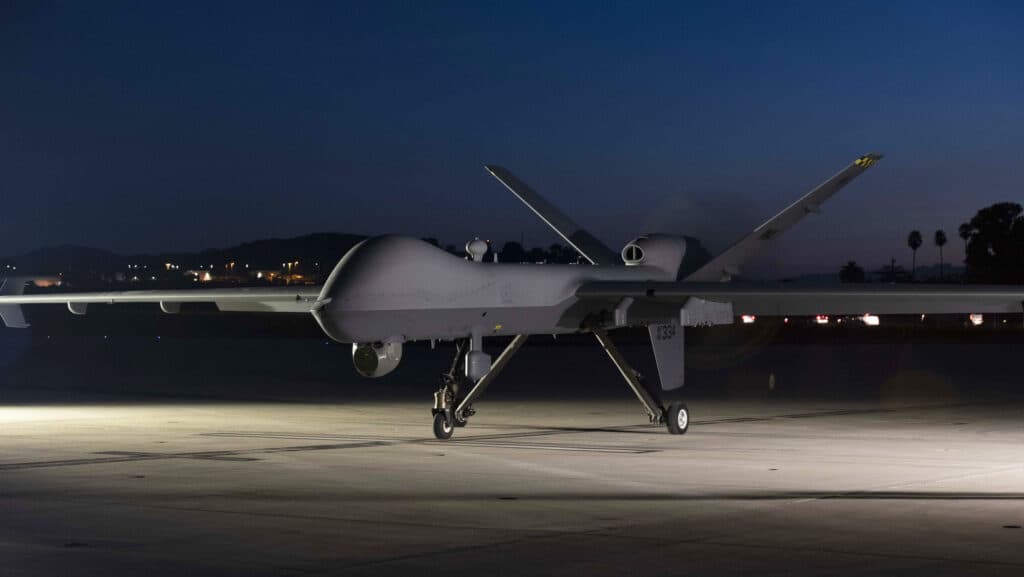
The Coast Guard has placed a $248 million order for its first MQ-9B drones. A senior official said the unarmed aircraft will allow personnel to monitor the service’s maritime jurisdiction from greater distances. The report did not disclose the number of aircraft, sensor configuration, delivery schedule or supporting services included in the order.
The first MQ-9B order will extend unarmed maritime surveillance.
Key points
- Coast Guard places $248 million MQ-9B order
- Purchase establishes its first MQ-9B fleet
- Aircraft will operate without weapons
- Drones will extend maritime domain awareness
- Aircraft count and delivery schedule remain undisclosed
Highlights
- The Coast Guard placed a $248 million order for its first MQ-9B drones.
- A senior official said the MQ-9Bs will be unarmed.
- The Coast Guard intends to use the aircraft to observe its maritime jurisdiction from greater distances.
- The report did not disclose the number of MQ-9B aircraft included in the order.
- The report did not provide a delivery schedule, basing plan or sensor configuration.
The Coast Guard has placed a $248 million order for its first MQ-9B drones, marking a significant expansion of its long-range maritime surveillance capability. According to a senior official cited by Breaking Defense, the unarmed aircraft are intended to let Coast Guard personnel maintain awareness of the service’s maritime jurisdiction from greater distances.
The report identifies the purchase as the Coast Guard’s first MQ-9B order but does not specify how many aircraft are included. It also provides no delivery schedule, basing plan or detailed breakdown of the contract’s equipment and support elements. The $248 million figure therefore should not be treated as a simple per-aircraft price, as major drone acquisitions can include ground-control infrastructure, sensors, communications equipment, training, maintenance and logistics support.
A surveillance-focused acquisition
The official’s description positions the MQ-9B as an intelligence and surveillance asset rather than an armed platform. In maritime operations, long-endurance drones can help operators observe areas beyond the practical reach of crewed patrol aircraft, cutters and shore-based sensors. Potential mission sets may include monitoring vessel activity, supporting interdiction operations, identifying suspicious traffic and improving situational awareness during emergencies.
The MQ-9B family was developed by General Atomics Aeronautical Systems for long-endurance remotely piloted operations. Available configurations can carry maritime sensors and communications systems, although the report does not identify the payloads selected for the Coast Guard aircraft. It likewise does not say whether the order covers a maritime-specific configuration or how the drones will connect with existing command-and-control networks.
The absence of weapons is operationally important. It indicates that the initial fleet will primarily collect and relay information, giving Coast Guard units a wider surveillance picture rather than adding a direct strike capability. Data gathered by the aircraft could support decisions by cutters, aircraft and shore-based personnel, but the article does not describe the intended data-sharing architecture.
Extending reach across a large jurisdiction
The Coast Guard is responsible for missions across extensive coastal and offshore areas. Persistent uncrewed aircraft can remain on station longer than many crewed platforms while reducing the need to place aircrews over distant waters. Their value, however, depends on reliable communications, trained remote crews, sensor availability and integration with existing operational systems.
Large remotely piloted aircraft also require carefully managed airspace access. Depending on the final operating concept, deployments may involve BVLOS operations, satellite communications and coordination with civil aviation authorities. The report does not provide details on regulatory approvals, launch locations or whether the aircraft will operate from Coast Guard facilities, military bases or contractor-supported sites.
Key contract details remain open
Several questions will shape the program’s eventual scale. The number of MQ-9Bs covered by the order remains undisclosed, as do the aircraft’s radar, electro-optical or infrared sensor packages. Breaking Defense’s report also does not identify an initial operating capability date or explain whether contractor personnel will support early missions.
Even with those details unresolved, the order establishes a new uncrewed aviation capability for the Coast Guard. Its operational impact will depend not only on aircraft endurance but also on how quickly sensor data can reach personnel responsible for vessel identification, maritime enforcement and emergency response.
What it means for Taiwan
For Taiwan’s drone industry, the order highlights demand for long-endurance platforms, maritime sensors, secure communications and command-system integration. Taiwanese airframe, radar, electro-optical payload and communications suppliers should monitor future MQ-9B contracting requirements and identify opportunities in components, maintenance and data infrastructure. Industry associations can also use the program as a reference when discussing sovereign maritime surveillance capacity. For local operators providing infrastructure inspection, exterior cleaning or agricultural services, the immediate effect is indirect: expanded government drone operations may increase airspace coordination and cybersecurity requirements. Before similar aircraft enter regional service, operators should review flight-notification procedures, communications resilience and data-handling policies. No delivery timetable was disclosed, so procurement or operational changes should not yet be tied to a specific date.
FAQ
Reviewed and published by the LAETimes editorial desk ·