Duke Health Drones Respond to Real 911 Cardiac Arrest Calls, Racing to Beat Ambulances with AEDs
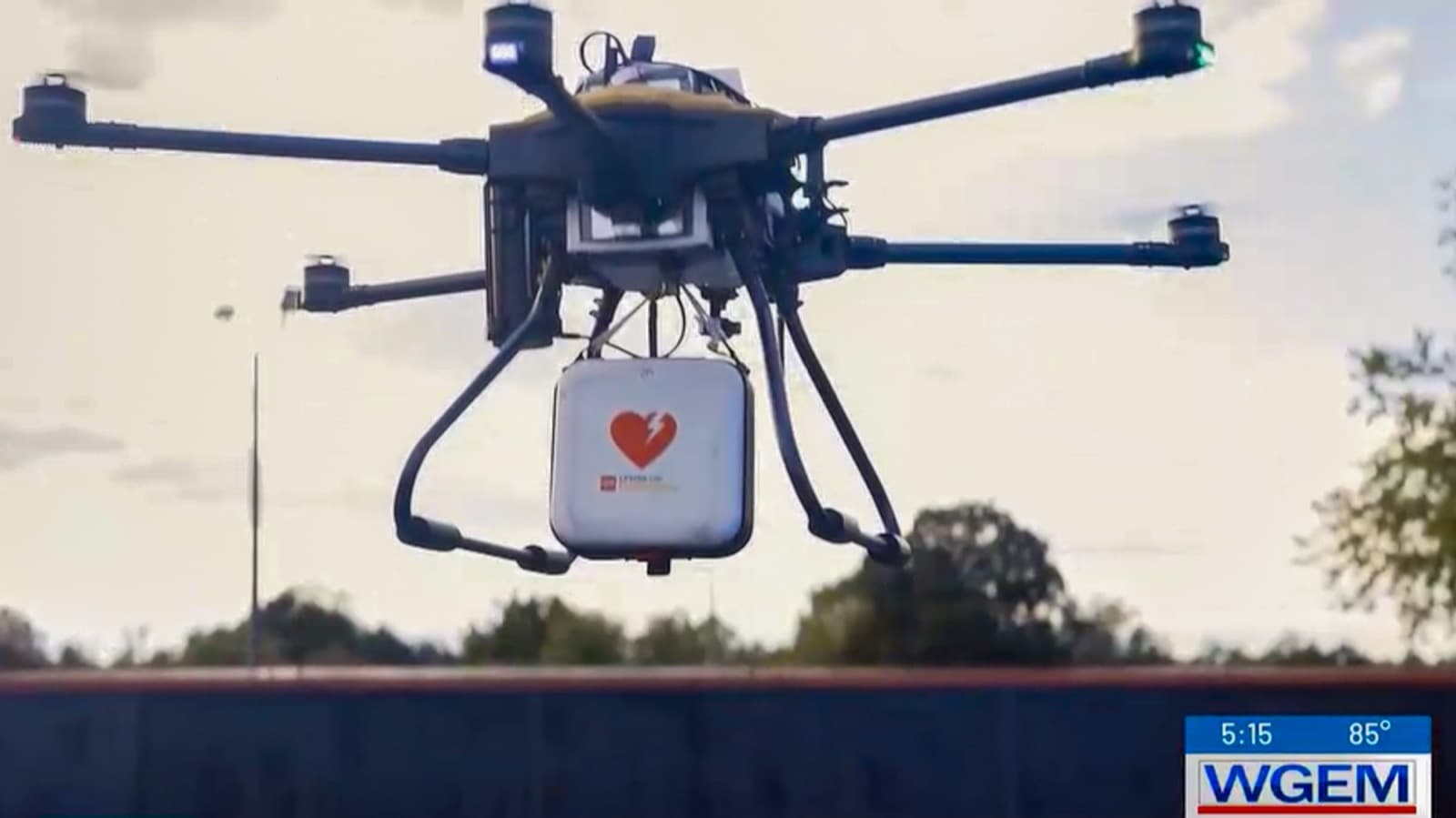
Researchers at Duke Health in North Carolina are deploying drones carrying automated external defibrillators (AEDs) to real 911 cardiac arrest scenes, testing whether autonomous drone delivery can arrive ahead of ambulances during the critical minutes that determine patient survival.
Highlights
- Duke Health is deploying AED-equipped drones to real 911 cardiac arrest scenes in North Carolina, marking a shift from simulation to live emergency response.
- Cardiac arrest survival rates decline by approximately 10% for every minute without defibrillation, making faster AED delivery critical.
- Drones can fly direct routes unimpeded by traffic, giving them a potential speed advantage over traditional ambulances in reaching cardiac arrest patients.
- The program collects real-world operational data to evaluate whether autonomous drone delivery can serve as a viable supplement to pre-hospital emergency care.
- Positive results could enable the model to be scaled to underserved rural areas where ambulance response times are longest.
Duke Health Drones Respond to Real 911 Cardiac Arrest Calls, Racing to Beat Ambulances with AEDs
Researchers at Duke Health are dispatching drones equipped with automated external defibrillators (AEDs) to real-world 911 cardiac arrest calls across North Carolina, testing whether autonomous drone delivery can outpace traditional ambulances during the life-or-death minutes that determine patient survival.
The Golden Minutes That Matter Most
Every minute without defibrillation reduces a cardiac arrest patient's chance of survival by approximately 10%. In many cases, emergency medical services take several minutes to reach a scene after a call is received. Drones, capable of flying in a straight line unimpeded by traffic or road conditions, have the potential to dramatically close the gap between a 911 call and the delivery of a life-saving AED.
Moving Beyond Controlled Testing to Real Emergency Response
The most significant breakthrough in Duke Health's current program is that drones are no longer operating in simulated or controlled environments — they are actively responding to live 911 calls. This means the entire system, including drone dispatch, flight path planning, and AED delivery, must perform reliably under real, unpredictable emergency conditions.
Assessing the Promise and Challenges of Autonomous Medical Delivery
The study aims to validate the feasibility of autonomous drone delivery for medical equipment and to collect real-world operational data that can assess whether the technology can serve as an effective supplement to existing pre-hospital emergency care systems. If results are positive, the model could potentially be scaled to additional regions, helping to address critical gaps in emergency medical response in rural areas or communities with limited ambulance resources.
This forward-looking trial led by Duke Health marks a pivotal transition for drone medical logistics — moving from proof-of-concept to real-world operational deployment — and offers valuable empirical evidence for the global advancement of emergency response drones.
原文來源: 查看原文
FAQ
Reviewed and published by the LAETimes editorial desk ·


