Emesent Closes $17M Round as Australia's Sovereign Fund Bets on Homegrown Drone Mapping Leader
Australian drone mapping company Emesent has completed a $17 million (A$25 million) funding round to expand manufacturing at its Wacol, Queensland facility and advance its Cortex AI autonomous flight engine and Aura cloud data platform. The round combines a A$10 million venture debt facility from the National Reconstruction Fund Corporation — the agency's first such deal — with A$15 million in equity via SAFE notes from investors including Main Sequence and QIC Ventures.
Highlights
- Emesent closed a $17 million (A$25 million) round comprising $7 million in NRFC venture debt and $10 million in equity from Main Sequence, QIC Ventures, and others.
- The NRFC venture debt facility is the Australian sovereign fund's first-ever transaction of this type, and is structured to avoid diluting existing shareholders.
- Hovermap is deployed at more than 200 mine sites worldwide across 40 countries, with customers including Rio Tinto, BHP, and Glencore.
- The US Army selected Hovermap as one of six xTech|Live competition winners in April 2026, validating its application for GPS-denied military reconnaissance.
- Emesent plans to add 21 new Australian jobs and expand its Wacol, Queensland manufacturing facility using the new capital.
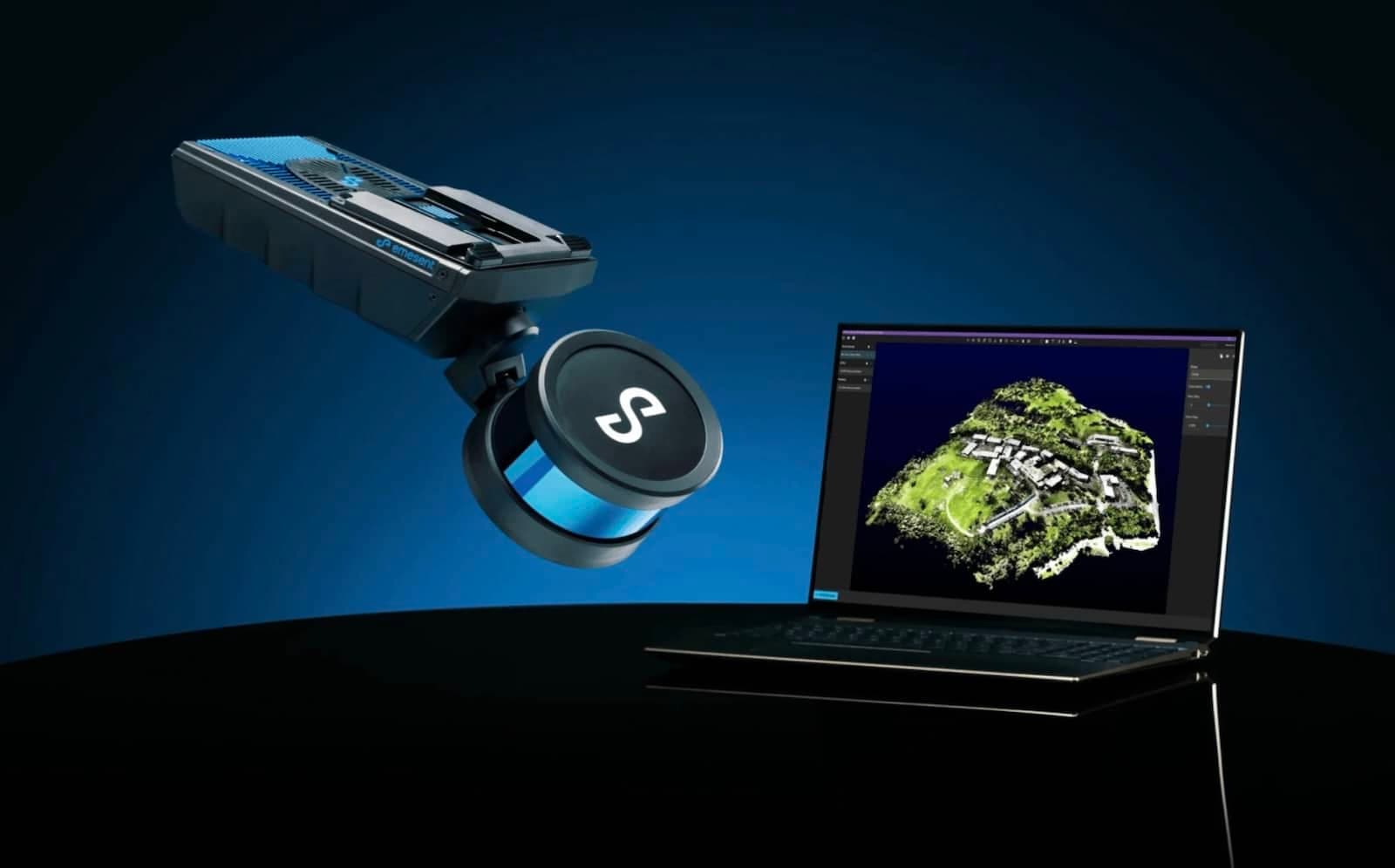
Australian drone mapping company Emesent has announced the close of a $17 million (approximately A$25 million) funding round. Proceeds will be used to scale manufacturing capacity at its Wacol, Queensland facility and to continue developing two core software platforms: Cortex AI — an onboard autonomous flight engine purpose-built for GPS-denied environments — and Aura, a cloud platform for processing and visualising 3D data.
The round is structured in two tranches: a $7 million (approximately A$10 million) venture debt facility from Australia's government-backed sovereign investment vehicle, the National Reconstruction Fund Corporation (NRFC), and a $10 million (approximately A$15 million) equity raise via SAFE notes.
Equity investors include returning seed-round backer Main Sequence alongside QIC Ventures, Orion Resource Partners, Hostplus, and NGS Super. Emesent currently employs 109 people and expects to add 21 new positions in Australia using the fresh capital.
DroneXL first covered Emesent in August 2020, when its Hovermap payload — mounted on a DJI Matrice 300 — achieved autonomous flight in underground Australian mines where GPS signals are completely unavailable. Six years on, the company that started as an add-on payload module is now positioned as a critical sovereign technology asset, and its trajectory reveals how allied governments are rethinking both drone policy and the tools they deploy to advance it.
Australia's Sovereign Fund Makes Its First Venture Debt Deal
The NRFC manages a A$15 billion government investment mandate, and the Emesent loan is the agency's first-ever venture debt transaction. The structure provides growth capital without diluting founders or existing shareholders in the way an equity raise would.
NRFC Chief Investment Officer Mary Manning noted that venture debt remains significantly underutilised in Australia compared with the United States, and that a government-backed fund able to invest across the capital stack can fill that gap for companies with proven products that need to scale. CEO David Gall framed the deal as a means of anchoring robotics and autonomous systems manufacturing in Australia — strengthening the supply chain while commercialising intellectual property developed at CSIRO, the national science agency from which Emesent was spun out in 2018.
Emesent CEO Charles Miller said the capital would accelerate every part of the business. "This investment accelerates everything we are building at Emesent," Miller said, pointing to a customer base that spans some of the world's most demanding operational environments.
Hovermap: From DJI Add-On to a Product Line Deployed Across 40 Countries
Emesent was founded in 2018 by Stefan Hrabar and Farid Kendoul, who commercialised CSIRO robotics research into Hovermap — a LiDAR mapping and autonomous flight payload that enables drones to navigate and scan underground mines and tunnels autonomously where GPS fails and human entry is hazardous.
The product found immediate market traction. Hovermap is now deployed across more than 200 mine sites worldwide and is treated as mission-critical equipment by operators including Rio Tinto, BHP, and Glencore. The hardware is airframe-agnostic: it launched on DJI platforms and is now also available for US-manufactured platforms such as the Freefly Astro, which gains full obstacle-avoidance capability through the Hovermap integration.
Funding milestones mirror the company's growth. Intelligence community strategic investor In-Q-Tel backed Emesent in 2020. In 2022, a $32 million Series A led by Perennial Partners, with Tiger Global and TELUS Ventures participating, followed. Hrabar, who led the company through the Series A, now serves as Chief Strategy Officer, while Miller leads as CEO. The product line has since expanded to include the Hovermap STX payload, the GX1 integrated SLAM scanner, the Aura data software suite, and the Cortex AI autonomy system, serving customers in more than 40 countries.
Defence Demand Pushes Emesent Beyond Its Mining Roots
Construction and mining remain Emesent's two largest verticals, but the company told Forbes Australia that defence reconnaissance has become the fastest-growing opportunity since the Series A, and that a portion of the new capital will be directed toward meeting the resulting capacity pressure.
"We need to grow our factory capacity to meet demand," CFO David Nucifora told Forbes Australia, citing parallel growth in both the defence and core industrial businesses.
Traction in defence is documented rather than aspirational. In April 2026, the US Army selected Hovermap as one of six winners at its xTech|Live competition held in Miami. Emesent demonstrated the system's ability to deliver real-time 3D situational awareness for infantry operating in GPS-denied, smoke-filled environments. The same SLAM technology capable of scanning underground mining faces maps combat structures or disaster-recovery sites with equal fidelity.
Analysis
Placing this deal alongside Washington's approach makes the contrast stark. The Pentagon has been forcing a domestic industrial base into existence by taking equity stakes in drone start-ups; FCC Covered List designations have forced companies like Westmag to rebuild severed motor supply chains from scratch. The US strategy is to ban the competition first and then scramble to subsidise alternatives. Australia's strategy, at least in this case, is more direct: find the company that is already winning on merit, and lend it money to keep scaling.
Emesent's merit case is solid. It has outcompeted every rival at GPS-denied mapping to earn deployments at 200-plus mine sites globally, and some of the early validation work was done on DJI airframes. Canberra evidently sees no shame in that history, because the frame was never the point — the intelligence layer above it is. That is why this round centres on Cortex AI and Aura rather than another hardware revision. The durable business is in autonomy and data, not hardware. By comparison, Skydio's $4.4 billion valuation rests in considerable part on regulatory moats rather than pure product competitiveness.
The cautionary note, however, is real. Government-led capital carries government-grade risk: the Australian federal government launched the first statutory review of the NRFC just days before this deal was announced, assessing whether the fund is still meeting its mandate. Watch whether that review endorses the venture debt model or constrains it. If the model survives, Emesent becomes a reference case for how a mid-sized allied nation can build sovereign drone capability without resorting to protectionism — and that is a model that will attract close study well beyond Australia.
Sources: Emesent press release, Forbes Australia, National Reconstruction Fund Corporation.
原文來源: 查看原文
FAQ
Newsletter
Subscribe to our Low-Altitude Industry Newsletter
Daily curated news on low-altitude economy and drone industry, delivered to your inbox.
Reviewed and published by the LAETimes editorial desk ·