Funzin’s KWM Uses AI to Coordinate Networked Unmanned Assets
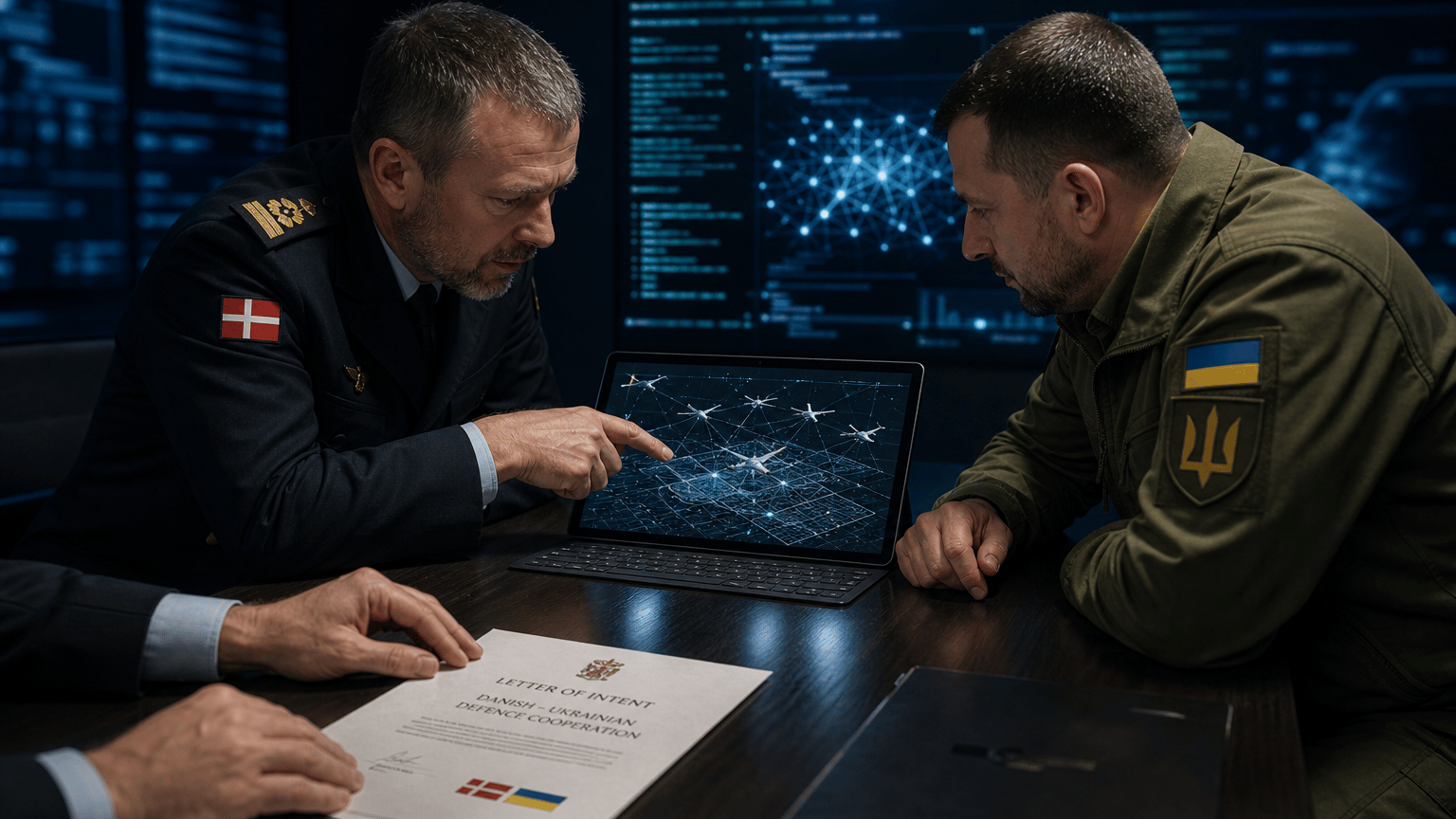
Funzin has presented KWM as an AI-powered decision-support system for connecting battlefield intelligence with available unmanned vehicles and mission assets. By evaluating sensor data, operational conditions and resources, the platform can rapidly generate recommendations and support coordination among UAVs, UGVs and other networked systems. The source post did not disclose technical specifications, deployment details or customer information.
Funzin’s KWM analyzes battlefield data, operating conditions and available resources to recommend missions and coordinate UAVs, UGVs and other connected systems.
Key points
- KWM links mission assets
- AI turns data into advice
- Sensors inform decisions
- Resources shape missions
- UAVs and UGVs coordinate
Highlights
- Funzin describes KWM as an AI-powered decision-support system connecting battlefield intelligence with available unmanned vehicles and mission assets.
- KWM analyzes sensor data, operational conditions and available resources to rapidly generate mission recommendations.
- KWM supports the integration and coordination of UAVs, UGVs and other networked systems.
- Unmanned Systems Technology published the KWM post on 2026-10-04T22:03:14.233+00:00.
- The cited source did not disclose KWM’s architecture, supported vehicle models, customers, deployment history or performance benchmarks.
AI-assisted operational planning
Funzin’s KWM is an AI-powered decision-support system designed to connect battlefield intelligence with available unmanned vehicles and other mission assets. The platform analyzes sensor data, operational conditions and accessible resources, then rapidly generates recommendations intended to help operators plan and coordinate missions.
According to a post published by Unmanned Systems Technology (UST) on October 4, 2026, KWM can support the integration and coordination of unmanned aerial vehicles (UAVs), unmanned ground vehicles (UGVs) and other networked systems. The central concept is to provide a common decision layer capable of assessing incoming information and matching operational requirements with the assets available at that moment.
This type of capability addresses a growing challenge in multi-domain unmanned operations. Individual UAVs and UGVs may collect large volumes of sensor information, but operators still need to determine which platform should respond, what resources can be assigned and how several systems can operate together. KWM is positioned as a tool for accelerating that assessment rather than leaving personnel to manually review every data stream and asset status.
Connecting intelligence and available resources
The information available indicates that KWM considers three broad inputs: sensor data, operational conditions and available resources. It then uses AI to produce mission recommendations. By bringing those inputs together, the system is intended to help decision-makers understand both the situation and the practical options for responding with connected unmanned assets.
Coordination is particularly important when aerial and ground platforms have different mobility, endurance, payload and communications characteristics. A UAV may provide an overhead view or relay information, while a UGV can operate closer to the ground or carry different equipment. A shared decision-support environment can potentially help operators assign complementary roles, provided the participating systems can exchange compatible and reliable data.
The original post does not specify KWM’s software architecture, communications protocols, supported vehicle models, autonomy level or human-approval process. It also does not identify customers, field deployments, procurement programs or performance benchmarks. Consequently, KWM should currently be understood through the capabilities described by Funzin and UST rather than as a platform whose operational results have been independently documented in the source material.
Part of a broader autonomy trend
KWM reflects the wider defense-sector shift from operating unmanned vehicles as isolated platforms toward managing them as connected systems. In this model, the value of a UAV or UGV depends not only on its individual hardware but also on its ability to share sensor information, receive tasking and participate in coordinated operations.
AI-based decision support can help organize complex information and present recommendations more quickly, but implementation also depends on secure communications, data quality, interoperability and clear command authority. In contested or communications-limited environments, operators must also consider how recommendations are generated when information is delayed, incomplete or inconsistent.
UST presented KWM as part of its coverage of unmanned systems, robotics and autonomous technology and encouraged readers to follow its channel for further industry developments. The Instagram post used the hashtags #Funzin, #KWM, #DefenseAI, #AutonomousSystems and #UST. No additional technical documentation or commercial timeline was included in the cited post.
What it means for Taiwan
For Taiwan’s drone manufacturers, industry associations and defense supply chain, KWM highlights a near-term shift in procurement value from individual airframes toward interoperable command, sensor-fusion and mission-management software. Suppliers seeking defense opportunities may need documented APIs, secure communications, data provenance and human-in-the-loop controls. Civil service providers conducting infrastructure inspection, exterior cleaning or agricultural spraying should not assume that a defense platform transfers directly to their operations. However, the same coordination model could influence future fleet-management purchases. Over the next procurement cycle, operators should ask vendors how recommendations are validated, whether mixed-brand UAVs and ground systems are supported, where operational data is stored, and how software updates affect compliance with Taiwan’s Remote Piloted Aircraft regulations and cybersecurity requirements.
FAQ
Reviewed and published by the LAETimes editorial desk ·