High Lander and Thirdeye Systems Launch Ground-Based BVLOS Detect-and-Avoid Field Trials
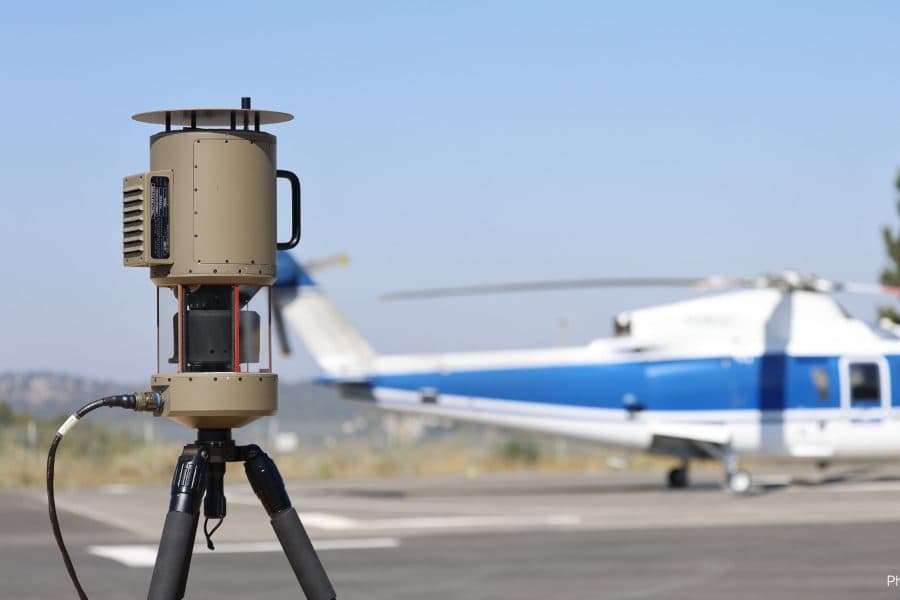
High Lander and Thirdeye Systems have signed an MOU and launched field trials to evaluate ground-based Detect-and-Avoid (DAA) systems for large-scale BVLOS drone operations. The trials integrate Thirdeye's MeduzaX passive optical radar with High Lander's Vega UTM platform, testing whether autonomous sensing technology can supplement or replace human visual observers in beyond-visual-line-of-sight flights.
Highlights
- High Lander and Thirdeye Systems signed an MOU and launched ground-based BVLOS Detect-and-Avoid field trials to validate autonomous sensing as an alternative to human visual observers.
- The trials integrate Thirdeye's MeduzaX passive optical radar with High Lander's Vega UTM platform, creating a unified command-and-control interface for shared airspace management.
- Dronery and Brook Aviation are executing test scenarios including sun-direction approaches, varied lighting, and controlled drone-helicopter conflict situations to benchmark system performance.
- The system cross-references real-time optical detections against flight plans in High Lander's Orion fleet platform to identify authorized aircraft and flag unauthorized air traffic.
- Both companies plan to expand testing across additional operating conditions to build scalable ground infrastructure for routine BVLOS drone operations.
High Lander and Thirdeye Systems have formally initiated a field trial program to evaluate whether ground-based Detect-and-Avoid (DAA) systems can effectively support large-scale beyond-visual-line-of-sight (BVLOS) drone operations.
The two companies announced the initiative following the signing of a memorandum of understanding (MOU). The trials center on validating whether autonomous ground-based sensing technology can supplement or replace the human visual observers typically required for BVLOS flights — a step aimed at building the infrastructure needed for routine BVLOS operations rather than relying on case-by-case regulatory waivers.
The field program integrates Thirdeye's MeduzaX passive optical radar system with High Lander's Vega unmanned traffic management (UTM) platform.
Evaluating Autonomous Detect-and-Avoid Capability
The trials are conducted with Dronery operating drones and Brook Aviation operating a helicopter across a series of test scenarios designed to benchmark optical detection systems against human observers.
Test conditions include aircraft flying both above and below the horizon, with open sky and terrain as backgrounds, approaches from the direction of the sun, and detection under varying lighting conditions. Controlled conflict scenarios between the helicopter and drones were also run to assess whether the system can identify potential conflicts early enough to support safe deconfliction within adequate timeframes.
Both companies stated that the overarching goal extends beyond target detection. The trials also aim to validate whether real-time optical tracking data can be integrated into a centralized traffic management environment to support flight operations by multiple operators simultaneously.
Shared Airspace Common Operating Picture
Under the integration architecture, Thirdeye's MeduzaX system feeds optical detection data into High Lander's Vega UTM platform, which consolidates information from detection and counter-drone systems into a single command-and-control interface.
According to the companies, the system cross-references real-time detection data against flight plans managed through High Lander's Orion fleet management platform, enabling it to identify authorized aircraft while flagging unknown or unauthorized air traffic.
The solution is designed to provide operators with a common operating picture and support Identification Friend or Foe (IFF) functionality in drone flight environments — including airports, urban drone corridors, and other high-density airspace.
Long-Term Goals
High Lander CEO and Co-Founder Alon Abelson said: "BVLOS operations are the future of aviation, unlocking limitless possibilities for commerce, public safety, and defense. To realize this vision, tracking alone isn't enough — we need full airspace transparency. By bridging the gap between traffic management and precision optical detection, we are providing the industry with the transparency and safety standards that the next era of aviation will depend on."
Thirdeye Systems CEO Lior Segal added: "Persistent ground-based observation addresses a critical gap in low-altitude airspace awareness, particularly for non-cooperative traffic. Our automated sensing technology is designed to deliver consistent tracking data without relying on onboard transponders. This field trial program establishes concrete evaluation benchmarks for how ground-based optical radar can safely support drone flight paths and integrated traffic frameworks."
Both companies said they will continue evaluating the integrated system across additional operating conditions and use cases as they develop the ground infrastructure needed to support scalable BVLOS drone operations.
Image credit: High Lander
原文來源: 查看原文
FAQ
Reviewed and published by the LAETimes editorial desk ·


