Lorica Technologies' Mule 28 Heavy Drone Successfully Delivers Bangalore Torpedo, Helping U.S. Army National Guard Breach Wire Obstacles
U.S. startup Lorica Technologies partnered with the Oregon Army National Guard's 741st Brigade Engineer Battalion to demonstrate the Mule 28 heavy-lift drone delivering and detonating a live M1A3 Bangalore Torpedo to breach wire obstacles. The drone can carry up to 90.7 kg (200 lbs), features a swarm-control architecture, and was developed in approximately six weeks, aiming to reduce combat engineer exposure during high-risk battlefield breaching missions.
Highlights
- Lorica Technologies與俄勒岡州陸軍國民警衛隊第741旅工兵營合作,以Mule 28無人機成功投放並引爆真實M1A3孟加拉魚雷,突破鐵絲網障礙。
- Mule 28最大承載重量達90.7公斤(200磅),整個平台由Lorica Technologies在約六週內開發完成。
- 機載運算系統每秒可執行128兆次運算(128 TOPS),並配備涵蓋0至11 GHz頻段的軟體定義無線電套件。
- 感測器套件支援人臉、車輛及武器辨識,可透過機載處理器即時計算精確目標座標。
- Lorica自研「Hive」蜂群架構未來將支援多機協同作戰及自然語言語音任務指揮功能。
Lorica Technologies Mule 28 Drone Completes Live-Fire Demo, Successfully Breaches Wire Obstacles
U.S. startup Lorica Technologies, working alongside soldiers from the Oregon Army National Guard's 741st Brigade Engineer Battalion, has jointly demonstrated the real-world combat capability of the Mule 28 heavy-lift drone — successfully delivering and detonating a live M1A3 Bangalore Torpedo to breach wire obstacles during a training exercise.
Remote Detonation to Reduce Engineer Risk
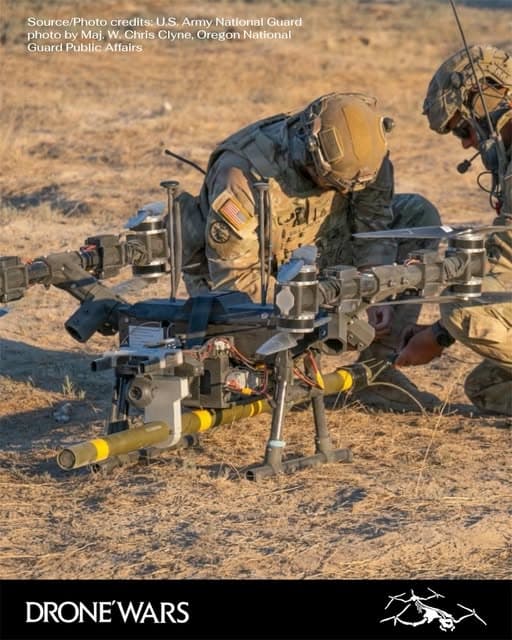
According to information released by the U.S. Army, the demonstration used a two-section M1A3 Bangalore Torpedo suspended beneath the Mule 28 airframe. The drone precisely placed the explosive charge on the obstacle, after which operators remotely detonated it from covered positions. This operational concept is designed to significantly reduce the exposure of combat engineers during one of the highest-risk tasks in military operations.
Performance Specs: 200-lb Payload, Developed in Six Weeks
The Mule 28 has an airframe weight of approximately 20.4 kg (45 lbs) and a maximum payload capacity of 90.7 kg (200 lbs). Its propulsion system consists of eight electric motors driving 28-inch dual-blade propellers. Notably, the platform was developed by Lorica Technologies in approximately six weeks, specifically for this demonstration.
Advanced Sensing and Onboard Computing
According to Lorica Technologies, the Mule 28's onboard computing system is capable of executing 128 trillion operations per second (TOPS) and is equipped with a software-defined radio suite covering 0 to 11 GHz, supporting signal detection and direction-finding. Its sensor suite is reported to support facial recognition, vehicle identification, and weapon detection, with the ability to calculate precise target coordinates directly from camera feeds via onboard processing.
Hive Swarm Architecture Enables Multi-Drone Coordination
The Mule 28 also integrates Lorica's proprietary "Hive" swarm-control architecture. The company states the system is under active development and will support coordinated multi-drone operations as well as natural-language mission command — allowing operators to assign reconnaissance or engineering tasks to drones via voice commands.
Image credit: U.S. Army National Guard. Photo by Oregon National Guard Public Affairs Officer Maj. W. Chris Clyne.
原文來源: 查看原文
FAQ
Reviewed and published by the LAETimes editorial desk ·