NASA and Wisk Aero Achieve Autonomous Flight Milestone: One Supervisor Managing Three Uncrewed Aircraft Simultaneously
Boeing's eVTOL subsidiary Wisk Aero has successfully simulated a single ground supervisor managing three uncrewed aircraft alongside normal air traffic in collaboration with NASA, achieving a landmark 1:3 supervisor-to-aircraft ratio. The milestone, conducted under a five-year Space Act Agreement, is seen as a critical step toward scalable commercial air taxi operations.
Highlights
- Wisk Aero and NASA successfully simulated a 1:3 supervisor-to-aircraft ratio, with one ground supervisor managing three autonomous aircraft simultaneously in a high-fidelity NAS environment.
- The test was conducted under a five-year Space Act Agreement, linking Wisk's Autonomy Lab in Mountain View, California with NASA's Ames Research Center ATC simulation laboratory.
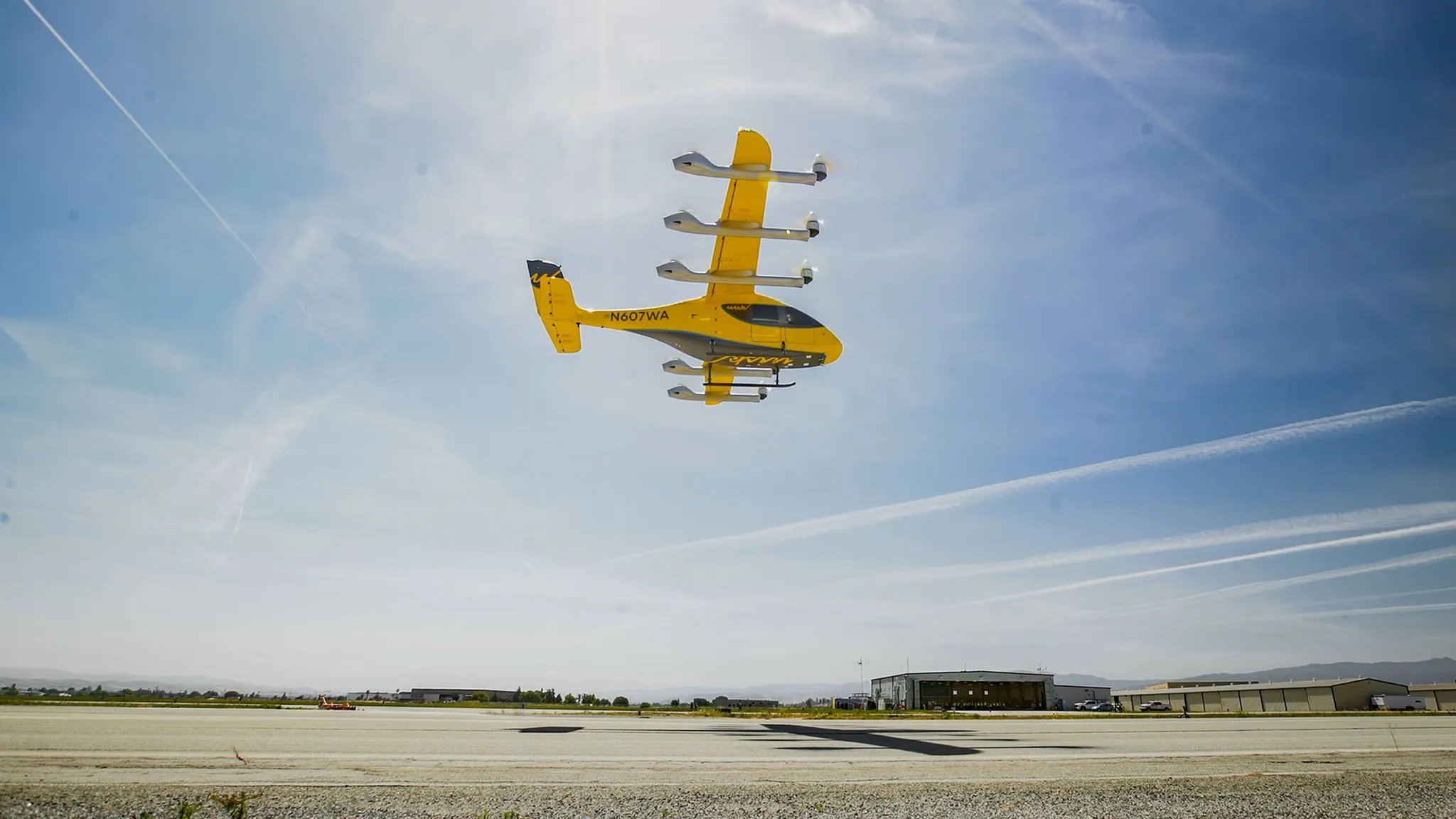
- Wisk's fully autonomous Generation 6 air taxi — which completed its maiden flight in December 2024 and features four passenger seats but no pilot controls — is the centerpiece of this multi-vehicle supervisor framework.
- Wisk is the only U.S. eVTOL developer planning full autonomy at commercial launch, and is also supplying its autonomous systems to Archer Aviation for a future Midnight derivative.
- The eVTOL Integration Pilot Program (eIPP) officially launched with Beta's Alia CX300 organ delivery flight, and the FAA may approve fare-charging air taxi flights during the multi-year program.
NASA and Wisk Aero Reach Major Autonomous Flight Breakthrough
Wisk Aero, Boeing's eVTOL (electric vertical takeoff and landing) air taxi division, has announced a significant milestone achieved in testing conducted jointly with NASA under a five-year Space Act Agreement.
On Wednesday, Wisk announced it had successfully simulated a single ground supervisor simultaneously coordinating three uncrewed aircraft while managing regular air traffic. The ability for one remote supervisor to oversee multiple aircraft is considered a critical enabler of large-scale commercial operations for autonomous aircraft such as Wisk's Generation 6 air taxi.
However, outside of narrow exceptions, the Federal Aviation Administration (FAA) currently does not permit operators to fly multiple small drones simultaneously — let alone uncrewed aircraft designed to carry passengers. The Generation 6 aircraft, while lacking pilot controls, features four passenger seats.
Among U.S. eVTOL developers, Wisk is the only company planning to launch with full autonomous capability from day one. Competitors including Joby Aviation, Archer Aviation, and Beta Technologies also view autonomous systems as essential to breaking through limited daily operational capacity.
Generation 6 and the Multi-Vehicle Supervisor Framework
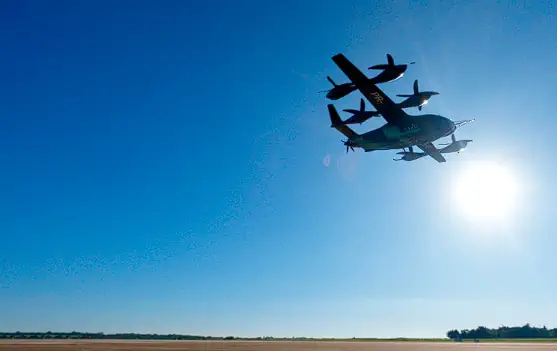
A prototype of Wisk's Generation 6 aircraft completed its maiden flight in December of last year, and is designed to work alongside what the company calls Multi-Vehicle Supervisors (MVSors) — personnel who monitor flight operations remotely and intervene if an air taxi deviates from its planned route.
"This is an exciting milestone for Wisk," said Erick Corona, Wisk's Vice President of Systems and Operations Integration. "This is our first successful test with NASA of a 1:3 supervisor-to-aircraft ratio in a high-fidelity, high-workload environment that fully replicates the complexity of the National Airspace System (NAS)."
The Space Act Agreement, secured last year, aims to study the operation of autonomous aircraft under Instrument Flight Rules (IFR) conditions within the NAS. Future phases are expected to combine actual flights with simulated airspace in NASA's Live Virtual Constructive (LVC) flight environment — a system capable of overlaying real-time or historical NAS air traffic onto live flight operations.
Goals of the collaboration include establishing airspace and route design standards, aircraft and ground safety requirements, and communication standards between uncrewed aircraft and air traffic control (ATC).
Simulation Test Details
Wisk's Autonomy Lab in Mountain View, California — dedicated to studying the interaction between human supervisors and the Generation 6 aircraft's automated systems — has been networked with NASA's ATC simulation laboratory at Ames Research Center in Silicon Valley.
Leveraging NASA's full-scale, 360-degree airport environment simulation capabilities, the teams practiced flying a predefined IFR route between Moffett Federal Airfield (KNUQ) and San Martin Airport (E16) in California's San Francisco Bay Area. Supervisors used Wisk's remote supervision system to communicate with autonomous systems and ATC, while ATC operated with existing tools and procedures.
Researchers analyzed communication response times, task delays, situational awareness, and cognitive load across normal and worst-case scenarios co-designed by NASA and Wisk.
"Demonstrating that a single ground supervisor can safely and efficiently manage multiple flight missions is central to making commercial air taxi operations scalable and commercially viable," Corona emphasized.
Data and findings from the simulation are expected to help establish standardized communication and procedural frameworks that could reduce workload for both ATC and pilots. The work may also advance the company's policy vision for "Automated Flight Rules" (AFR) — a regulatory framework defining the role of multi-vehicle supervisors.
As Wisk wrote in a February blog post: "AFR is designed to complement, not replace, Visual Flight Rules (VFR) and Instrument Flight Rules (IFR), and is open to any airspace user with appropriate equipment. While VFR and IFR rely on pilot visual perception and ATC services to maintain aircraft separation, AFR allows aircraft to use automation to perform conflict management functions."
Broader Implications and Next Steps
The Wisk–NASA collaboration has the potential to yield concrete regulatory outcomes. NASA's Unmanned Aircraft System Traffic Management (UTM) program directly contributed to the FAA's development of the Low Altitude Authorization and Notification Capability (LAANC) system for drone operations. The UTM team also designed the air traffic management framework the FAA used to enable drone operations in Dallas-Fort Worth, making it the first U.S. city to allow multiple operators to share airspace and conduct BVLOS flights.
Kurt Swieringa, Deputy Technical Director for NASA's Air Traffic Management – eXploration (ATM-X) program, told media last year that his team is developing a new version of the Airborne Collision Avoidance System (ACAS) adapted for uncrewed aircraft.
NASA researchers have tested digital communications between ATC and flight decks, conducted multiple remotely piloted flights, and studied air taxi noise, traffic flow, ride quality, and collision scenarios. NASA shares its findings with the FAA to help inform new regulations that could unlock commercial services for operators including Wisk, Joby, Archer, and Beta.
Unlike its competitors, Wisk's Generation 6 aircraft is fully autonomous from the outset, positioning the company to benefit most directly from NASA's research outcomes.
"I think integrating eVTOLs into the airspace is one challenge, and autonomy is another," said Cindy Comer, Wisk's Vice President of Safety and Quality Management, in an interview published in the March 2026 issue of FLYING magazine. "How do we work most effectively with air traffic control — ensuring they have sufficient awareness of and engagement with our missions without adding to their workload?"
Comer noted that the Generation 6 aircraft combines computers, predictive hardware and software, radar, sensors, and ground data links to autonomously detect and avoid other aircraft — many of the same systems already used on transport-category aircraft such as the Boeing 737 and Airbus A350.
Wisk is even supplying autonomous systems for a future derivative of Archer's Midnight air taxi, and Comer hinted that selling to other competitors is not out of the question. Should those rivals adopt Wisk's autonomy platform, they would be able to share in the multi-vehicle supervisor framework being developed with NASA.
Flight Validation and Commercialization Path
Wisk's first Generation 6 prototype was joined by a second aircraft in May of this year. While no prototypes were used in the NASA simulation, Wisk hopes to publicly demonstrate the aircraft before the conclusion of the FAA's eVTOL Integration Pilot Program (eIPP). This multi-year initiative will see Wisk partnering with the Texas Department of Transportation to advance high-frequency flight operations with the Generation 6 aircraft.
Dan Dalton, Wisk's Vice President of Commercialization and Airline Business, stated in March that the FAA may even approve fare-charging passenger flights during the eIPP period.
The eIPP officially launched last week with Beta's all-electric Alia CX300 conducting an organ delivery flight, with program activities expected to grow progressively more complex.
原文來源: 查看原文
FAQ
Reviewed and published by the LAETimes editorial desk ·