What Is NDAA-Compliant LiDAR? The New Threshold for U.S. Federal Procurement
NDAA-compliant LiDAR has become a critical requirement for U.S. federal contractors in surveying, mapping, engineering, drone services, and infrastructure inspection. The National Defense Authorization Act restricts federal procurement of technology linked to certain foreign suppliers—particularly Chinese companies deemed national security risks. The FAR Council translates these restrictions into enforceable acquisition rules, meaning any firm seeking federal contracts must verify their LiDAR sensors and UAS platforms meet full compliance standards.
Highlights
- The NDAA restricts U.S. federal agencies from procuring LiDAR sensors, UAS platforms, and related components from certain Chinese manufacturers deemed national security risks.
- The FAR Council converts NDAA congressional provisions into binding Federal Acquisition Regulations that all federal contractors must follow.
- Drone service providers, surveying firms, engineering consultancies, and infrastructure inspection companies holding federal contracts must verify full NDAA compliance across their entire technology stack.
- NDAA-compliant LiDAR requires hardware from non-restricted countries, traceable supply chains, and vendor-supplied compliance documentation.
- Demand for non-Chinese-origin LiDAR solutions is growing rapidly as Western manufacturers expand their NDAA-compliant product offerings to serve U.S. government contractors.
What Is NDAA-Compliant LiDAR?
In the United States, LiDAR technology that complies with the National Defense Authorization Act (NDAA) has become an increasingly critical benchmark for industries including surveying, mapping, engineering, drone services, and infrastructure inspection.
What Is the NDAA?
The National Defense Authorization Act is legislation passed annually by the U.S. Congress to govern defense budgets and policy. In recent years, NDAA provisions have been progressively expanded to restrict federal government procurement of equipment involving certain foreign technologies or supply chains—particularly products from Chinese manufacturers identified as posing potential national security risks.
How Does the NDAA Affect LiDAR Procurement?
The restriction process works as follows:
- Congressional Legislation: Congress passes NDAA provisions containing restrictions on technology procurement.
- Regulatory Conversion: The Federal Acquisition Regulation (FAR) Council translates these restrictions into specific Federal Acquisition Regulations.
- Enforcement: Federal agencies must confirm that the technologies used in purchased equipment and services comply with relevant regulations, and are prohibited from procuring products from vendors on restricted lists.
Which Industries Are Affected?
Any company contracting with the U.S. federal government—including:
- Surveying and mapping firms
- Engineering consultancies
- Drone service providers
- Infrastructure inspection companies
—must ensure that their LiDAR sensors, UAS platforms, and related components are NDAA-compliant. Failure to do so may result in disqualification from federal contracting opportunities.
What Defines an NDAA-Compliant LiDAR?
A LiDAR system described as "NDAA-compliant" typically must meet the following criteria:
- Manufacturing Origin: Hardware must not originate from restricted countries or banned vendors (such as certain Chinese companies).
- Supply Chain Transparency: Component origins must be traceable and must not involve restricted supply chains.
- Compliance Documentation: Vendors must be able to provide relevant compliance declarations or certification documents for review by procuring agencies.
Specific Impact on the Drone Industry
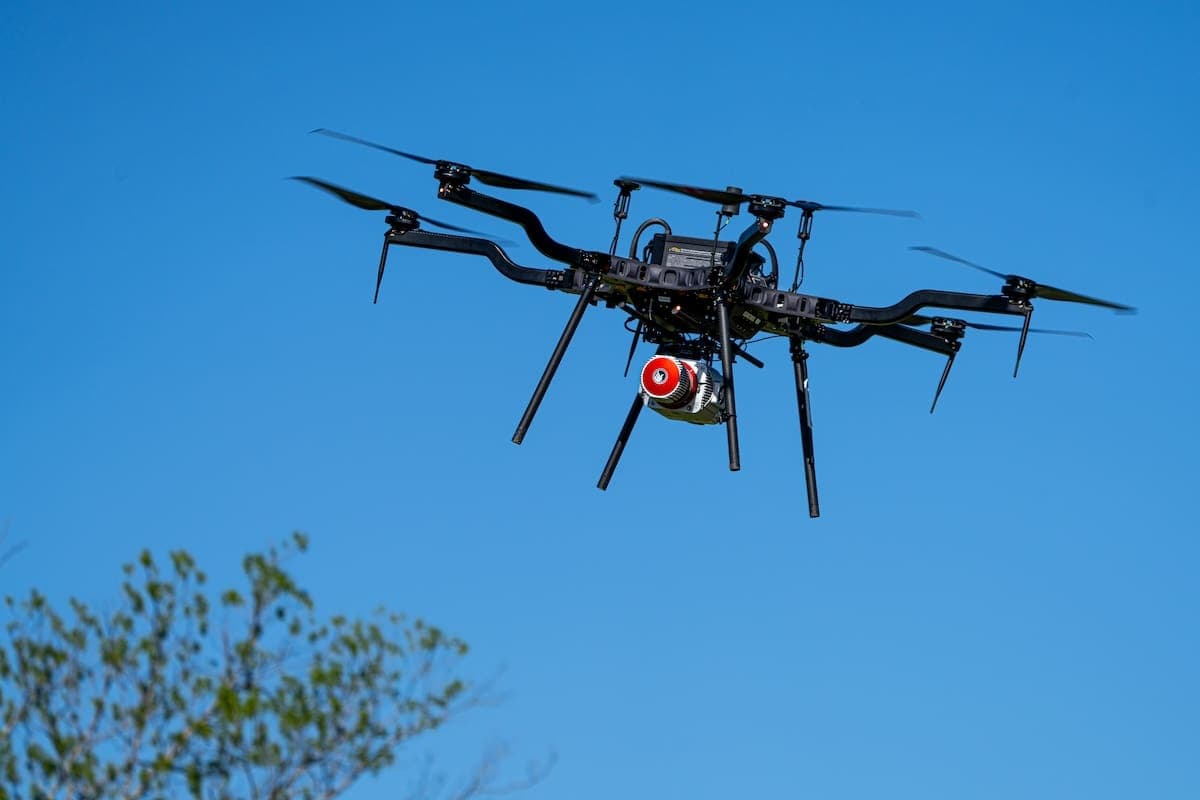
UAS platforms integrated with LiDAR sensors are widely used for terrain mapping, forestry surveys, power line inspection, and other applications. However, when these missions involve federal contracts, operators must verify from the ground up that the entire system—including both the drone platform and the LiDAR module—does not incorporate technology or components restricted under the NDAA.
A growing number of Western manufacturers are actively marketing LiDAR products as "NDAA-compliant" to meet the procurement requirements of the U.S. government and its contractors. This trend has driven rapid growth in demand for non-Chinese-origin LiDAR solutions.
Conclusion
As the U.S. federal government continues to raise supply chain security requirements, NDAA compliance is no longer solely a concern for large defense contractors. It is now a threshold that any drone or geospatial technology company seeking U.S. government business must take seriously. Companies should assess the compliance status of their existing equipment early and work closely with legal counsel and equipment suppliers to ensure operations meet the latest regulatory requirements.
原文來源: 查看原文
FAQ
Reviewed and published by the LAETimes editorial desk ·