Royal Navy Tests Nyan One-Way Strike Drone From HMS Queen Elizabeth
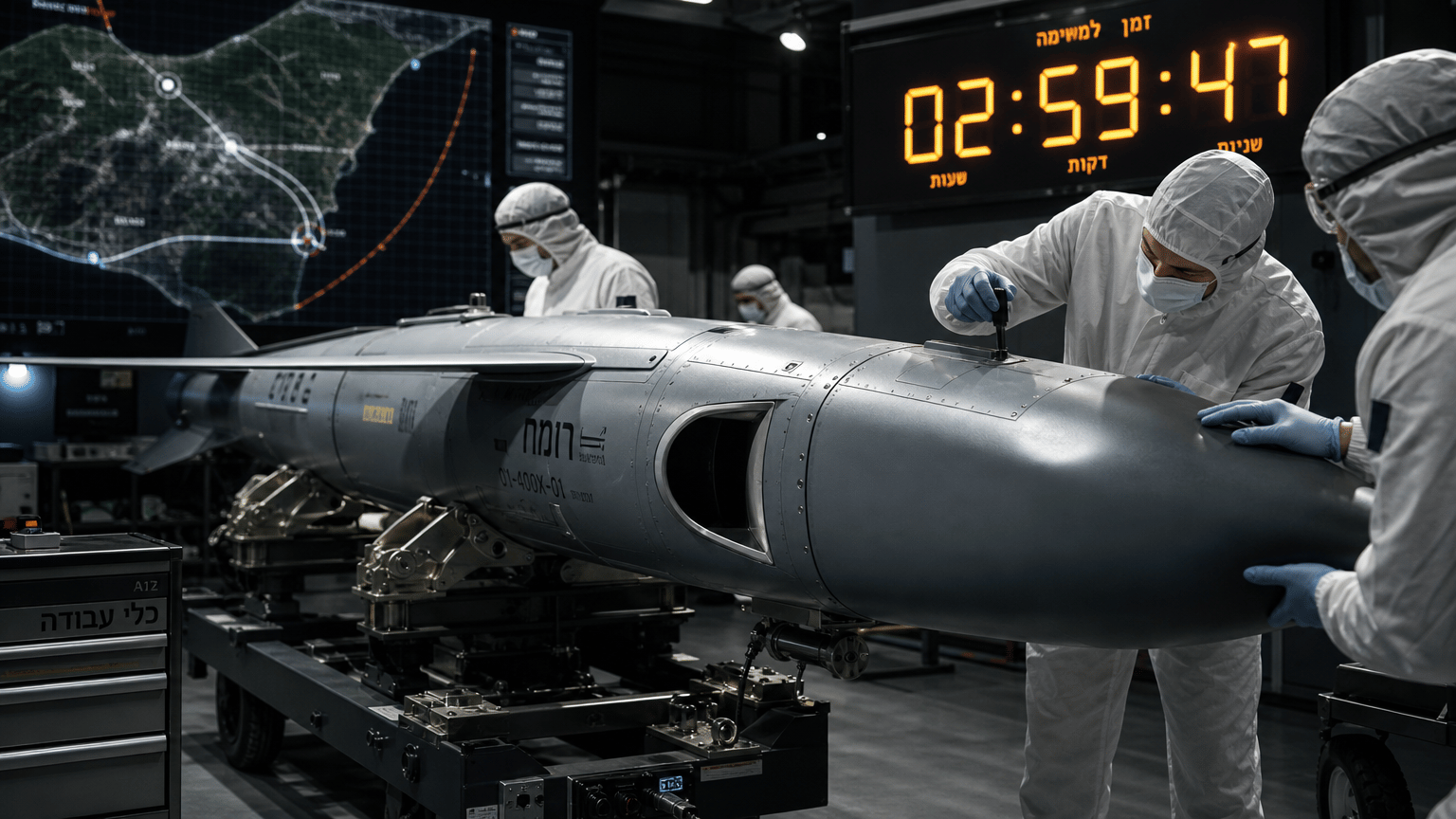
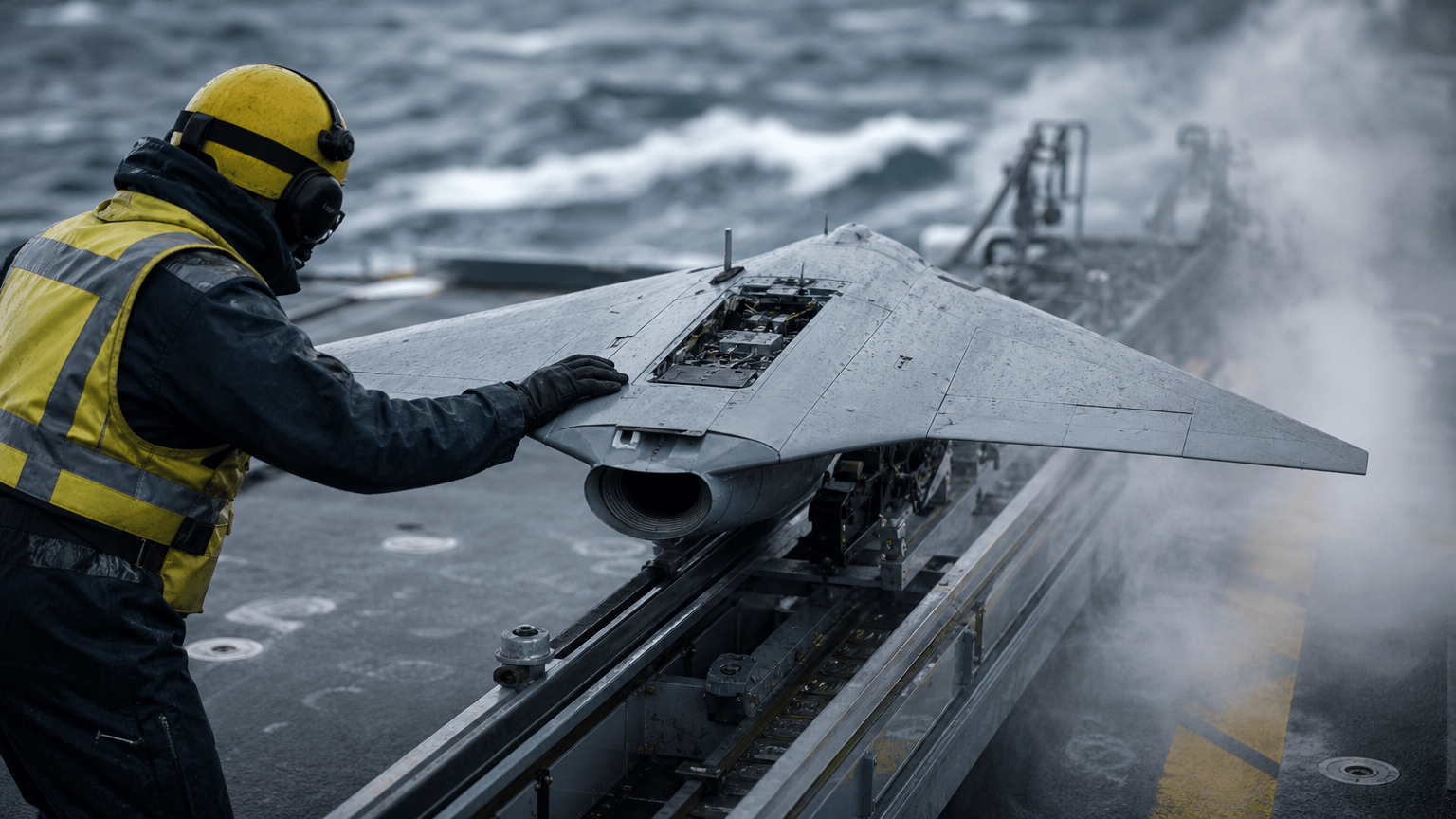
The Royal Navy has completed the first launch of the British-made Nyan One-Way Effector unmanned aerial system from HMS Queen Elizabeth. The test focused on demonstrating that the platform could be launched from an aircraft carrier, but the service has not disclosed the date, range, guidance system, payload, launch architecture or whether a complete target engagement was conducted. The milestone gives the Royal Navy initial experience integrating a one-way strike platform into carrier operations while leaving its operational capability, procurement status and deployment timeline uncertain.
The Royal Navy has launched the British-made Nyan One-Way Effector from HMS Queen Elizabeth, marking its first carrier-based test and an initial step toward integrating strike-capable drones with naval aviation operations.
Key points
- Royal Navy launches Nyan from HMS Queen Elizabeth
- Test validates initial carrier launch capability
- Nyan provides a one-way strike option
- Range, guidance and payload remain undisclosed
- Further fleet evaluation has not been confirmed
Highlights
- The Royal Navy completed the first launch of the British-made Nyan One-Way Effector from HMS Queen Elizabeth.
- The test focused on validating Nyan's ability to launch from an aircraft carrier.
- The Royal Navy did not disclose the test date, launch architecture, flight distance, guidance technology, payload or warhead.
- Public information does not confirm whether the trial included a complete target engagement sequence.
- The Royal Navy has not announced a fleet evaluation, procurement decision or operational deployment timeline for Nyan.
The UK Royal Navy has conducted the first launch of the British-made Nyan One-Way Effector, or OWE, unmanned aerial system from the aircraft carrier HMS Queen Elizabeth. The demonstration marks the first known deployment of Nyan from the ship and represents an early step in assessing how strike-capable drones could be incorporated into British carrier aviation.
The publicly available information indicates that the test was primarily intended to verify whether Nyan could be launched from an aircraft carrier. The Royal Navy has not disclosed when the trial occurred, how the aircraft was launched, how far it flew or whether it completed a full target engagement sequence.
Key capabilities remain undisclosed
Important technical details have also been withheld. No information has been released concerning Nyan's guidance technology, communications architecture, resistance to electronic interference, warhead or alternative payload, endurance, speed or operational range. It is therefore not yet possible to assess the system's intended target set or its potential role in Royal Navy operations.
The absence of these details also limits comparisons with other one-way attack drones and loitering munitions. A One-Way Effector is generally designed to complete a mission without being recovered, allowing an operator to strike a designated target without placing a crewed aircraft in the same high-risk airspace. Such systems can overlap with loitering munitions in mission and design, but the terms should not be treated as interchangeable without information about Nyan's ability to loiter, search for targets and receive updated guidance.
The carrier test consequently demonstrates a launch capability rather than a fully validated combat system. There has been no public confirmation that Nyan has completed operational evaluation, entered procurement or received approval for fleet deployment.
Carrier integration extends beyond launch
Operating a one-way drone from an aircraft carrier involves more than proving that it can leave the flight deck safely. The Royal Navy would also need to examine storage, transportation, handling procedures, mission planning, communications links, command and control, maintenance requirements and compatibility with existing deck operations.
Any future deployment would have to account for simultaneous operations involving crewed aircraft and other naval aviation assets. Launch equipment must be positioned without disrupting flight deck activity, while the drone's communications and control systems must function within the ship's broader electromagnetic environment.
Rules of engagement would be another central consideration. Depending on Nyan's level of autonomy and guidance architecture, the service would need procedures governing target selection, mission updates, loss of communications and authorization to strike. None of those arrangements has been detailed publicly.
Expanding the carrier air wing
HMS Queen Elizabeth is one of the Royal Navy's principal aviation platforms. The Nyan launch suggests that the UK is exploring how lower-cost unmanned systems could supplement existing carrier aircraft, extend strike options and provide commanders with greater flexibility when operating in contested environments.
One-way systems could potentially be deployed against targets where sending a crewed aircraft would carry disproportionate risk. They could also add mission capacity without requiring every task to be assigned to a recoverable aircraft. Whether Nyan can deliver those advantages will depend on reliability, unit cost, range, payload performance and resilience against electronic warfare and air defenses.
The test provides the Royal Navy with initial experience in carrier integration, but it does not establish an operational deployment timeline. Further trials would be required to validate flight performance, command links, deck procedures and mission effectiveness. The service has not said whether Nyan will proceed to fleet evaluation or a formal acquisition program.
What it means for Taiwan
For Taiwan's drone manufacturers, industry associations and component suppliers, the trial highlights potential demand for ship-compatible airframes, secure communications, compact launch systems and electronics designed to withstand saltwater, vibration and electromagnetic interference. Any opportunity to enter allied defense supply chains would depend on traceability, cybersecurity and export-control compliance, although the Royal Navy has announced no Nyan procurement schedule. For Taiwanese inspection, exterior cleaning and agricultural spraying operators, the test creates no immediate purchasing or regulatory change. Its practical relevance is mainly technical: maritime operators may see faster development of corrosion-resistant components and resilient links, while civilian service providers should not treat one-way military systems as commercially usable platforms or assume they fall under ordinary operating approvals.
FAQ
Reviewed and published by the LAETimes editorial desk ·