UK Commits £90m to AI-Enabled Atlantic Seabed Surveillance Network
The UK Ministry of Defence has announced £90m ($120m) for Atlantic Net, a planned network of advanced uncrewed systems, sensors and AI supporting Royal Navy protection of North Atlantic subsea cables and energy infrastructure. The initiative reflects growing concern over underwater threats linked to Russia and the vulnerability of assets carrying communications and energy supplies. The government has not disclosed platform types, suppliers, procurement quantities, deployment locations or an implementation schedule.
The UK Ministry of Defence is investing £90m ($120m) in Atlantic Net, combining uncrewed systems, sensors and AI to strengthen Royal Navy protection of critical North Atlantic subsea infrastructure.
Key points
- UK commits £90m to Atlantic Net
- Royal Navy gains new surveillance capabilities
- AI will help identify anomalous activity
- Uncrewed platform types remain undisclosed
- Programme targets critical subsea infrastructure
Highlights
- The UK Ministry of Defence is investing £90m ($120m) in Atlantic Net.
- Atlantic Net will combine advanced uncrewed systems, sensors and AI to support the Royal Navy.
- The programme is intended to protect North Atlantic subsea cables and energy infrastructure.
- The original report frames Atlantic Net as a response to underwater threats associated with Russia.
- The MoD has not disclosed platform types, product models, procurement quantities, contractors or deployment locations.
A new layer of protection for the North Atlantic
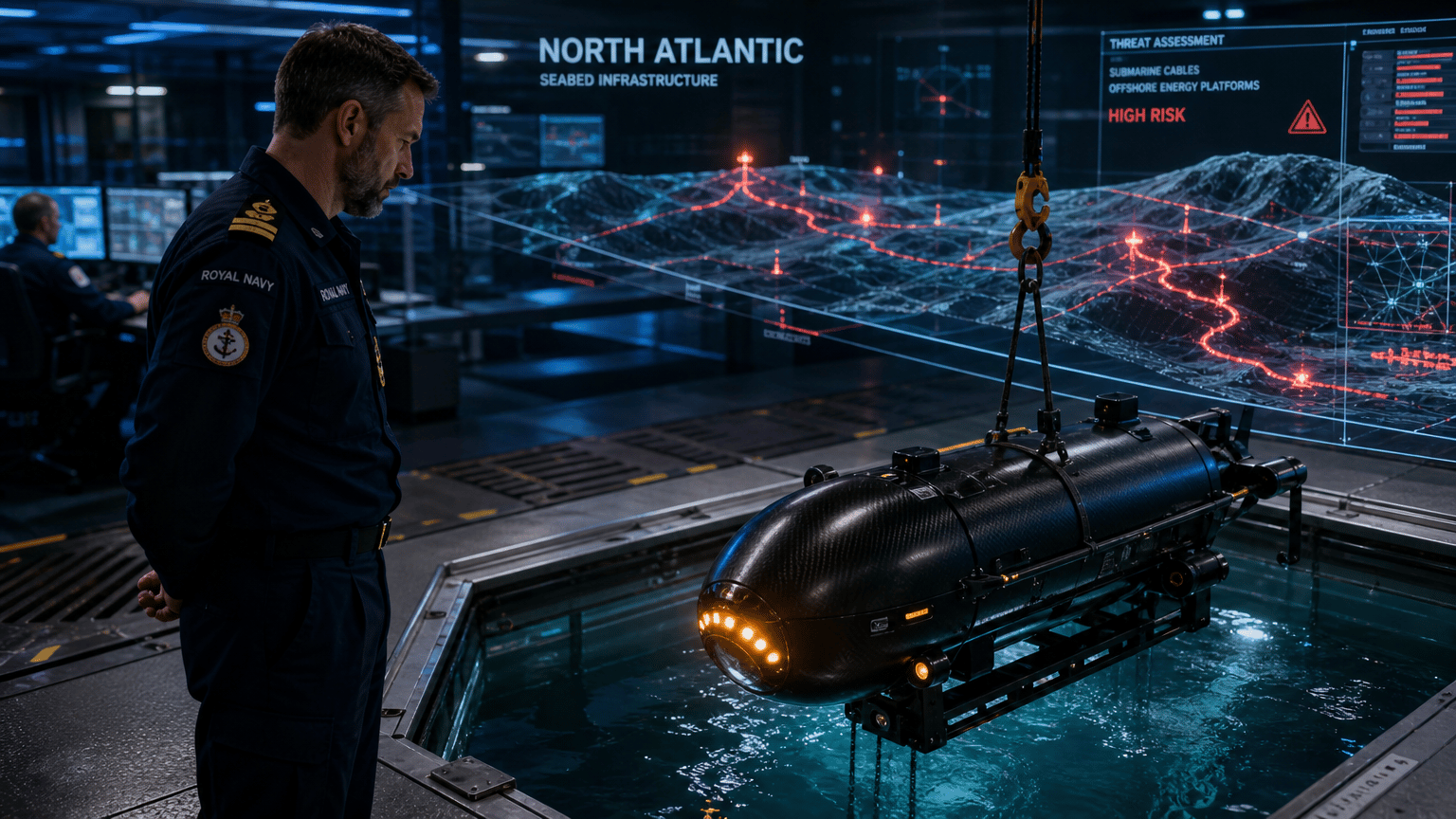
The UK Ministry of Defence (MoD) is allocating £90m ($120m) to Atlantic Net, an initiative intended to improve the Royal Navy’s ability to monitor and protect critical infrastructure across the North Atlantic. The planned capability will bring together advanced uncrewed systems, sensors and artificial intelligence to detect potential threats around subsea cables and offshore energy assets.
According to the framing of the original report, the investment is primarily aimed at strengthening the UK’s response to underwater activity associated with Russia. The announcement reflects a broader shift in maritime security: governments are increasingly treating infrastructure on and beneath the seabed as a strategic defence priority rather than solely a matter for commercial operators.
Subsea cables carry substantial volumes of international communications and internet traffic, while offshore pipelines, power links and energy installations are closely tied to national supply resilience. Damage to these systems could disrupt military communications, civilian connectivity, commercial services or energy availability, making persistent surveillance increasingly important.
Connecting sensors, AI and uncrewed systems
Publicly available information confirms that Atlantic Net will incorporate advanced uncrewed systems, sensors and AI. However, the MoD has not specified whether the uncrewed platforms will operate in the air, on the sea surface or underwater. No product models, procurement quantities, contractors, deployment locations or implementation schedule have been disclosed.
That lack of detail means the programme’s full technical architecture cannot yet be determined. It also remains unclear whether Atlantic Net will rely mainly on existing military platforms, modified commercial technologies or newly developed systems commissioned specifically for the mission.
At a functional level, distributed sensors could provide persistent collection of acoustic, environmental and movement data around sensitive seabed areas. AI-based analytics could then process high volumes of signals, distinguish routine maritime activity from unusual patterns and direct human operators toward events requiring closer examination.
Uncrewed platforms could potentially support patrol, inspection, verification or incident-response tasks. Depending on the final system design, such platforms may serve as mobile sensor nodes, investigate alerts generated by the wider network or relay information to Royal Navy command systems. These possible roles have not yet been officially confirmed, so definitive capabilities will depend on future MoD procurement documents and technical specifications.
Maritime autonomy becomes a defence priority
The £90m ($120m) commitment signals that subsea infrastructure protection is moving beyond periodic patrols by crewed vessels. The emerging model combines persistent sensor coverage, automated analysis and deployable uncrewed assets, potentially allowing naval forces to monitor larger areas without maintaining a ship at every location.
For defence technology suppliers, Atlantic Net may create opportunities across multiple layers of the system rather than through a single vehicle contract. Relevant capabilities could include long-endurance uncrewed platforms, underwater communications, resilient navigation, edge computing, acoustic sensing, secure data links and software able to combine information from different military and civilian sources.
North Atlantic operations also impose demanding technical requirements. Systems may need to function for extended periods in rough seas, maintain communications in difficult conditions and produce reliable alerts despite heavy commercial shipping, fishing activity and complex underwater noise. Integrating data across airborne, surface and subsea platforms could be as important as the performance of any individual drone.
The decisive test will be whether Atlantic Net can convert sensor detections into timely, actionable information. Further clarity will depend on the MoD releasing tender notices, supplier awards, technical requirements and deployment milestones. Until then, the investment establishes the programme’s strategic direction but leaves its platform mix and operational model open.
What it means for Taiwan
For Taiwan’s drone manufacturers, industry associations and maritime technology supply chain, Atlantic Net points to export opportunities beyond complete vehicles, particularly in ruggedized sensors, secure communications, edge AI, navigation modules and cross-platform data integration. Suppliers seeking UK defence work will need to monitor MoD tenders and prepare evidence covering cybersecurity, component provenance, reliability and operation in harsh maritime conditions; no procurement schedule has yet been announced. For Taiwanese inspection, cleaning and agricultural service providers, the immediate effect is indirect but practical: maritime and infrastructure contracts are likely to demand longer endurance, auditable sensor records and secure data handling. Operators considering similar systems should avoid premature platform purchases until mission requirements, communications coverage and local aviation or maritime approvals are defined.
FAQ
Reviewed and published by the LAETimes editorial desk ·