No Scaffolding Required: How the Voliro T Drone Performs Aerial Spot Repair on Elevated Steel Assets
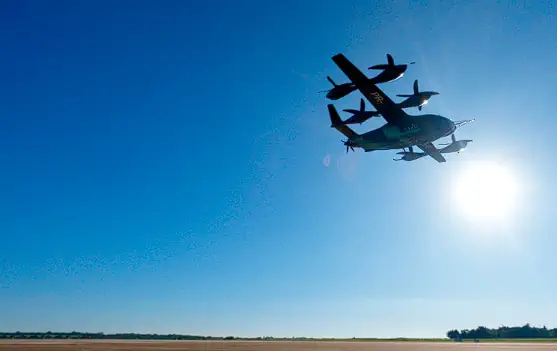
Swiss drone manufacturer Voliro has introduced an aerial spot repair service using its Voliro T platform, enabling a complete Find–Prep–Coat–Verify corrosion remediation workflow at height without scaffolding or rope access. The system meets SSPC-SP 11 surface preparation standards, is compatible with industry-standard two-component epoxy coatings such as PPG Sigma Shield 880, and generates full digital audit trails. Early-access slots are available for 2026.
Highlights
- Voliro T 無人機在無需鷹架或繩索作業的情況下,執行「找出→整備→塗裝→驗證」完整高處定點修補工作流程。
- Aeroblaster 承載裝置已通過獨立實驗室與 SGK 瑞士腐蝕防護協會驗證,可穩定達到 SSPC-SP 11 要求的 ≥ 25 µm 表面粗糙度。
- 系統相容 PPG Sigma Shield 880 與 AkzoNobel Interzone 954 等業界主流雙液型環氧樹脂塗料,資產業主無需重新進行塗料認證。
- 每個修補點的影像、影片與 DFT 量測數據均自動儲存於 Voliro Cloud,可直接生成數位稽核報告。
- Voliro 定點修補早期使用服務預計 2026 年以有限名額在陸域鋼構資產上推出。
The Voliro T can perform surface preparation and coating application directly on elevated structures — repairing early-stage corrosion quickly, efficiently, and without disrupting operations. No scaffolding, rope access, or production shutdown is required.
What Is Spot Repair?
Spot repair is a targeted remediation technique applied to localized corrosion on industrial steel assets such as storage tanks, chimneys, exhaust stacks, pipelines, and offshore platforms. Rather than stripping and recoating an entire asset, operators address only the areas where the protective coating has failed or fallen below the minimum allowable dry film thickness (DFT).
The distinction matters. Full recoating campaigns are expensive and disruptive, typically requiring extensive scaffolding and production downtime. Spot repair is the practical alternative: a fast, cost-effective way to extend asset life between major turnarounds — before small rust patches become structural problems.
The persistent challenge has always been access. Corrosion on most industrial assets occurs at height — on tank walls 30 metres up, on chimney stacks, on pipe bridges. Getting qualified coating applicators safely to those positions and completing quality surface preparation has traditionally required rope access, scaffolding, or elevated work platforms.
The Standards That Govern Spot Repair
Spot repair is not an informal process. The most widely applied surface preparation standard prior to coating is SSPC-SP 11 (Power Tool Cleaning to Bare Metal), which specifies the minimum surface cleanliness and minimum surface profile required to achieve adequate coating adhesion.
The key requirement: a surface profile of at least 25 µm (1 mil). This anchor profile is essential for the mechanical bond between coating and substrate; without it, even a correctly specified coating will fail prematurely.
Once the surface is prepared, coating must be applied to the target DFT specified by the asset owner's integrity team. Common spot repair specifications in harsh industrial environments call for high-build two-component epoxy products such as PPG Sigma Shield 880 and AkzoNobel Interzone 954.
The Traditional Process: Why It Is Slow and Costly
After an integrity team identifies corrosion through visual inspection or non-destructive testing (NDT), it marks the affected areas and hands the scope to a coating contractor. Depending on availability and permitting, the contractor mobilizes a rope access crew or arranges scaffolding erection — typically days to weeks later. The team ascends to each work location, performs manual surface preparation, applies the coating, then descends.
Every step introduces cost and risk. Scaffolding around a tank wall can take days to erect and cost tens of thousands of dollars before a single repair point is touched. Rope access is faster but physically demanding and weather-dependent. Falls from height remain one of the most common causes of serious occupational injury in the industrial sector.
The result: a rust patch the size of an A4 sheet of paper may sit unaddressed for months because the logistics of safe access make a single mobilization economically unviable. By the time it is finally treated, what was a spot repair problem has become a structural integrity concern.
The Voliro T Spot Repair Solution
Voliro's solution is a single aerial platform — the Voliro T — that executes the complete spot repair workflow from the ground. The process follows four steps: Find → Prep → Coat → Verify.
Find: Locating the Repair Points
The Voliro T already supports multiple NDT payloads for inspection: ultrasonic testing (UT), high-temperature UT, electromagnetic acoustic transducer (EMAT), pulsed eddy current (PEC), and DFT gauging. Operators fly directly to suspect areas and take contact measurements to precisely quantify where corrosion has occurred. Inspection data defines the repair scope. Typical target repair areas are approximately 30 × 30 cm (roughly 1 sq ft), applicable to flat, cylindrical, or spherical steel structures.
Prep: Aerial Surface Preparation to SSPC-SP 11
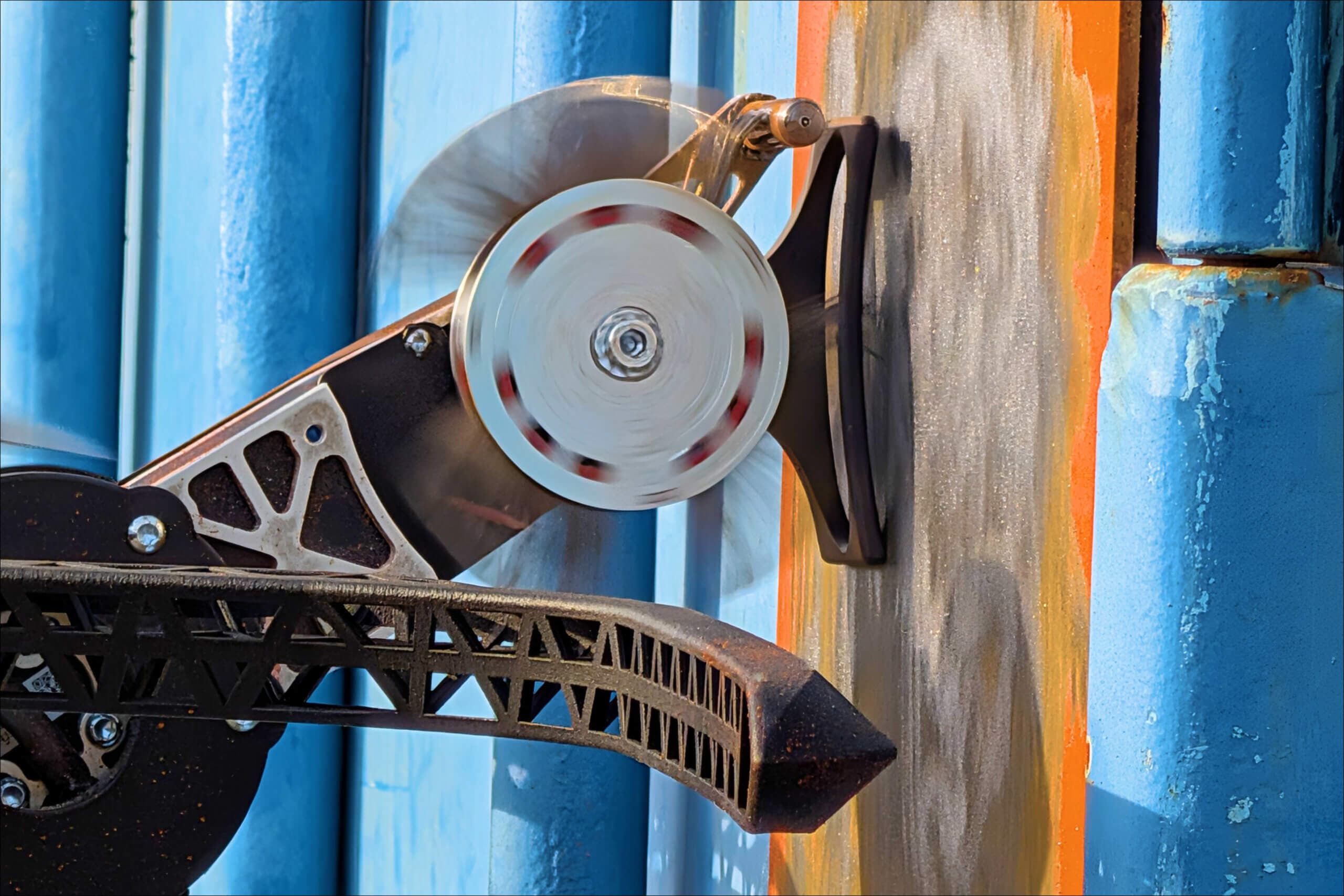
The Aeroblaster payload, co-developed with MontiPower — a global leader in mechanical surface preparation — uses an integrated Bristle Blaster tool to mechanically prepare the surface, removing corrosion and creating the anchor profile required for coating adhesion.
The Aeroblaster has been externally validated to consistently achieve the SSPC-SP 11 minimum profile requirement (≥ 25 µm), confirmed by an independent external testing laboratory and reviewed by SGK (Swiss Association for Corrosion Protection), a neutral technical authority with more than 100 years of corrosion protection expertise.
Coat: Applying the Specified Coating System
Following surface preparation, the Voliro T applies the specified product to the target DFT. The system is compatible with industry-standard two-component epoxy products, including PPG Sigma Shield 880 and AkzoNobel Interzone 954 — the same products already specified by asset owners in their manual spot repair programs — requiring no requalification of the coating specification.
Verify: Complete Digital Audit Trail for Every Repair Point
Each repair point is documented with imagery and measurement data, creating a traceable maintenance record. All data — images, video, and inspection readings — is stored in Voliro Cloud, with automated report generation covering the full scope of work. Every repair is timestamped and logged, ready to share directly with asset owners, integrity teams, or auditors — no manual report writing required.
What This Means for Asset Owners and Inspection Companies
The immediate benefit is operational: no scaffolding means faster mobilization, shorter downtime, and fewer personnel working at height. Repair points that would traditionally take days to access can be addressed within hours of a decision being made.
Beyond speed, drone-based spot repair changes the economics of corrosion maintenance. Rather than waiting until enough repair points accumulate to justify mobilization costs, owners can address corrosion as it appears — extending asset life between major turnarounds and reducing the risk of unplanned shutdowns.
For inspection companies and drone service providers already using the Voliro T for NDT work, spot repair is a natural extension of scope. The same platform used to find corrosion can now fix it. Inspection and repair become part of a single integrated workflow, completed by the same crew during the same site visit.
The solution is currently offered as an early-access service by Voliro on onshore steel assets, with limited availability in 2026.
Summary
Drone spot repair addresses one of the most persistent pain points in industrial asset maintenance: the gap between identifying early-stage corrosion and being able to address it cost-effectively. By integrating aerial NDT, validated mechanical surface preparation, and precision coating application on a single platform, the Voliro T delivers a complete ground-operated Find–Prep–Coat–Verify workflow.
The process meets the same standards as conventional spot repair (externally validated SSPC-SP 11 surface profile), while providing a faster, safer execution method with a complete digital audit trail.
Asset owners and operators managing elevated steel structures who wish to explore whether Voliro spot repair fits their maintenance program are encouraged to contact the Voliro team with details on asset type, site location, target coating system, and estimated number of repair points to arrange an initial assessment.
Frequently Asked Questions
Which surface preparation standard does Voliro spot repair comply with? The Voliro Aeroblaster payload has been validated to meet SSPC-SP 11 (Power Tool Cleaning to Bare Metal), achieving a surface profile of ≥ 25 µm, confirmed by an independent external testing laboratory and reviewed by SGK, the Swiss Association for Corrosion Protection.
Which coating products is the Voliro T compatible with? The Voliro T is compatible with industry-standard high-build two-component epoxy products, including PPG Sigma Shield 880 and AkzoNobel Interzone 954. Asset owners can use the same coating systems specified in their manual spot repair programs without requiring requalification.
What is the typical repair area for drone spot repair? The typical repair area is approximately 30 × 30 cm (roughly 1 sq ft). The solution is optimized for flat, cylindrical, or spherical onshore steel structures, including storage tanks, exhaust stacks, chimneys, pipelines, and structural supports.
Is drone spot repair suitable for offshore environments? The Voliro T platform is currently optimized for static onshore assets. Offshore and FPSO applications are on the product roadmap but fall outside the current operating scope; individual cases require separate evaluation.
How is each spot repair documented? Each repair point is recorded with imagery, video, and DFT measurement data stored in Voliro Cloud. The system automatically generates comprehensive inspection and repair reports covering the full scope of work, complete with timestamps and location data, ready to share directly with asset owners, integrity teams, or auditors.
原文來源: 查看原文
FAQ
Newsletter
Subscribe to our Low-Altitude Industry Newsletter
Daily curated news on low-altitude economy and drone industry, delivered to your inbox.
Reviewed and published by the LAETimes editorial desk ·