Japan Joins Global Drone Interceptor Race, Eyes Full Deployment by 2027
Japan's Acquisition, Technology & Logistics Agency (ATLA) is accelerating procurement of autonomous interceptor drones for deployment at radar stations, bases, and naval vessels by 2027. The push comes amid concerns that U.S. missile stockpile pressures following Operation Epic Fury could delay Tomahawk deliveries to Japan. This year's drone defense budget has surged to ¥277 billion (approx. USD 1.72 billion), nearly 2.5 times last year's figure.

Highlights
- Japan's ATLA plans to deploy autonomous interceptor drones at radar stations, military bases, and naval vessels by 2027, following a next-month demonstration evaluation.
- Japan's drone defense budget surged from ¥111 billion (USD 690 million) in 2025 to ¥277 billion (USD 1.72 billion) this year, reflecting accelerated investment in unmanned systems.
- Terra Drone CEO Toru Tokushige confirmed strong Ministry of Defense interest in the company's Terra 1 and Terra 2 interceptor drones, both battle-tested in Ukraine.
- CSIS warned of near-term munitions shortfalls following Operation Epic Fury, raising fears of Tomahawk delivery delays to Japan and prompting Tokyo to fast-track domestic alternatives.
- Japan's ruling LDP approved a target on June 9 to produce approximately 80,000 drones annually by 2030, though final budget allocations are still pending.
Japan Joins Global Drone Interceptor Race, Eyes Full Deployment by 2027
MANILA — Japan is moving swiftly to deploy autonomous interceptor drones as part of its expanding long-range strike posture. The urgency is partly driven by concerns that U.S. missile stockpiles — strained after the 38-day Operation Epic Fury campaign against Iran — could delay scheduled Tomahawk cruise missile deliveries to Tokyo.
ATLA Fast-Tracks Procurement
Japan's Acquisition, Technology & Logistics Agency (ATLA), the defense procurement arm of the Ministry of Defense, has issued a notice announcing a demonstration evaluation next month, with the goal of accelerating procurement and scaling up production and deployment.
ATLA stated that interceptor drone systems are targeted for deployment by 2027 at radar stations, military bases, naval vessels, and other critical sites.
The Ministry of Defense had previously issued a separate notice last month soliciting autonomous drone systems capable of detecting and engaging swarms of long-range loitering munitions — such as the Shahed-136.
According to the published specifications, candidate drones must already be in active service with another armed force, have demonstrated kills against Shahed-type drones, and be capable of integrating with existing radar and command-and-control systems. Operating and flight management must require no more than two personnel, and the systems must be easy to maintain.
Terra Drone Eyes Opportunity, Drawing on Ukraine Battlefield Data
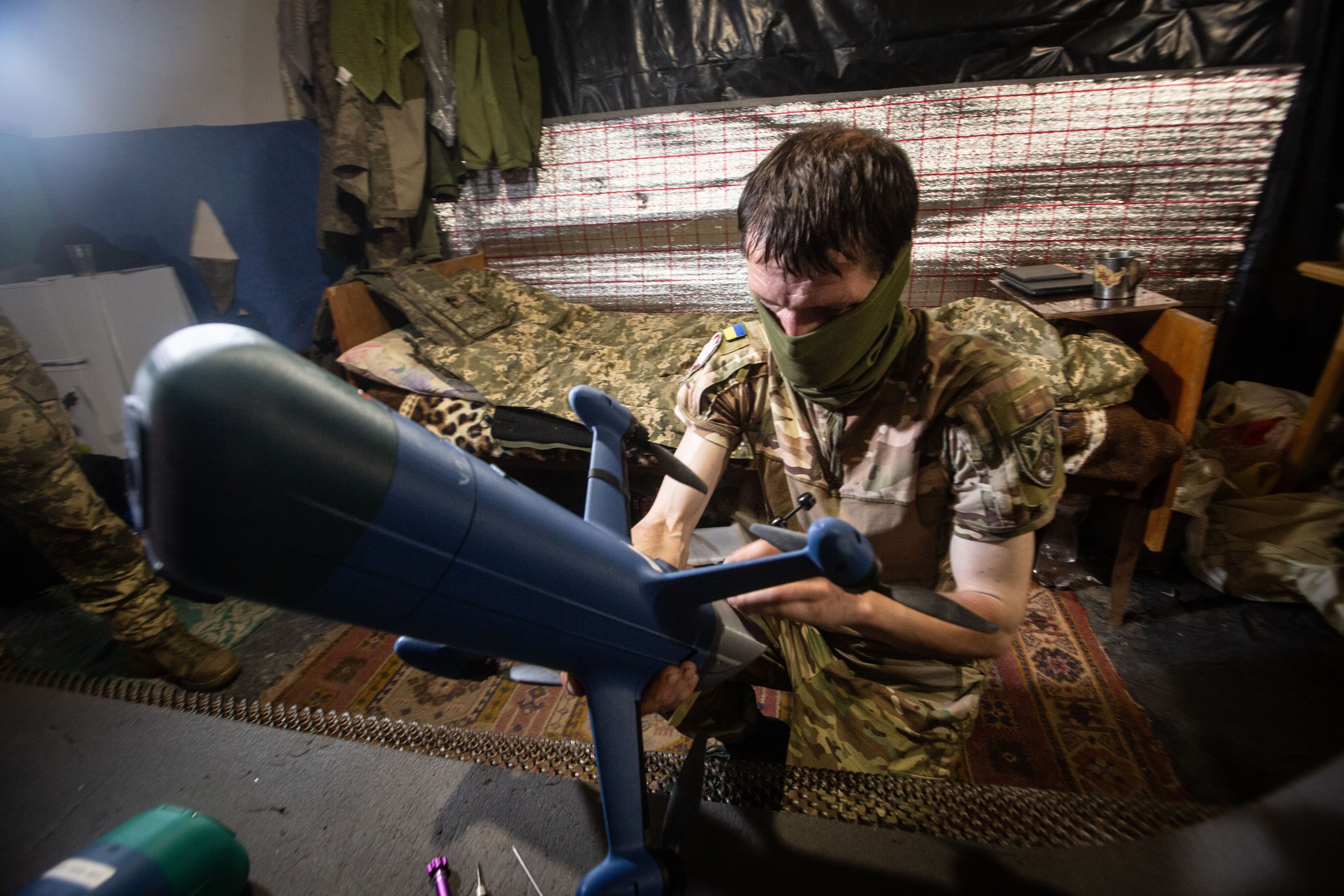
The interceptor drone push is the latest addition to Japan's broader unmanned systems fleet plan. The Ministry of Defense has already been in contact with drone company Terra Drone, which has deployed two interceptor drone models in Ukraine through Kyiv-based startups.
In March, Terra Drone announced an investment in Amazing Drones, introducing the rocket-type interceptor Terra 1. Two months later, it partnered with Ukrainian defense technology firm WinnyLab to unveil the fixed-wing model Terra 2.
Terra Drone CEO Toru Tokushige told Defense News that feedback has been "very positive," adding that Japan's Ministry of Defense has shown strong interest in the interceptor drones.
"Drone technology is evolving rapidly in Ukraine, which validates the importance of interceptor drones as a low-cost alternative to interceptor missiles," Tokushige said. He also noted that Middle East conflicts have underscored the lethal effectiveness of Shahed-type drones — which are now being deployed more frequently than missiles.
Rising Security Tensions in East Asia
The long-range capability of the Shahed drone has also raised security concerns in East Asia. The munition has previously flown more than 1,100 miles from Tehran to Tel Aviv. While battlefield environments and geography differ, that range means a similar weapon launched from Northeast Asia could reach Japan, South Korea, and even the Philippines.
"My impression of the defense industry used to be that it was very traditional, bureaucratic, and slow-moving. But after visiting Ukraine — and with the Middle East conflict as well — everyone now understands the value of drones and the importance of investing in them," Tokushige said.
Tomahawk Delay Fears Accelerate Domestic Push
Japan's emergency request for proposals is also closely tied to reports of ammunition shortages following Operation Epic Fury. The Center for Strategic and International Studies (CSIS) warned of a "near-term risk" of munitions shortfalls in the wake of the Iran operation, with delays already affecting U.S. supply contracts to European allies. There are concerns that similar delays could affect Japan's scheduled Tomahawk deliveries.
U.S. Secretary of Defense Pete Hegseth and Japanese Defense Minister Shinjiro Koizumi both denied that Tomahawk deliveries face delays. However, Koizumi noted that the Ministry of Defense plans to ramp up development of domestically produced missile systems — an extension of the recent Operation Supercharge production agreement, which will see the U.S. and Japan jointly manufacture SM-6 and SM-3 interceptor missiles.
Defense Drone Budget Surges
Japan's defense umbrella plan — to be completed over five years through 2027 — encompasses long-range strike capabilities, a missile defense network, and unmanned systems including drones, unmanned ground vehicles, and unmanned submarines.
This year's budget for unmanned defense capabilities has jumped sharply from ¥111 billion (approx. USD 690 million) in 2025 to ¥277 billion (approx. USD 1.72 billion).
With the government planning to raise defense spending to 3.5% of GDP, investment in unmanned systems is expected to continue expanding. The ruling Liberal Democratic Party approved a proposal on June 9 targeting annual production of approximately 80,000 drones by 2030, though budget allocations have yet to be finalized.
原文來源: 查看原文
FAQ
Newsletter
Subscribe to our Low-Altitude Industry Newsletter
Daily curated news on low-altitude economy and drone industry, delivered to your inbox.