Canada Weighs Mixed Fighter Fleet of 72 Gripen E/F and 72 F-35A Jets
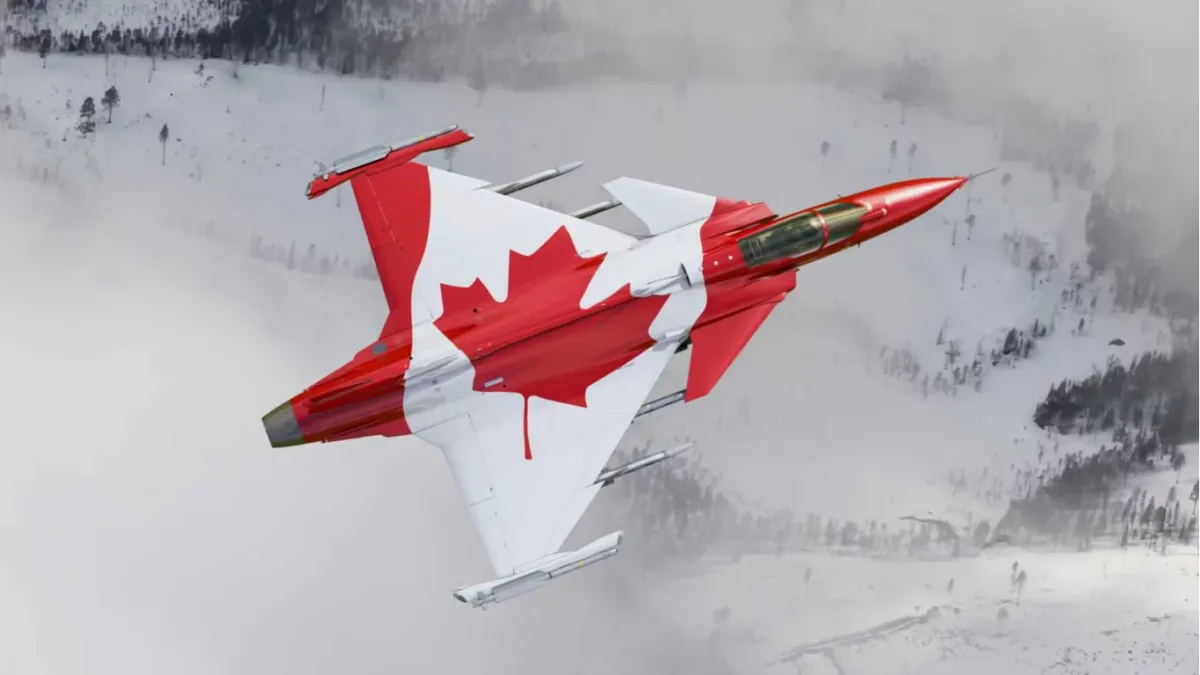
The Canadian federal government is evaluating a major defence procurement proposal to expand its fighter fleet from a planned 88 aircraft to approximately 140 jets. The plan under consideration would combine 72–88 Lockheed Martin F-35A Lightning II stealth fighters with 72 Saab Gripen E/F multirole aircraft, forming a high-low mix force to bolster North American air defence and Arctic sovereignty.

Highlights
- Canada is evaluating a mixed fighter fleet of 72–88 F-35A Lightning IIs and 72 Saab Gripen E/Fs, expanding the RCAF from 88 to approximately 140 aircraft.
- The Gripen E/F's lower cost-per-flight-hour makes it attractive for high-volume Arctic patrol and NORAD missions where deploying F-35As would be prohibitively expensive.
- Canada has committed tens of billions of Canadian dollars over 20 years to NORAD modernisation, including radar networks and satellite communications infrastructure.
- The Gripen E/F option could deliver significant industrial offsets through Saab's technology-transfer and local-production partnerships, benefiting Canada's aerospace sector.
- The total procurement cost of roughly 140 fighters could exceed tens of billions of Canadian dollars, making it one of the country's largest military acquisitions in decades.
Canada Weighs Mixed Fighter Fleet of 72 Gripen E/F and 72 F-35A Jets
The Canadian federal government is evaluating a significant defence procurement proposal that would expand the Royal Canadian Air Force (RCAF) fighter fleet from the previously planned 88 aircraft to a mixed force of approximately 140 jets. The strategic concept under consideration involves the simultaneous acquisition of 72–88 Lockheed Martin F-35A Lightning II stealth fighters and 72 Saab Gripen E/F multirole combat aircraft.
The High-Low Mix Strategy
The core rationale behind the proposal is a classic high-low mix approach, giving the RCAF both cutting-edge stealth capability and a cost-effective multirole platform. Under the concept, the F-35A would handle high-threat missions requiring fifth-generation stealth performance, while the Gripen E/F would take on routine patrols, Arctic sovereignty missions, and NORAD-related taskings.
The Gripen E/F offers a considerably lower cost-per-flight-hour than the F-35A — a significant economic advantage for Canada, which must conduct large volumes of routine patrol sorties across vast Arctic airspace.
Arctic Defence and NORAD Modernisation
Canada faces intensifying Arctic security challenges, including increasingly frequent approaches by Russian military aircraft toward its Air Defence Identification Zone (ADIZ) and growing navigability of Arctic shipping lanes due to climate change — both of which are driving up demand for sustained air presence. A mixed fleet would allow Canada to maintain sufficient intercept and patrol capacity without placing excessive wear on its high-value F-35A assets.
The proposal also aligns with Canada's NORAD modernisation commitments. Ottawa has pledged tens of billions of Canadian dollars over the next 20 years to upgrade North American air defence infrastructure, including radar networks, satellite communications, and related facilities.
Industrial and Political Considerations
Introducing the Gripen E/F could deliver substantial industrial offset benefits for Canada. Saab has a strong track record of offering generous technology transfers and local production partnerships, which could generate employment and capability gains for Canada's aerospace sector.
However, the proposal faces real challenges. Operating two distinct fighter types would increase logistical complexity, including duplicated spare-parts inventories, training systems, and maintenance infrastructure. There may also be reservations from the United States about Canada simultaneously acquiring a non-American fighter platform, particularly given the current emphasis on allied interoperability.
Procurement Timeline and Next Steps
Canada has already confirmed it will receive its first F-35A aircraft, with the initial delivery expected within the next few years. The Gripen E/F procurement proposal, however, remains at the evaluation stage and has not yet entered a formal tendering process.
Defence analysts note that if Canada ultimately adopts the mixed-fleet option, the total procurement — at roughly 140 aircraft — would represent one of the country's largest military acquisitions in decades, with an estimated total value potentially exceeding tens of billions of Canadian dollars.
A clearer picture is expected to emerge over the coming months as Canada's Department of National Defence continues to assess cost-effectiveness, strategic value, and industrial offset considerations for each option.
原文來源: 查看原文