Pentagon Awards AeroVironment $500 Million Counter-Drone Contract
The U.S. Department of Defense has awarded AeroVironment a contract worth up to $500 million over three years to supply commercial counter-drone technology. The deal, managed by the U.S. Army Contracting Command Detroit Arsenal, reflects growing Pentagon urgency to build cost-effective defenses against small unmanned aircraft systems, with work locations and funding to be determined on a task-order basis.

Highlights
- The U.S. Department of Defense awarded AeroVironment a contract worth up to $500 million over three years for commercial counter-drone technology, administered by the U.S. Army Contracting Command Detroit Arsenal.
- AeroVironment's LOCUST directed-energy laser system can intercept drones for as little as $3 per engagement, compared to the far higher cost of traditional air-defense interceptors.
- The contract follows AeroVironment's record fourth-quarter revenue announcement, with its share price rising on both the earnings report and the Army contract news.
- LOCUST underwent testing at White Sands Missile Range after a series of incidents — including the mistaken destruction of CBP Mylar balloons and a friendly-fire shoot-down of a CBP drone near the U.S.-Mexico border.
- The Pentagon and the FAA subsequently reached an agreement confirming that directed-energy systems can be operated safely within U.S. airspace, following congressional criticism of the incidents.
The U.S. Department of Defense has awarded AeroVironment a contract worth up to $500 million over three years to provide commercial counter-unmanned aircraft system (C-UAS) technology, underscoring the military's sustained push to bolster defenses against small drones.
The award was announced in the Pentagon's daily contract digest and will be administered by the U.S. Army Contracting Command Detroit Arsenal. According to the announcement, work locations and funding allocations will be determined on a task-order basis.
Focus on Cost-Effective Counter-Drone Capability
The contract reflects lessons the U.S. military has drawn from recent conflicts, where swarms of low-cost drones have posed significant defensive challenges — most notably in Iran-linked engagements involving large numbers of inexpensive one-way attack drones such as the Shahed series.
Senior Pentagon officials have increasingly emphasized the need to correct what they call an unfavorable "cost curve" — the longstanding imbalance created by using expensive interceptor missiles to defeat cheap expendable drones.
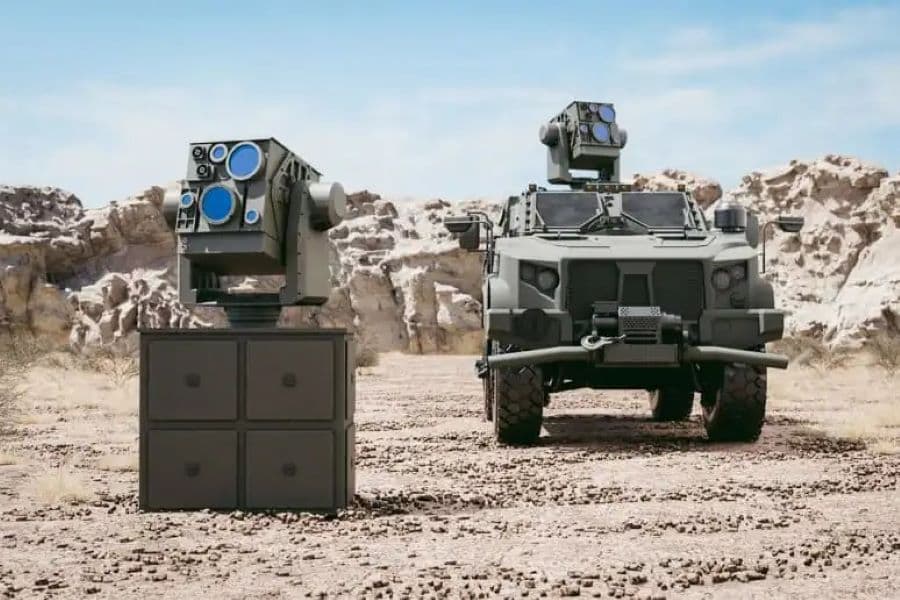
AeroVironment manufactures a range of drone and counter-drone systems, including the Switchblade loitering munition and the LOCUST directed-energy laser system.
Earlier this week, AeroVironment reported record fourth-quarter revenue; its share price rose following the earnings announcement and climbed again after news of the Army contract broke.
AeroVironment President and CEO Wahid Nawabi said the company remains focused on scaling production capacity. "We continue to focus on flawless execution and strengthening our supply chain to accelerate the commercialization of our platforms," he said. "AV is well-positioned to capture the growing global demand for lethal and non-lethal drones, counter-UAS, space, and advanced technologies, and to create long-term value for our shareholders."
Contract Details Remain Limited
The Pentagon has disclosed only the contract ceiling and duration. AeroVironment's spokesperson and the DoD's counter-drone organization, Joint Interagency Task Force 401 (JIATF-401), did not provide additional information.
The award comes as AeroVironment continues testing its LOCUST laser weapon. The company claims LOCUST can intercept drones for as little as $3 per engagement — a fraction of the cost associated with conventional air-defense interceptors.
Earlier this year, LOCUST underwent testing at White Sands Missile Range in New Mexico following an incident that resulted in the closure of Texas airspace. In a separate incident, U.S. Customs and Border Protection (CBP) used a Pentagon-loaned laser system near El Paso, Texas, to destroy targets that were later identified as Mylar balloons. In yet another incident that same month, U.S. military personnel mistakenly shot down a CBP drone that had been launched without notifying the military task force overseeing operations along the U.S.-Mexico border.
Those incidents drew criticism from members of Congress and prompted a subsequent agreement between the Pentagon and the Federal Aviation Administration (FAA) confirming that directed-energy systems can be operated safely within U.S. airspace.
原文來源: 查看原文
FAQ
Newsletter
Subscribe to our Low-Altitude Industry Newsletter
Daily curated news on low-altitude economy and drone industry, delivered to your inbox.
Reviewed and published by the LAETimes editorial desk ·