Historic First: Unmanned Surface Vessel Rescues Apache Helicopter Crew, Marking New Era for Search and Rescue
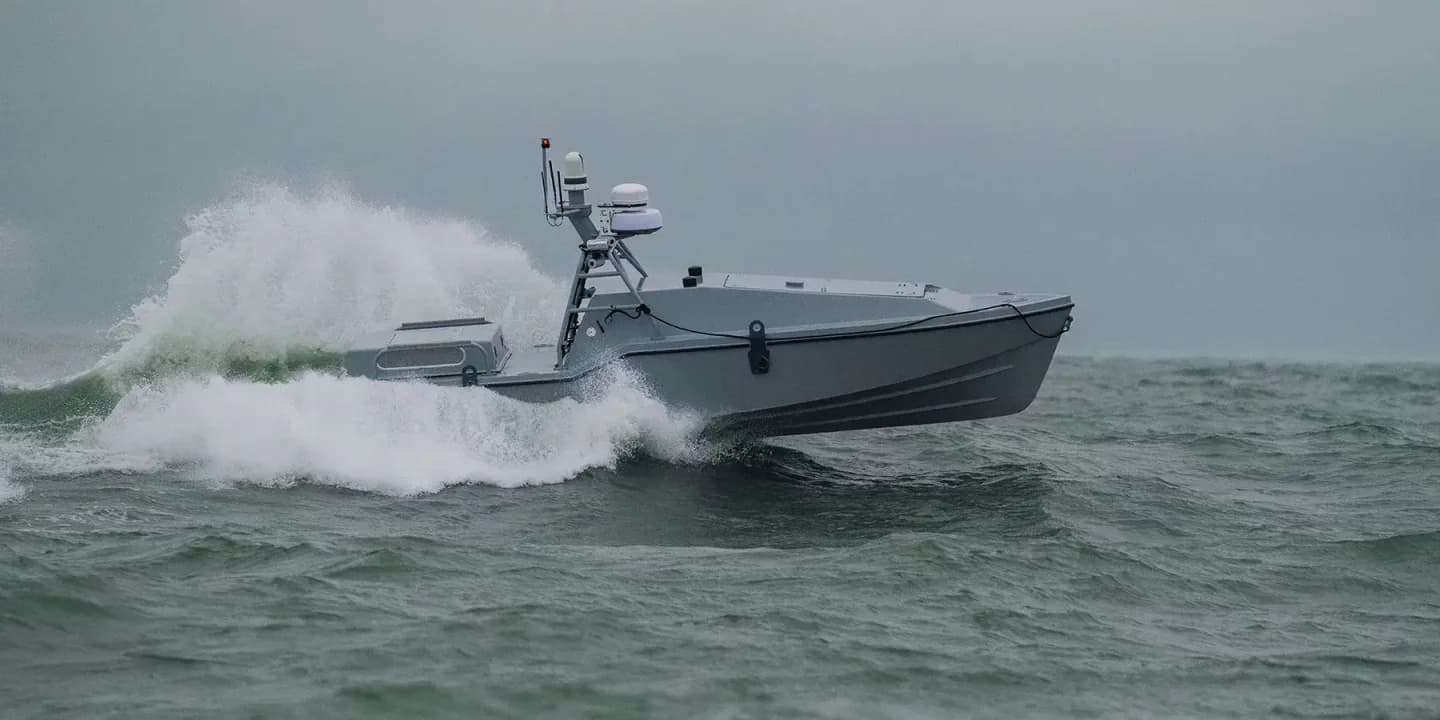
A U.S. Army AH-64 Apache helicopter made a forced landing near the coast of Oman, leaving two crew members in peril. Within two hours, the Saronic Corsair unmanned surface vessel (USV), operated by U.S. Naval Forces Central Command's Task Force 59, successfully rescued both crew members — marking the first-ever personnel rescue mission conducted by an unmanned vehicle in a real military operation.

Highlights
- A U.S. Army AH-64 Apache helicopter made a forced landing near the coast of Oman, endangering two crew members.
- The Saronic Corsair USV, operated by U.S. Navy Task Force 59 (5th Fleet), rescued both crew members within two hours.
- This is the first-ever confirmed personnel rescue mission successfully completed by an unmanned vehicle in a real military operation.
- Task Force 59 specializes in integrating unmanned systems and AI into maritime operations and was responsible for deploying the Corsair.
- The mission is expected to accelerate the adoption of unmanned vehicles in standard SAR procedures across military forces worldwide.
Unmanned Surface Vessel Rescues Helicopter Crew in Military SAR Milestone
In a historic first, a U.S. Army AH-64 Apache attack helicopter made a forced landing near the coast of Oman, placing two crew members in immediate danger. U.S. Naval Forces Central Command's Task Force 59 (TF 59), operating under the U.S. Navy's 5th Fleet, rapidly deployed the remotely operated Saronic Corsair unmanned surface vessel (USV) and successfully recovered both crew members within two hours.
A New Era for Unmanned Search and Rescue
The operation marks the first time an unmanned vehicle has completed a personnel rescue mission in an actual military context, representing a significant turning point in search-and-rescue (SAR) doctrine. The Saronic Corsair is an autonomously capable USV deployed and operated by TF 59, a unit with a dedicated focus on integrating unmanned systems and artificial intelligence into maritime operations.
Advantages of Unmanned Systems in SAR Missions
Conventional SAR operations typically require helicopters or crewed vessels, resulting in longer response times and exposing additional personnel to risk. This incident demonstrates that unmanned vehicles can be rapidly deployed in hazardous or high-risk environments, significantly reducing rescue response times while eliminating additional risk to human responders.
Looking Ahead
This successful rescue is expected to accelerate the integration of unmanned vehicles into standard SAR procedures across multiple armed forces. As autonomous navigation technology and AI decision-making capabilities continue to advance, the potential for unmanned systems in maritime rescue and disaster relief operations grows considerably. The mission also provides compelling real-world evidence that unmanned vehicles can expand their operational role beyond reconnaissance and strike missions into humanitarian and life-saving operations.
原文來源: 查看原文