Ukraine War Reshapes Robot Tactics as U.S. Army Pivots to Small Unmanned Ground Vehicles
Inspired by lessons from Ukraine, the U.S. Army is actively procuring small unmanned ground vehicles (UGVs). Arizona startup Crow Industries' Fenris robot, weighing 700–1,500 lbs, can carry 500 lbs of cargo, evacuate casualties, or conduct reconnaissance. The Army has been fielding Fenris since September 2024 and is developing a 'Robotic Forward Line' doctrine, with fully unmanned military units potentially achievable within five years.

Highlights
- The U.S. Army began fielding Crow Industries' Fenris UGV in September 2024; the vehicle weighs 700–1,500 lbs and can carry up to 500 lbs of cargo.
- Crow Industries, a 12-person startup founded in 2018 in Scottsdale, Arizona, originally designed the Fenris rover for space mining before pivoting to military applications.
- Ukraine battlefield experience — including UGV use in logistics, reconnaissance, and casualty evacuation — has significantly accelerated U.S. Army interest in unmanned ground vehicles.
- Competing Army UGVs are substantially heavier: HDT Global's Hunter WOLF weighs 3,600 lbs ($11.6M contract, 2024) and Textron's Ripsaw M3 weighs eight tons ($24.7M contract, 2025).
- Brigadier General Anthony Gibbs confirmed three forthcoming Army autonomous unmanned systems procurement announcements as part of a broader push for scalable, interoperable robotic capabilities.
Ukraine War Reshapes Robot Tactics as U.S. Army Pivots to Small Unmanned Ground Vehicles
WASHINGTON — When James Crowell founded Crow Industries, building a war machine was the last thing on his mind.
When he established the company in Scottsdale, Arizona, his vision was to deploy unmanned ground vehicles (UGVs) for space exploration. To support humanity's interplanetary ambitions, his team built a rover designed for mining operations — one that might one day help industrialize the solar system.
Everything changed when an Army contact saw the prototype — the first domestically produced UGV of its class in the United States, thousands of pounds lighter than competing systems — and asked for a demonstration. The U.S. Army has since become the company's primary customer.
"We're in a very exciting era, because we have an opportunity to help the Army develop new doctrine: how do robots fight alongside humans?" said Crowell.
Ukraine Drives UGV Demand
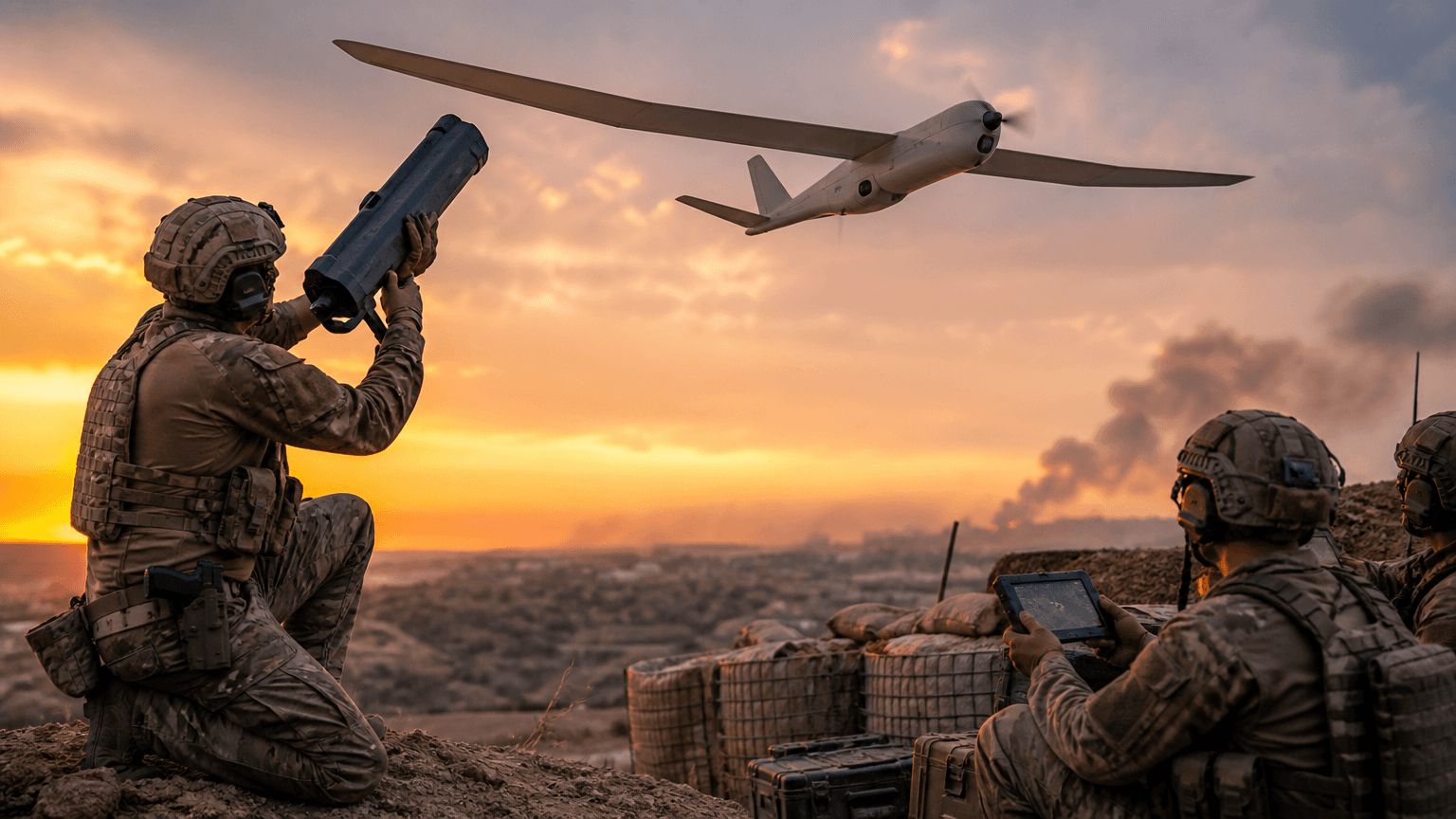
U.S. Army officials' interest in UGVs has grown steadily. Remotely operated robotic ground systems have demonstrated clear utility on the Ukrainian battlefield, with applications spanning logistics, reconnaissance, obstacle breaching, casualty evacuation, ordnance disposal, and direct engagement of enemy combatants.
In fact, the American defense industry had already taken notice of UGVs well before Russia's invasion of Ukraine. DARPA introduced predecessor vehicles as far back as the 1960s, launching decades of technological innovation in which the Army played a central role.
More recently, the XVIII Airborne Corps has been testing UGV-based obstacle breaching through the multi-year Sandhills Project. The Army's xTech program has held multiple competitions soliciting UGV concepts and solutions — among them, Crow Industries.
Earlier this year, the Army issued a UGV procurement solicitation calling for vehicles capable of supporting troops during the most dangerous and complex phase of an operation: the "last tactical mile."
Army Pursues Scalable Autonomous Robotic Systems
Brigadier General Anthony Gibbs, who leads the Capabilities Integration and Development Program Executive Office (CPE Mission Autonomy), said the Army is pursuing "multiple commercial autonomous unmanned robotic capabilities" and is committed to putting prototypes in soldiers' hands for real-world feedback.
"The Army is advancing autonomous unmanned robotic capabilities to enable commanders to seize the initiative through shaping and degrading threats across the multi-domain battlefield," he said in an emailed statement. "The Army strategy aims to leverage commercial technologies to close capability gaps, improve operational readiness, and ensure rapid prototyping, fielding, and integration to build affordable, scalable, interoperable, and mission-essential autonomous systems."
Fenris: From Space Rover to Battlefield Robot
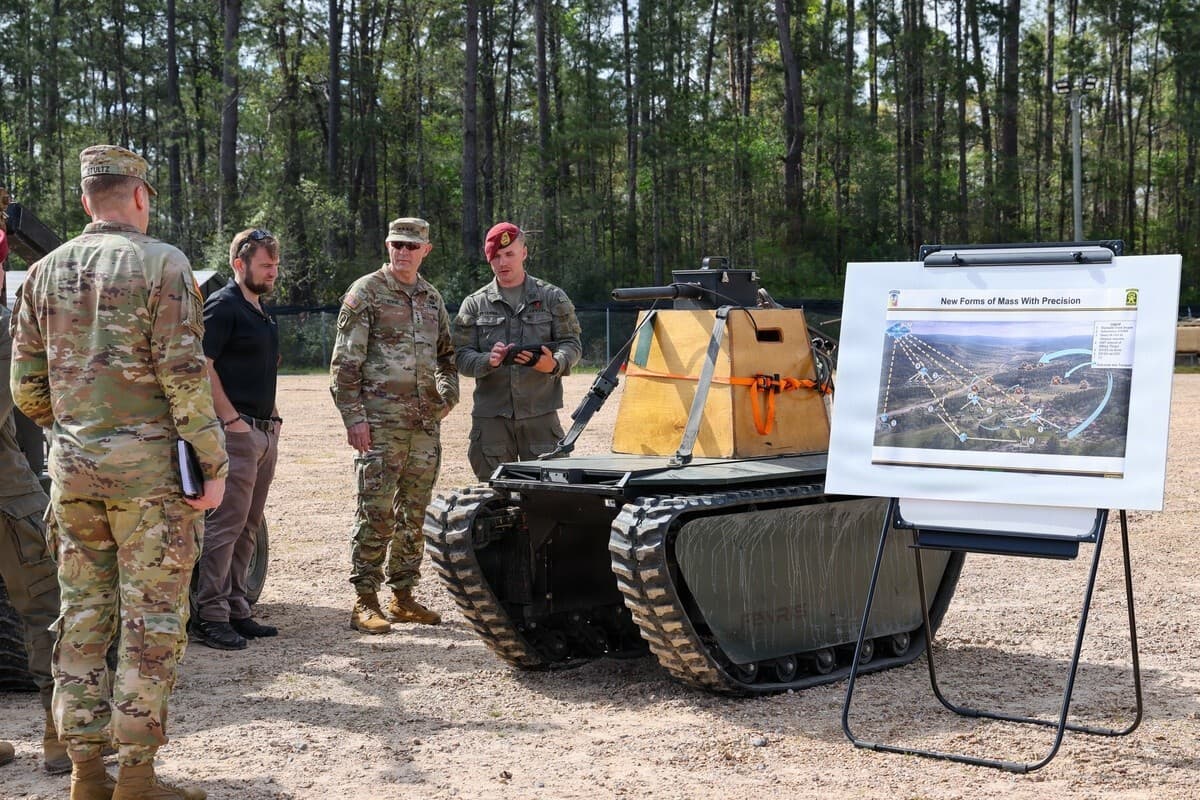
The Fenris rover developed by Crow Industries can carry up to 500 lbs of cargo and supports turret mounting, ordnance disposal, supply delivery, casualty evacuation, and intelligence gathering, operating in both remote-controlled and autonomous modes, according to the company's website. The vehicle also retains the mining capability for which it was originally designed.
The Army has been fielding the Fenris since September 2024. It comes in two weight configurations — 700 lbs and 1,500 lbs. Crowell says the vehicle's relatively compact footprint is its key differentiator.
By comparison, other UGVs in the Army's inventory are considerably heavier. In 2024, the Army awarded HDT Global an $11.6 million contract for its Hunter WOLF vehicle, which weighs 3,600 lbs. In 2025, Textron Systems' Ripsaw M3 — weighing in at eight tons — was among the prototype awardees under a $24.7 million contract. The Army has since moved toward a consortium model for developing combat robotic vehicles.
The Fenris takes a different design philosophy: agile, simple, and inexpensive to manufacture. Concentrating UGV capability on a limited set of functions keeps per-unit costs down and reduces the financial risk of battlefield losses.
"It's about distributing risk across the entire battlespace," Crowell said.
Founded in 2018, Crow Industries currently employs just 12 people. Crowell declined to disclose contract values but said the company is executing multiple Army contracts and is in discussions to sell to U.S. allies.
Fenris has been tested in training exercises and has proven capable of handling muddy and woodland terrain. Its low — though undisclosed — cost makes it effectively "attritable," allowing the Army to deploy it to disrupt enemy positions even if the vehicle is lost in the process.
Procurement Reform Fuels Startup Growth
Crowell is counting on the Trump administration's push to accelerate technology procurement to help the company continue scaling.
"Innovation isn't just about technology," he said. "Innovation in the acquisition pathway is a significant tailwind for us right now."
Retired Army Colonel Ben Fernandes, who served as Director of Defense Policy and Strategy on the National Security Council and has spent years studying Army and Navy robotic and autonomous systems, now teaches at Arizona State University. He sees a wide range of military applications for UGVs.
"It will ultimately become the first line of defense, or the first wave of attack," Fernandes said.
UGVs can provide both offensive and logistics capabilities without putting personnel at risk, making them particularly well-suited for "dull, dirty, and dangerous" tasks such as mine clearance.
Robotic Forward Line: The Future Shape of War
According to an article in the Army journal Infantry, an emerging operational concept called the "Robotic Forward Line" would see unmanned systems deployed ahead of troops to conduct reconnaissance and make initial contact with the enemy.
"This is genuinely where future warfare is heading," Crowell said.
Fernandes cautioned, however, that the development and adoption of UGVs has not been without obstacles. The technology still requires further research, full integration demands structural changes within the Army, and senior leadership remains skeptical.
"Convincing them to replace a manned tank with an unmanned tank is very, very difficult," he said.
More prototype testing and field evaluations will be needed to demonstrate the battlefield value of UGVs. "We're not experimenting enough, we're not developing enough to get these systems to a production-ready level."
Crowell also acknowledged the difficulty of persuading Army leadership to shift from large UGVs toward smaller systems like Fenris. It was only when frontline soldiers began requesting more agile UGVs — combined with mounting evidence of their effectiveness in Ukraine — that the Army began to take Crow Industries seriously.
Brigadier General Gibbs pointed to the Army's establishment of its Mission Autonomy organization and three forthcoming autonomous unmanned systems procurement announcements as evidence of the service's commitment to the technology.
"The Army is committed to delivering autonomous capabilities to ensure our soldiers continue to hold a decisive advantage on the battlefield," he said.
Allied Industry Also Bullish on UGVs
Chris Haag, Vice President of Business Development and Strategy at Rheinmetall America — the U.S. subsidiary of Europe's fifth-largest defense contractor — is equally optimistic about the Army's embrace of UGV technology. Rheinmetall America's flagship UGV line includes vehicles weighing nearly 5,500 lbs.
Haag, a former U.S. Army engineer, said that as the size of standing forces shrinks, UGVs represent an effective means of augmenting human formations.
"It's a great convergence point for supporting the Army and the militaries we serve — getting soldiers through the mission and back home safe," he said.
Crowell envisions broader adoption of small UGVs like the Fenris. Within the next five years, he expects to see fully unmanned military units comprised of ground vehicles, aerial drones, and maritime vessels.
"The Robotic Forward Line is coming," Crowell said. "And it will be powered by small, modular UGVs."
This article was originally published in Small Wars Journal*, produced under the auspices of Arizona State University.*
原文來源: 查看原文
FAQ
Newsletter
Subscribe to our Low-Altitude Industry Newsletter
Daily curated news on low-altitude economy and drone industry, delivered to your inbox.