Mysterious Roman Curse Tablet Unearthed at Ancient Dutch Military Settlement
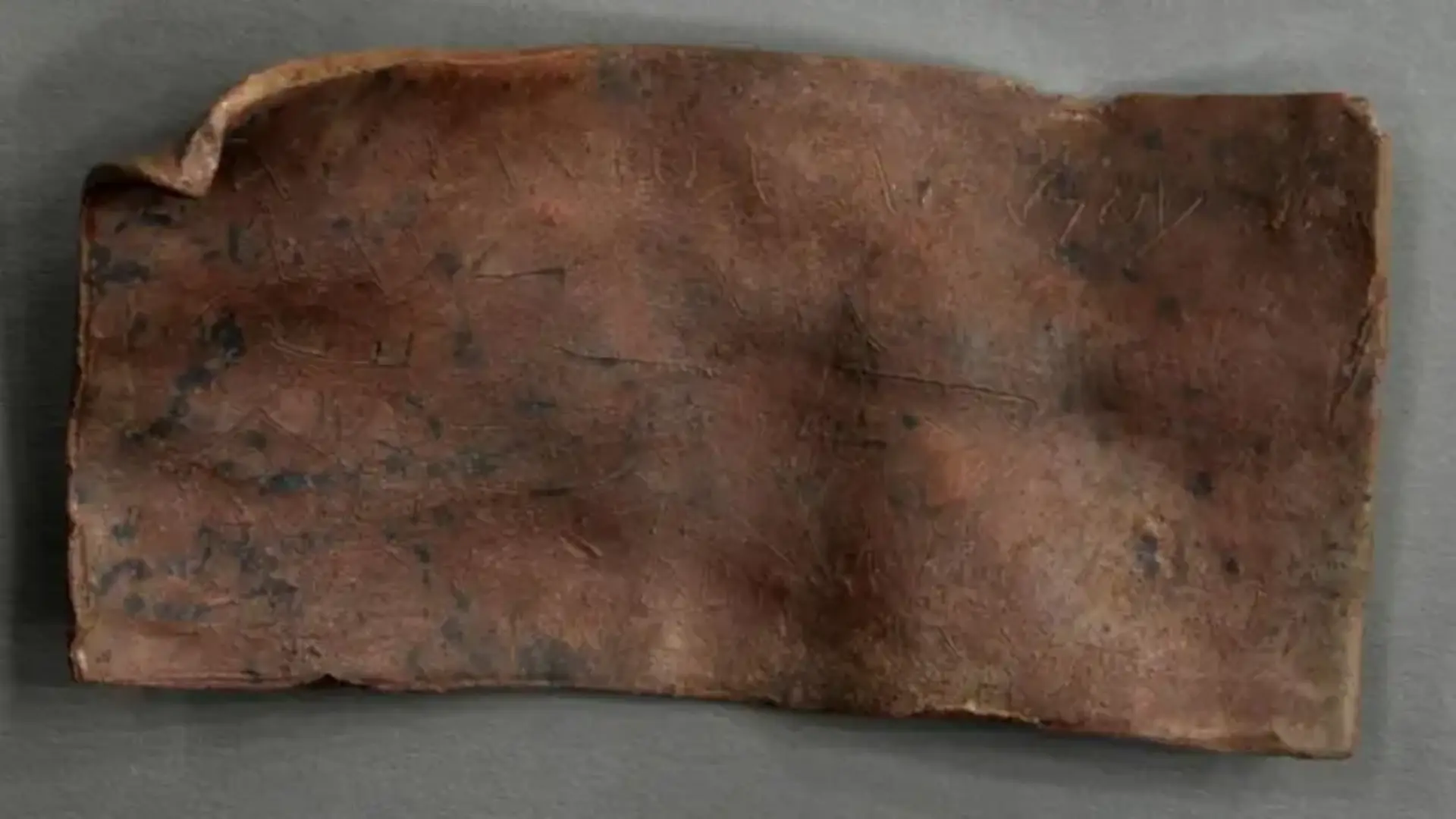
Researchers at Heidelberg University's Papyrology Institute have identified a Roman-era lead curse tablet excavated from a pit in the city centre of Heerlen, Netherlands. Measuring approximately 3.7 × 1.9 inches, the artefact originates from the Roman military settlement of Coriovallum in Lower Germania. Written in Greek and invoking Egyptian deities, the tablet is exceptionally rare for northern Europe, and scholars suggest its author may have been an enslaved person from Roman Egypt.

Highlights
- A Roman-era lead curse tablet measuring 3.7 × 1.9 inches was excavated from a pit in Heerlen city centre, at the site of the ancient settlement of Coriovallum in Lower Germania.
- Heidelberg University's Institute for Papyrology identified the artefact, using Reflectance Transformation Imaging (RTI) to recover text damaged over centuries.
- The tablet is written in Greek and invokes Egyptian deities — a combination described as exceptionally rare among curse tablets found in northern Europe.
- Researchers believe the author was likely an enslaved person from Roman Egypt, possibly bringing knowledge of Egyptian magical traditions to the Roman frontier.
- The inscription names four enslaved individuals — two with Latin male names and two with Greek female names — though scholars cannot confirm whether they were the targets or the authors of the curse.
Mysterious Roman Curse Tablet Unearthed at Ancient Dutch Military Settlement
Researchers at Heidelberg University's Institute for Papyrology in Germany have identified a set of Roman-era "curse tablets," shedding fascinating new light on the more superstitious side of the once-mighty empire.
The tablet was recovered from a pit excavated beneath the central square of Heerlen, in the Netherlands. Measuring approximately 3.7 × 1.9 inches, it originated from Coriovallum, a Roman military settlement in the province of Lower Germania.
Researchers believe the tablet may have been placed either to curse four enslaved individuals named on it, or by those four enslaved persons jointly cursing an unidentified target.
Known in Latin as defixiones and in Greek as katadesmoi, these lead tablets were inscribed with spells and buried at locations associated with supernatural forces — a testament to humanity's enduring desire to invoke divine favour or misfortune upon others.
The artefact's roots in Roman Egyptian culture make it an exceptionally rare find, illuminating the role of magic in ancient society at a time when cultures and belief systems were intermingling across the Roman Empire.
Someone Had a Score to Settle
Centuries of deterioration left the inscription badly damaged, presenting researchers with a formidable decipherment challenge. The team employed Reflectance Transformation Imaging (RTI), a technique capable of revealing surface details invisible to the naked eye, to recover additional lost text.
Among the faded markings, researchers discovered references to Egyptian deities — a finding that surprised them, as such references are exceptionally rare in artefacts found in the Germanic region. Curse tablets recovered in northern Europe typically follow a standard formula: written in Latin and invoking Roman gods, not Egyptian ones.
The discovery grew more intriguing still. Unearthed at a former Roman military settlement — an unusual location for a curse tablet, which was more commonly buried at sites associated with the supernatural — the artefact bears three magical symbols followed by the names of four enslaved individuals. The male names are Latin; the female names are Greek.
Owing to the damaged inscription, researchers cannot determine with certainty whether the tablet curses the four named individuals or was composed in their names, calling upon Egyptian gods and demigod heroes to bring harm upon an unknown party.
"The tablet could be a curse directed at these four slaves, or a curse made in their name against an unspecified person," Heidelberg University's papyrologists told Phys.org.
Attempting to "Work a Little Magic"
What further sets this tablet apart from comparable artefacts is that it was inscribed in Greek rather than Latin. Such thin lead sheets engraved with supernatural wishes were, according to Archaeology News, commonly used to influence the outcome of legal disputes, undermine rivals, or intervene in matters of the heart.
Dr Julia Lougovaya, a researcher at Heidelberg University's Institute for Papyrology, told Phys.org: "It cannot be excluded that one of the two women was the writer of the inscription and that she brought to this location the ability to communicate with the gods through a curse from Roman Egypt."
This suggests she may have composed the curse on behalf of all four enslaved individuals. Given the imagery invoked in the text, the author was in all likelihood from Roman Egypt — a region where magic held a significant place in society, though notably more often associated with protective amulets and healing than with curses.
Yet this is undeniably a curse tablet, and a Roman-style one at that. Did a formerly enslaved person turn that tradition on its head? Therein lies the tablet's singular importance: its cultural hybridity.
Discovered on Rome's distant northern frontier, this artefact blending Egyptian and Greek elements is a striking demonstration of how far the currents of cultural exchange could reach. The names of the enslaved individuals inscribed upon it may yet offer further clues as to who left this remarkable cross-cultural curse behind — and why — within the walls of a Roman military garrison.
原文來源: 查看原文
FAQ
Newsletter
Subscribe to our Low-Altitude Industry Newsletter
Daily curated news on low-altitude economy and drone industry, delivered to your inbox.