BRINC Drones Help Michigan Police Arrest Child Predators: Taylor PD Case Study
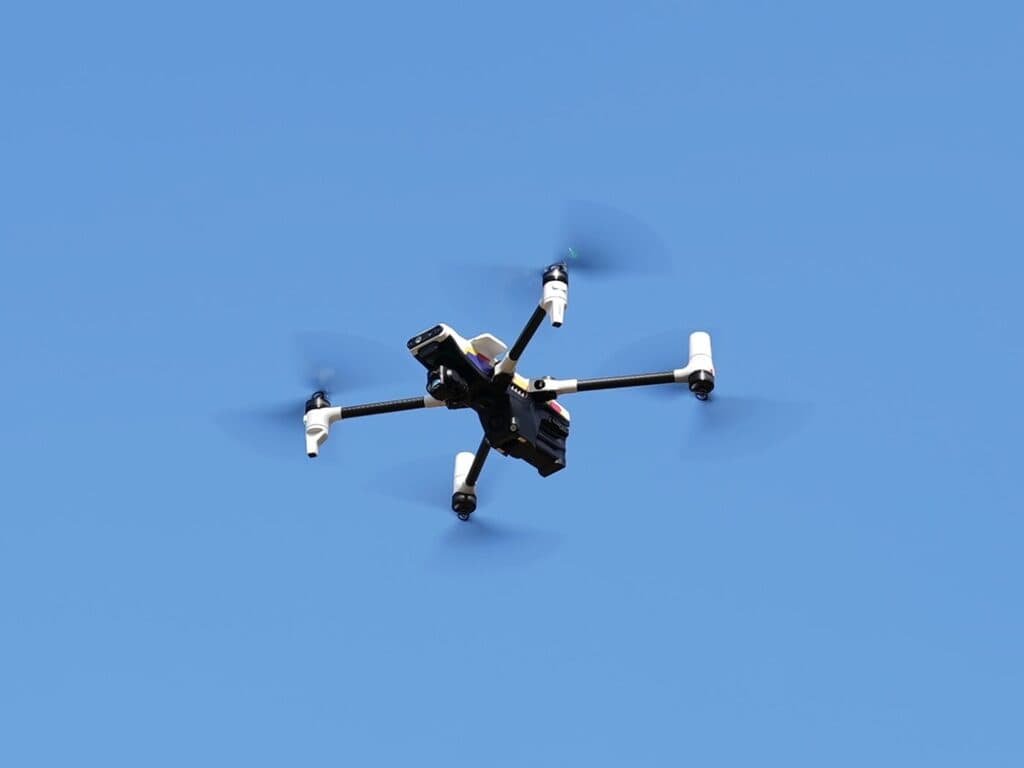
The Taylor Police Department in Michigan used BRINC Responder drones during undercover sting operations in 2025, arresting 14 individuals attempting to sexually exploit minors. Four more suspects were arrested in 2026. Operating at over 150 feet, the drones provided real-time aerial surveillance, enabling officers to confirm suspect identities before making contact—reducing risk and strengthening evidence collection.

Highlights
- Taylor Police Department (Michigan) arrested 14 child predators in 2025 and 4 more in 2026 using BRINC Responder drones during undercover sting operations.
- BRINC Responder drones operated at altitudes exceeding 150 feet, delivering stable video footage that allowed officers to confirm suspect identities before making physical contact.
- In one operation, the Responder tracked a fleeing suspect vehicle traveling at up to 45 mph, recording continuous footage until police could safely intercept the driver.
- Two Responders were simultaneously deployed in some operations to cover multiple entry and exit points at large public venues such as parks and event locations.
- Taylor PD has transitioned its drone program to a full Drone as First Responder (DFR) model, with officers proactively requesting drone coverage as a standard operational tool.
BRINC Drones Help Michigan Police Arrest Child Predators: Taylor PD Case Study
Protecting children requires more than a fast response. It demands certainty, discretion, and control—all established before a suspect ever realizes law enforcement is present.
In 2025, the Taylor Police Department in Michigan launched a series of undercover operations targeting individuals attempting to sexually exploit minors. By year's end, 14 child predators had been arrested, with several entering guilty pleas. In 2026, four additional men who had intended to engage in sexual activity with children were taken into custody.
BRINC Responder drones played a critical role in every one of these operations.
Identifying Suspects Before They Could Blend In
Taylor PD's investigations began online, with undercover officers posing as minors and arranging in-person meetings with suspects. The real challenge began at the moment of arrival—suspects routinely lied about their vehicle, appearance, or intentions.
That's where the BRINC Responder proved its worth.
"Suspects are dishonest," said Lieutenant Jeff Adamisin of the Taylor Police Department. "They say they're driving one vehicle and show up in another. We deployed the Responder to get the full picture before our officers made any contact."
During these sting operations, Taylor PD positioned the Responder to cover all entry and exit points at large public venues, including parks and event locations. Leveraging its industry-leading loiter time and powerful zoom capability, the drone scanned incoming vehicles. In multiple cases, suspects were positively identified via the drone before any undercover officer had laid eyes on them in person.
Crystal-Clear Imagery, Zero Guesswork
Flying at altitudes exceeding 150 feet, the Responder delivered stable, high-quality footage even in the presence of tall tree cover and variable weather conditions.
"The image quality is excellent," Adamisin said. "We can see inside vehicles, get the angles we need, and confirm we have the right person."
That level of certainty is operationally decisive—officers move in with a complete picture of who they're dealing with, reducing the risk of misidentification while building a stronger evidentiary record from the outset.
Silent Deployment, Full Tactical Advantage
Because suspects never detected the drone's presence, Taylor PD maintained continuous situational awareness without escalating tension on the ground.
"It's a huge asset," Adamisin said. "We can surveil a target from a distance without being detected."
In some operations, two Responders were deployed simultaneously to cover multiple exit points. In one instance, when a suspect's vehicle fled the scene at speeds up to 45 mph, the Responder tracked the vehicle continuously, capturing everything on video until officers were able to safely intercept the suspect.
From Support Tool to First Responder
Taylor PD's drone program has evolved from patrol support into a true Drone as First Responder (DFR) model. The transition was gradual, but once officers experienced the operational benefits firsthand, adoption accelerated quickly.
"When our drone fleet wasn't available, officers started saying, 'I wish we had a Responder right now,'" Adamisin said. "That's when we knew the technology had fundamentally changed how we operate."
Real Operations, Real Results
By establishing an aerial advantage before situations could escalate, the Responder helped Taylor PD maintain control of every critical moment.
These were not training exercises. The results were tangible: faster suspect identification, safer arrests, stronger evidence, and 14 predators removed from the community.
That outcome wasn't accidental. It was by design.
原文來源: 查看原文
FAQ
Newsletter
Subscribe to our Low-Altitude Industry Newsletter
Daily curated news on low-altitude economy and drone industry, delivered to your inbox.
Reviewed and published by the LAETimes editorial desk ·