U.S. Air Force Awards First CCA Production Contracts to General Atomics and Anduril
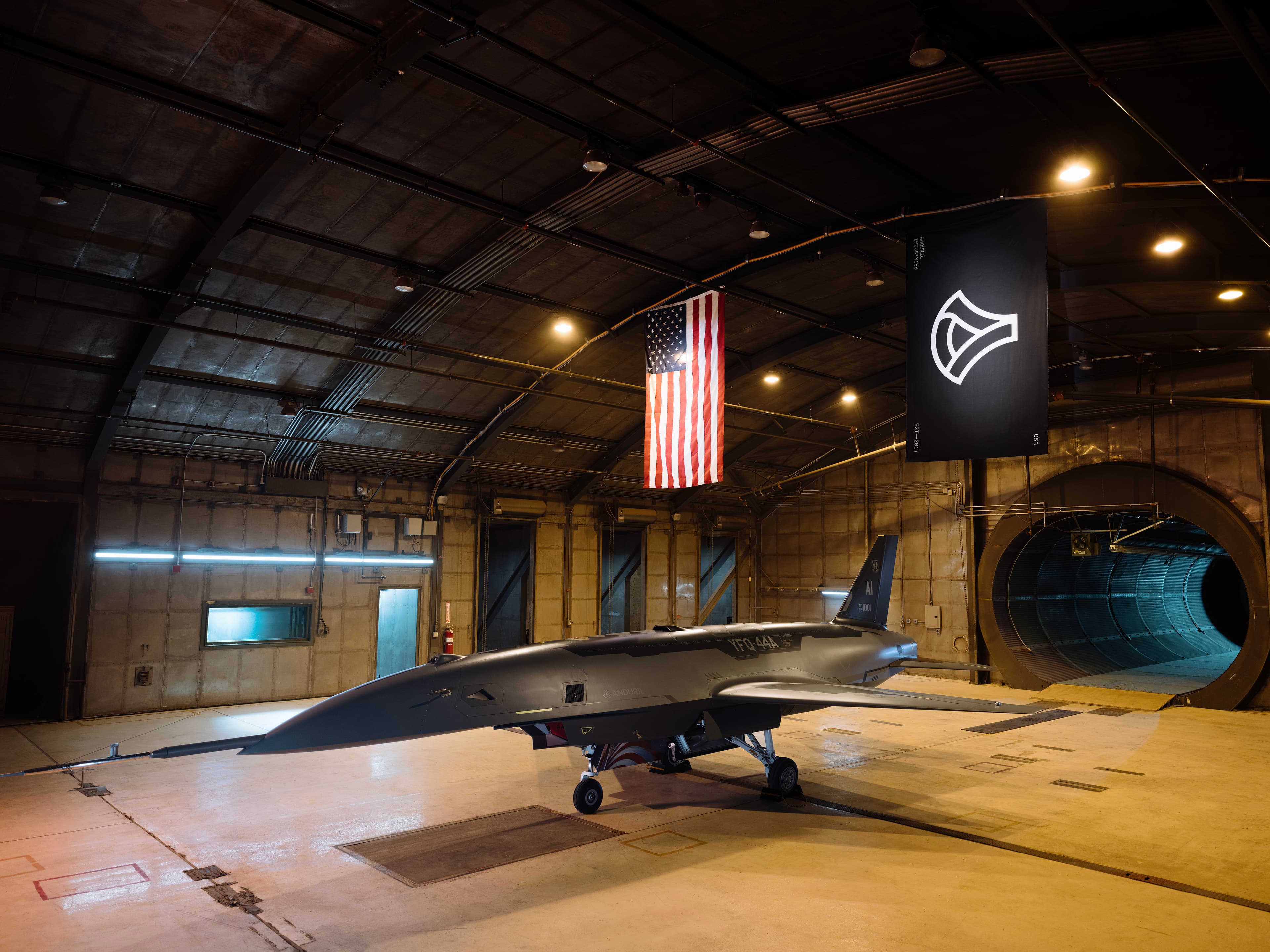
The U.S. Air Force has awarded its first Collaborative Combat Aircraft (CCA) production contracts to General Atomics Aeronautical Systems for the FQ-42A and Anduril Industries for the FQ-44A, completing the milestone four months ahead of schedule. Six companies will compete for autonomous software contracts, with a single primary software vendor to be selected by summer 2027. The Air Force aims to procure more than 150 combat-ready CCAs before the end of the decade.

Highlights
- The U.S. Air Force awarded the first CCA production contracts to General Atomics (FQ-42A) and Anduril (FQ-44A), completing the milestone four months ahead of schedule.
- Six companies — Anduril, General Atomics, Lockheed Martin, Northrop Grumman, RTX Collins Aerospace, and Shield AI — qualified for a six-year autonomous software framework contract.
- Anduril, RTX Collins Aerospace, and Shield AI were selected to begin the first six-month autonomous software development round immediately, with a single primary vendor to be chosen by summer 2027.
- The Air Force targets procurement of more than 150 combat-ready CCAs by end of decade, against a long-term program goal of approximately 1,000 aircraft.
- The Air Force's FY2027 budget request marks the first time Congress has been asked to fund CCA procurement — as opposed to research and development — signaling the program's transition to full production.
U.S. Air Force Awards First CCA Production Contracts to General Atomics and Anduril
The U.S. Air Force has announced that its Collaborative Combat Aircraft (CCA) program has officially entered full production, with contracts awarded to General Atomics Aeronautical Systems and Anduril Industries. Six additional companies will compete for the autonomous software contracts that will power the aircraft.
Milestone Reached Four Months Ahead of Schedule
The Air Force said the decision was completed four months ahead of the original schedule. The contracts cover General Atomics' FQ-42A and Anduril's FQ-44A as part of the CCA Increment 1 program.
The two aircraft were previously designated YFQ-42A and YFQ-44A during development. The removal of the "Y" prefix marks their official transition from prototype to production-representative aircraft.
'Loyal Wingman' Concept Becomes Reality
CCAs, commonly referred to as "loyal wingmen," are jet-powered, semi-autonomous unmanned combat aircraft designed to operate alongside crewed fighters such as the F-35 — and the planned F-47 — to extend sensor and weapons coverage while absorbing risks that would otherwise fall on human pilots.
Air Force Chief of Staff Gen. Ken Wilsbach said: "Collaborative Combat Aircraft changes how we project power and scale in highly contested environments. Getting this capability to warfighters faster ensures our forces maintain the tactical advantage needed to deter and, if necessary, defeat any adversary."
Procurement Goal: More Than 150 Aircraft by End of Decade
While the Air Force has committed to building a large CCA fleet, the ramp-up will be gradual. Secretary of the Air Force Troy Meink said the contracts reaffirm the service's confidence in procuring more than 150 combat-capable CCAs before the end of the decade — still well short of the program's long-term goal of approximately 1,000 aircraft.
"By moving rapidly from competitive selection to full-rate production, we are able to field highly credible, combat-ready semi-autonomous systems that keep us ahead of our competition," Meink said.
Six Companies Compete for Autonomous Software Contract
The Air Force has separately launched a competition for CCA autonomous software development. The following six companies have qualified for a six-year indefinite-delivery contract:
- Anduril
- General Atomics
- Lockheed Martin
- Northrop Grumman
- RTX Collins Aerospace
- Shield AI
"Mission autonomy is the cornerstone of the CCA concept," Meink said. "A competitive, multi-vendor environment ensures we have access to the best available technology."
Three Companies Begin Immediate Development Work
From the six, the Air Force has selected three to begin autonomous software development immediately: Anduril, RTX Collins Aerospace, and Shield AI will participate in the first of two six-month head-to-head competition rounds.
The Air Force said the three were selected based on their ability to meet program schedule and cost requirements. The service plans to select a single primary software vendor for Increment 1 by summer 2027.
Notably, the Air Force is employing what it describes as a "first-of-its-kind" payment model — full licensing fees will only be paid when a vendor "delivers operational capabilities that meet warfighter requirements and feedback." This arrangement allows the Air Force to continuously access and integrate cutting-edge technology as it evolves.
Government-Owned Architecture Ensures Flexibility
Despite three companies taking the lead in development, the Air Force retains the ability to award software licenses to any of the six vendors at any point over the next six years.
Underpinning this strategy is a government-owned Autonomy Government Reference Architecture built on a modular open systems approach, enabling the Air Force to port software across different aircraft and avoid vendor lock-in.
In February, the Air Force announced it had used this architecture to integrate government-owned autonomy software into both prototype aircraft, demonstrating that software can be transferred across vendors and platforms.
First-Ever Procurement Budget Request
The contract awards follow the Air Force's Fiscal Year 2027 budget request — the first time the service has asked Congress for funds specifically for procurement of CCAs, rather than research and development alone. The Air Force did not disclose contract values or specify how many aircraft each company will produce.
原文來源: 查看原文
FAQ
Newsletter
Subscribe to our Low-Altitude Industry Newsletter
Daily curated news on low-altitude economy and drone industry, delivered to your inbox.